Interview with Reyna Grande, author of “Migrant Heart: Essays About Things I Can’t Forget.”
By Rey M. Rodríguez
At a time of indiscriminate ICE raids, unnecessary and inhumane detention centers, and terrorized communities, we need writers who write with the compassion, tenderness, and moral clarity that Reyna Grande achieves in her body of work on migration. Born in Iguala, Guerrero, Mexico, and raised in both Mexico and the United States, Grande’s writing explores the complexities of displacement, family separation, language, and belonging. Through her novels, memoirs, and essays, she gives voice to the millions of people affected by an imposed border, who are often unheard or ignored.
In her memoir, The Distance Between Us, which brought her much notoriety, she described her childhood divided between two countries and the painful realities of family separation caused by migration. This was not an easy story to tell, given the pain and trauma caused by family dynamics and, at times, an unwelcoming country. Her work continues to draw readers in through books such as Across a Hundred Mountains and A Dream Called Home, which deepen our understanding of the immigrant experience and the enduring search for home.
In A Ballad of Love and Glory, she examined the involvement of the Irish soldiers who, during the US/Mexico War, decided to switch sides and, instead of fighting on behalf of the United States, decided to fight to defend Mexico. It is a book that directs our gaze to the deeper emotional and historical reasons for a wound that has yet to heal between the two countries.
In her upcoming book of essays, Migrant Heart: Essays About Things I Can’t Forget, which releases on May 12, 2026, Grande turns inward and explores issues of being a Chicana, mother, wife, daughter, and writer in this moment. Migrant Heart is both personal and political—an exploration of identity, memory, and the moral imagination required to tell stories that challenge silence and injustice.
In this conversation, we speak with Reyna Grande about why she wrote Migrant Heart, the role of storytelling in shaping public understanding of migration, and what a migrant heart is in a time when questions of belonging remain deeply contested. For readers, writers, and communities shaped by movement across borders, Grande’s work reminds us that literature is not only an act of witness—it is also an act of reclamation, resistance, and hope.
Reyna Grande, welcome to the Storyteller's Corner of Chapter House, the literary journal for the Institute of American Indian Arts.
Thank you so much! I'm so happy to be back here, joining you for this conversation.
You are the first person I’m interviewing for a second time, so let’s focus on your new upcoming book, called Migrant Heart: Essays About Things I Can't Forget. What was the emotional or creative impulse that made you realize that you should publish this group of essays?
After I finished my novel, A Ballad of Love and Glory, I was ready to switch back to memoir. I like to go from creative nonfiction to fiction and back again because sometimes, when I write memoir, it can be a lot, emotionally. But with Migrant Heart, I wanted to challenge myself by stepping out of my comfort zone and try something new. Personal essays have always scared me. I decided to do a collection of essays to teach myself how to write them and be more comfortable with the form. The point of view is slightly different from my other two memoirs, which I wrote from the point of view of my child self, teenager Reyna, and the young woman. This time I wrote from the point of view of the woman I am now. I wanted to also explore how all these experiences I've had have shaped me into the mother, the wife, the writer, the woman I am now.
Did you use prompts for each essay like a poet would use to write poetry? I found many of your essays to be like prose poems. Often, a prompt leads you to write something unexpected.
I didn’t have prompts, but that’s such a great idea! I entered the essays by thinking of a topic or a theme I wanted to explore. In the first essay, for example, “The Queen of Misery,” I explore my habit of recalling painful things and forgetting the joyful moments. Where does that come from?
I’m a “the glass-is-half-empty” type of person. I tend to be negative and critical. I hold on to the memories that caused me pain. Those are burned into my mind, and all the joyful stuff gets forgotten. I start each essay with what I’m curious about. “Juana La Mexicana” explores the enigma that is my mother, “Stitching My Mother Tongue” is wrapped around my language trauma, and how that impacted my relationship with my kids, my mother, and my writing. “Spare the Chancla and the Child” is about child abuse and trying to break the cycle. That essay was very painful to write, but I wanted to explore that moment when I was not my best self with my son. I wanted to give my behavior more social, cultural, political, and historical context, and try to understand the Chancla culture and how it has impacted our community. I wrote it through my experience as a child who was abused and who then grew up to be a parent who abused her child. Each essay was an exploration of what I wanted to learn more about, trying to understand my behaviors, where they were coming from, and why I did what I did, and my relationships with others, especially with my family, my loved ones. I wanted to learn more about myself, and that’s what writing allows me to do. To learn and understand myself so much more.
We will go deeper into each. I read them almost as prose poems. Each one is lyrical, in a sense. Although you had worked through something really dark in each essay, you seem to get to the other side — into a certain lightness. Is that fair to say?
Oh, for sure. And that was very helpful for me because I’m working towards retraining my mind to hold on to the joy. The first essay sets the tone for the rest of the book, where I acknowledge that I hold on to the negative stuff and write a lot about my misery. Now, I want to hold on to the joy and the hope. I'm going to try to retrain my brain to do that. I also want to retrain myself as a writer. I have tied my trauma to my creativity, and so whenever I write, I need to poke at the wound, and I don’t want to do that anymore, you know? If I let the wound heal, I can teach myself how to create from a different place—a place that doesn’t hurt so much.
One thing I wanted to talk to you about is grief. In terms of how you can carry grief and see grief not as just pain, but as a gift, meaning it's an indication of how much you were loved or how much you loved. It's double-sided. And if you only see one side of it, you can't get to the joy of it. I'm curious if that's part of the practice that you're talking about—carrying misery differently.
Because I don't think you can ever get over it, right? You can't…but you can carry it differently.
Right. There’s an essay where I talk about how trees, when they suffer a trauma, suffer a wound, they don't heal the way we do. They cannot regenerate. So, what they do is they grow new wood around the wound to close it and isolate that wound from the rest of the tree. They do this so the pathogens are stuck in there, but not hurting it. The tree has grown around the wound to protect itself. That's what we do with trauma, you know? We don’t get over it; we never get over things, but we learn to live with them in a way where they do not continue to hurt us.
I loved your introductory letter, where you write about the burden of representation in a country that often values distortion over truth. Can you elaborate on that?
In this country, they’re always finding ways to vilify immigrants, right? They’re always distorting who we are and trying to portray us as bad people who do bad things. There's a lot of demonizing of the community in a way where I feel we're not seen as we truly are. We are seen through a lens of distortion and manipulation. In “Horror Story,” I talk about the Snow Queen and the Devil's Mirror, and when it breaks, the shards get into the eyes of people, and then they look at others as ugly, horrible, and cruel.
Similarly, I think that the United States, especially in times like right now, the immigrant community is being looked at the wrong way, through a lens that distorts our community. Sometimes it gets exhausting to constantly be defending ourselves, to constantly be hyper-visible, trying to push back against all these negative perceptions of who we are, to be on the defensive all the time, and to be feeling the chronic stress and anxiety that so many of us suffer. With writers of color, in particular, we carry the burden of having to teach others about our community, having to correct others and their opinions about us.
We have to use our writing as a form of social justice. We cannot just be writers. We cannot just write stories that entertain. We have that added responsibility that our stories must mean something. Our stories have to advocate for our community, and our stories must push for social justice and social change. And that can be quite exhausting for us immigrant writers. But we must do it. We have to do the work.
I felt you were able to do all of those things with the book because there are some stories that you get to write about your daughter and a butterfly. And then, in other stories, when you are speaking of going back to Iguala, which seems heavy, but you also get to talk about the beauty of the place that others may not even see, even though they will see it from the negative viewpoint of the press, and what's happening in Mexico.
In my essay “In-Iguala-ble,” I write about the disappearance of the 43 students in my hometown. I opened the essay by expressing my hesitation about talking about it because I don’t want to perpetuate stereotypes of Mexico. But bad things do happen in Mexico, yet I don’t want to contribute to those negative perceptions of my country by constantly talking about all those things. However, one thing I did try to point out in that essay was how the U.S. has played a part in that violence. That’s something that we're talking about right now with what happened with the cartels recently in Guadalajara. I’m really glad that people are pointing out that before you judge what’s happening in Mexico, keep in mind that the role the U.S. has played. In the war on drugs, the U.S. has been supplying Mexico with helicopters, weapons, and military training. The U.S. is constantly pressuring Mexico to carry out these attacks on the cartels. And why do cartels even exist? Who’s funding them, if not the U.S, through our drug addiction and all the weapons? Eighty percent of the weapons that cartels use come from the U.S.
Yes, that's critical. That's why your book is so important, because it gives the counter-narrativethat is often not told. I loved that you also told the story of how you gave back to your town and how that was complex, too. What did you learn about that in terms of going home? How difficult was that for you, and what did you learn from it that experience?
It really makes me sad that I had to stop doing my posadas because I love doing them. I loved seeing the children come and get their toy, and…
For those who don't know what a posada is, can you explain why it's culturally so important?
In Mexico, nine days leading up to Christmas, they have reenactments of the journey that Mary and Joseph took, looking for shelter on the way to Bethlehem. So the communities get together and have a procession where they go from house to house, and they sing, asking for shelter. Eventually, they end up at a house that gives them shelter, or “posada,” or they end up at the church. They give out goodie bags filled with candy and fruit. They have a piñata, and sometimes they give out toys.
One of the few joyful memories I have of my childhood are these posadas. So, I decided I was going to go to my hometown and start a tradition where every year I would do a big posada. I started fundraising, got donations from people here, my friends, and my readers, and then I would go down there and buy good toys—soccer balls, basketballs, remote control cars, Barbies, Play-Doh, and stuffed animals. Gifts that the kids would find really special. And I got my family in Iguala to help me out. My cousins would take me shopping to the swap meets, and my aunt would make the food, and we got a DJ.
So, it was a big event because that's how I envisioned it. Maybe I got carried away because I was getting a lot of donations, and I wanted to spend all the money. But it got big, and it attracted a lot of attention. Pretty soon, my cousin started getting worried. “They're starting to talk about you,” they told me. “They say, ‘Oh, mira tu prima tiene mucho dinero.’”And they said, “Maybe it's not a good idea for you to come next year.” They were worried, and obviously, we do hear so much about kidnappings and things like that. So that's why I stopped going. I haven't gone to my hometown since then. My cousins started to come out to see me when I go to different parts of Mexico. But for a while, the kids kept asking, “Hey, when is Reyna gonna come for the posada?”
And it just broke my heart. Maybe one day I can start again.
These matters definitely come and go in waves, and it's interesting because you were just in Guadalajara, and so you have plenty of instances to still touch base there. How has your relationship to memory changed since your earlier memoirs, and how did that evolution shape the way you wrote this book?
From my younger years, I can recollect memories very clearly. That's why when I wrote The Distance Between Us and A Dream Called Home, I knew exactly what I was going to write, because I had all these memories. I was able to give it a strong narrative arc. Whereas with Migrant Heart, because I was writing more about things that have happened in the last twenty years of my life, I noticed that I haven't been retaining memories in the same way as before, because now I just retain snapshots. I’ve been too happy! And happy memories fade, as I’ve said. I think that's why the essay form worked well with this book, because I don't think I could have written a more traditional memoir this time.
How do you define a migrant heart, and how does that idea guide the narrative?
Well, a migrant heart is a very resilient heart because it’s a heart that has gone through a lot of trauma and displacement, yet it continues to beat. It is full of life. It will persist no matter what.
When writing about family and migration, how do you balance honesty with care for the people who share that history with you?
That's always the dilemma of memoirs. How do you write about other people in your life? And it's something that I talk about in the essay, right? In “As Much as I'm Willing,” I talk about moments when I’ve written about my family that have not gone down very well. People who have gotten angry at me because of something I revealed. With this book, I tried to be careful. My husband read it, and there were things he did not approve of, so he crossed them out. I respected that. I showed essays to my children. I said, “Read this, and if you don’t like it, I will take it out.” I was trying to be respectful of their privacy, though I wanted them to give me their blessing with this book. For the most part, they were perfectly fine with the things that I wrote. I showed a few passages to my older sister to see if she was comfortable with me sharing what I did about her. And then, with other people, I either changed their names or didn't tell them. But we need to be careful when we write about real people. We must be aware of what we're saying and also of our privilege, right? It’s my interpretation of the events that gets published. And those go on to be the official record.
One of the things that you focus on is shame. How do you work through the shame? Has your idea about shame changed over time?
Yes, I think I'm getting better at being kinder to myself in that regard. I would always talk to myself in a really bad way. Even with my kids, the voice in my head would say, "You’re such a bad mother. You should be ashamed of yourself. You’re doing your art instead of being more present with your kids. You should be ashamed of this, you should be ashamed of that.” Obviously, it’s what was modeled for me, right? Like, my father was always pointing out all the things we should be ashamed of. And so, I think the voice in my head is my father's voice, and I have had to learn how to silence that critical voice.
Now I'm starting to be kinder and say, “I’m doing the best I can. I’m not a bad person.” I’m not a perfect mom or perfect wife by any means, but I have definitely put in a lot of effort into being a good mom and a good wife, and a good writer, and a good friend, and a good daughter.
So, I'm trying to walk away from that feeling of constant shame that I have felt for most of my life. And that applies to my language, too, because I grew to be ashamed of my Spanish, but then I'm also ashamed of my English. I remember a few years ago, I was having a conversation with Sandra Cisneros and Angie Cruz, and they asked me, “How come you’ve never done your own audiobook?” And I said, “Because I'm so embarrassed by my accent in English.” When I read aloud in English, my insecurities as an English language learner come up. My accent gets more pronounced, and I stumbled on the words, so I have all these insecurities, and that's why I've never done my own audiobook. But today I have agreed to do the audiobook of Migrant Heart because I have overcome that shame!
Oh, that's fantastic!
I'm really afraid and insecure about it, but I’m going to go for it.
It will be so wonderful to hear your voice as you read because it is poetry. You are going to be very happy with the result, I am sure. Will you discuss the power of forgiveness, especially forgiveness for your father? Has that forgiveness helped you to be kinder to yourself? Do you think that's part of it?
Yes, I've definitely had to do a lot of work on that. When my father died in 2011, I decided I needed to heal myself from my father’s wound. Writing about him has helped me a lot. The essay in the collection, “Dictionary of a Father's Death,” was so brutal to write.
Oh, my god. To read it is brutal. I'm curious about how you came up with the idea of the form for the essay.
I had to read through a thousand pages of his medical records. And it was so hard to read, because the nurses and the doctors would list every day how much he weighed, and their interactions with him, and what he said, and there was one note from his doctor where they asked him about his children. They asked him, “Don’t you have your children who can come and sit here with you, and spend time with you?” And then the note said, “The patient said that his relationship with his children is not very good.” All those notes I had to read were painful. But at the same time, it made me feel close to him because it helped me understand his death in a way I didn’t understand it when he was dying.
I didn’t go often enough to see him. I didn't interact a lot with his doctors. I was going through the shock and denial of it. But sitting with those medical records, reading through them, and then writing that essay was very healing for me to do.
The way that this essay came about was because I wanted to write about his death, but a lot of it was a blur. But I had some very vivid memories, like when we were digging up dandelions in my backyard. Labor Day, when I was out shopping, and I missed his call, and it was the day before he died, his last phone call to me. The medical records helped me to reconstruct those moments of his death. I put it into a dictionary structure because I didn’t want to write a traditional essay from beginning, middle, and end. I wanted to write it in fragments. To capture that fragmentation of grief, right? The essay is nonlinear because grief is nonlinear. Also to try to define his death by thinking of individual words and definitions that would best capture its meaning.
That’s probably one of my favorite essays in the collection.
That's why it's poetry. Each defined word is a poem. I would read a word and get moved to tears, and I’d get to the next word, and it would be “jaundiced.”Uff! I could feel how you were wrestling with all of these complex emotions with each defined word and “definition.”
It's so powerful because it shows the power of forgiveness and how difficult forgiveness is.
I would like to talk about the Chancla essay. As I was reading it, I was working through something with my kids, and it was a wonderful reminder that nonviolence is always the better way. Kindness, tenderness, and kinship are always much more powerful, even though it's easy to go quickly to anger. Would you respond to this idea?
What I explore in that essay is how I grew up in a home where corporal punishment was the only way, right? My father raised me and my siblings by hitting us. Physical and verbal abuse were his way of disciplining. Then I grew up and became a mother who did that to her son. I lacked other techniques. When I got angry, my very first instinct was to yell at him and hit him. I didn’t know any other ways of disciplining.
Then, when I met my husband, it was very enlightening because he didn’t grow up being physically abused by his parents. So, he was the one who showed me I could do timeouts, take away their favorite toy. There are different ways to discipline without physically abusing your kid. And so, little by little, I was able to learn other ways, but I was always stuck between these two extremes, where either I wanted to hit or did not want to deal with the situation at all. My brain would freeze, and I didn't know what to do. So, I struggled a lot with that as a young mom, and then eventually I let my kids do whatever they wanted. Or tell my husband, “You deal with it. I can’t deal with it.” Sometimes I would get criticized by my siblings, or other people: “You're such a pushover, you know, your kids walk all over you,” and I'm, like, “It's okay, I would rather that than the other way.” I’m so glad I eventually stopped acting on that instinct with my son, and instead, I tried to just have a good relationship with him and my daughter. Now they're at an age where I don’t have to do disciplining. I can just enjoy our relationship.
Did you find that an apology was helpful?
Yes, I talk about it with my son, and I’ve apologized. “I don’t think you're a bad person,” Nathan says. The apology is more for his younger self. He needs that apology, right? My father never apologized, and I would have appreciated it if at some point, he had recognized what he did. For my son, even if he says it hasn't affected him, or he’s gotten over it, I know his twelve-year-old self probably still feels a little hurt, and I know I must soothe that twelve-year-old because maybe the twenty-four-year-old Nathan is fine, but I need to soothe the child Nathan.
So… there are so many other things I want to talk about, but I have to talk about the butterfly. I love the story of the butterflies. Please talk about that story a little bit.
Yes, I love that story too, and that’s why when I was thinking about the order of each essay, I decided to end it with the butterfly. My husband was the one who gave me the idea. “This is the essay that you should end the book with because it's so hopeful and beautiful,” he said.
When I still lived in Los Angeles, my daughter and I started raising monarch butterflies that we found in the garden. I planted milkweed, and they would come and lay their eggs. My daughter and I watched a documentary about predators, and we saw, I think it was a spider or a praying mantis, that was eating the little caterpillars, and then she freaked out. “Oh, we gotta protect our little caterpillars from these predators.” So, then we went out to the garden, and we started bringing in the leaves that had eggs. I bought pencil cases, and we would put the leaves in there. Then the caterpillars would be born, and as soon as they were big enough, we’d transfer them to this butterfly habitat. And we’d keep feeding them fresh milkweed every day. Then we’d watch them pupate. That was really cool, like, just to see that whole transformation happen.
My daughter kept a journal, so she always knew who pupated when, and then she’d try to predict when they would come out. Every day after school, when I picked her up, she’d hurry home because she needed to see what butterflies had been born that day, and it was just such a beautiful experience to share with my daughter. And I kept thinking about the experience of migrants, and how migrants also face all these different obstacles and dangers, much like these butterflies.
One day, one of the caterpillars was born with a disability—its right wings were shorter than its left wings. I told my daughter, “She’s not going to be able to fly. I don’t think we can let her go.” My daughter said, “I'm going to teach her to fly.” I thought about my story as a migrant, and the challenges to get to where we want to go, all of the disadvantages, the obstacles before us. And I thought about how my daughter was learning a lesson through this butterfly. But what most astonished me was how hopeful she was that one way or another, this butterfly was going to fly. And one day she did!
I don’t know what happened to her. She might not have flown very far, I really don’t know.
I'm going to say that she made it.
Yes!
She flew all the way to where she needed to go.
Right! It was one of the most beautiful moments I’ve shared with my daughter. We still talk about it to this day.
The way you write about the experience is beautiful. I can’t wait for other people to read it. Are there any questions that you would hope someone would ask you about your book that you are concerned that people might not ask of you, or maybe something that you wanted to ensure that people knew about this book?
I'm proud of the book in that I know that I revisit similar topics or themes from my other work, like immigration, but I tried to write it in a way that is new and fresh. I feel that every book I have written has taught me something new. Maybe I have pigeonholed myself as a writer who just writes about immigration, or in the “genre of victimhood,” but I’m okay with that because I know that every time I do it, it gives me a different perspective on who I am and a different way to see the world. I understand my lived experiences in a more nuanced and deeper way.
I love that sentiment, and I love the line that you express that migration is a natural process, and not a crime. I felt that, given the moment, this declaration needs to be said forcefully and strongly. It is not a crime to be a migrant. And that statement removes the shame of having to move from one home to another. Monarchs migrate, and they don’t know what borders are. They are just trying to find a home. What do you think your book has to offer in terms of those who are feeling so terrorized right now, feeling so marginalized?
I have a lot of mixed feelings where, on one hand, I do feel a lot of grief, a lot of anger, a lot of rage sometimes about what’s happening, but then I also feel a lot of hope. I see people coming together to push back against all this cruelty. I see people willing to put themselves at great risk. We have seen people getting killed by ICE who were there trying to stand up for what was right.
And so that gives me hope that there are a lot of good people in this country who are able to see immigrants through the eyes of compassion and understanding. Who are able to treat us with dignity and respect. And so that helps me believe that it’s not always going to be like this. We are going to continue to fight together to overthrow this horrible regime and to bring in leaders who can unite us. Leaders who can bring out the best in us, and who can really turn things around so that we can be a country that could be a sanctuary. Forget the idea of only sanctuary cities; the whole country needs to be a sanctuary!
Well, I love that. Thank you, Reyna. Thank you so much for your time, and your generosity of spirit, and for this just beautiful, powerful, important book. I hope everybody buys it. It's coming out in May, right?
Yes, May 12th.
May 12th, excellent. Thank you so much for your generosity of time today.
Rey M. Rodríguez is a writer, advocate, and attorney. He lives in Pasadena, California. He is working on a novel set in Mexico City. His poetry collection, Todos Somos Sagrados/All Are Sacred (El Martillo Press), will debut in May 2026. He has attended the Yale Writers' Workshop multiple times and the Palabras de Pueblo workshop once. He participated in Story Studio's Novel in a Year Program. He is a second-year fiction writing MFA student at the Institute of American Indian Arts. His poetry is published in Huizache. His other interviews and book reviews can be found at La Bloga, Chapter House's Storyteller’s Corner, Full Stop,Pleiades Magazine, and the Los Angeles Review. He is a graduate of Cornell, Princeton, and U.C. Berkeley Law School.
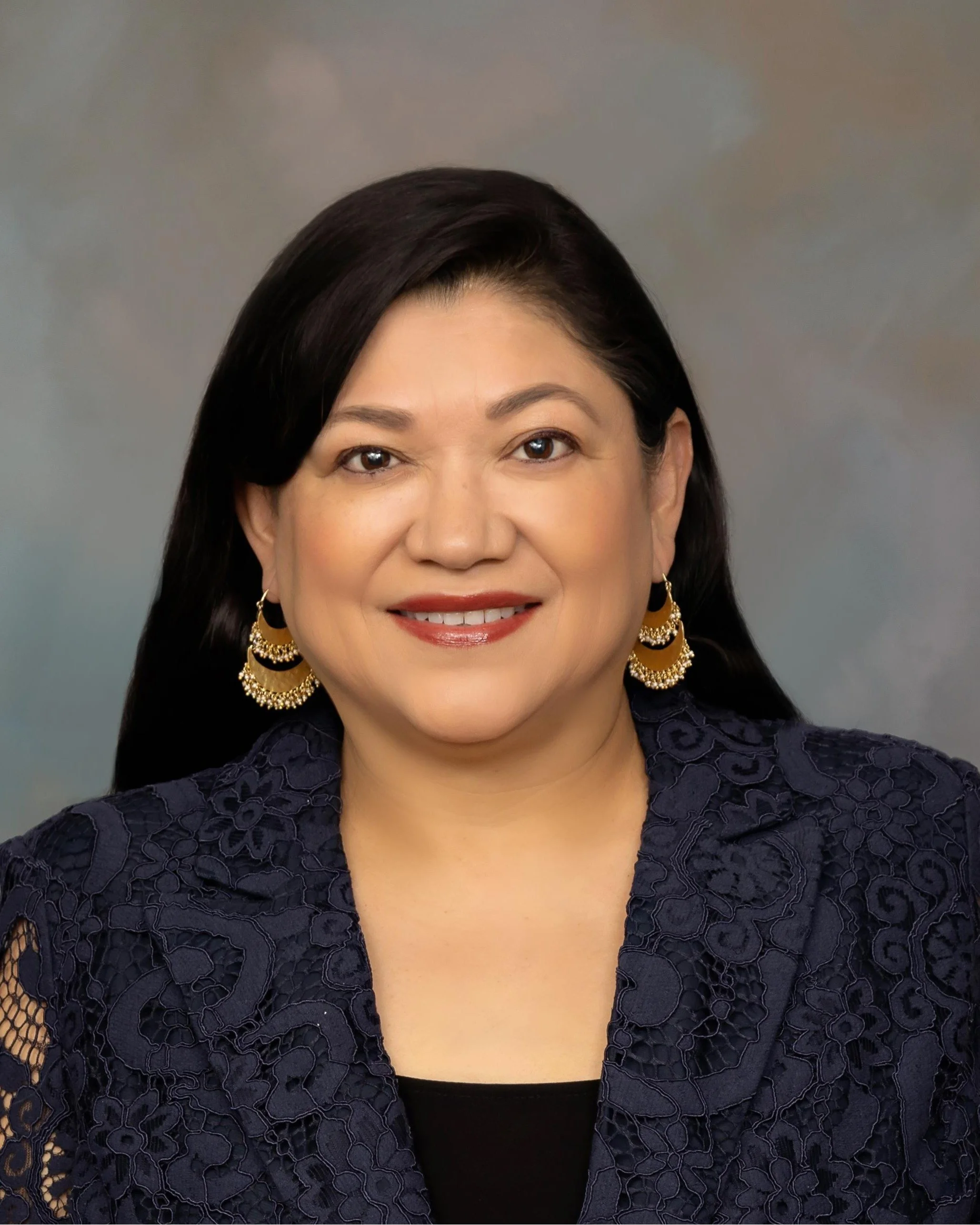
Photo by Ara Arbabzadeh