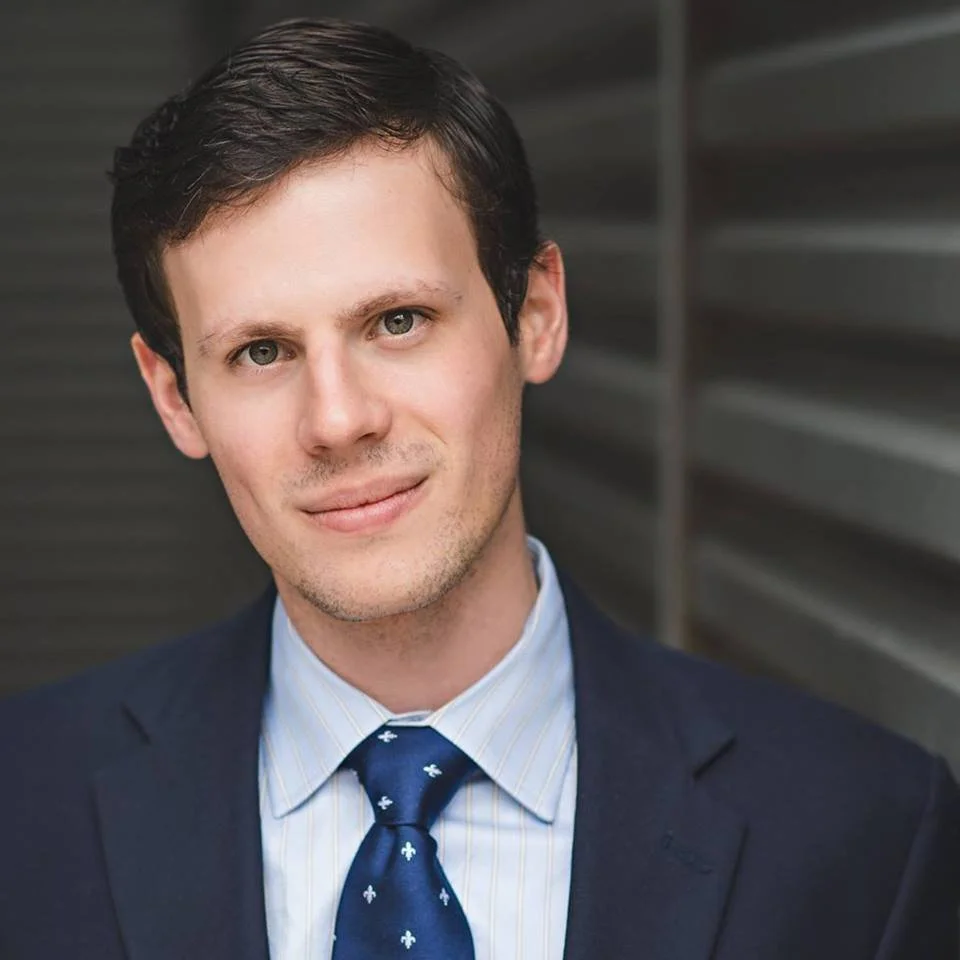
Interview with Mark Gottlieb, Literary Agent at Trident Media Group
Interview by Rey M. Rodríguez
As Institute of American Indian Arts (IAIA) students have recently graduated and new students begin their MFA journey, we thought it appropriate to interview a literary agent to obtain an overview of the publishing landscape and offer advice to students.
Mark Gottlieb is a prominent literary agent working at Trident Media Group, a leading literary agency in New York City. Gottlieb has represented New York Times bestselling authors as well as major award-winning ones. He has optioned and sold numerous books to production companies and studios for film and TV adaptation. He enjoys working with authors to help manage and grow their careers. In addition to having worked at the company’s Foreign Rights Department, he also ran the company’s Audiobook Department.
In this wide-ranging conversation, Gottlieb reflects on the evolving landscape of publishing, the enduring necessity of human storytelling, the uncertain role of AI in literature, and the delicate balance between art and marketplace realities. Moving fluidly between discussions of copyright law, oral traditions, memoir, speculative fiction, editorial practice, and the emotional resilience required of writers, Gottlieb offers an unusually candid look inside the publishing world.
What emerges is less a conversation about commerce than about faith—faith in books, in writers, and in literature’s ability to preserve what machines cannot replicate: soul, memory, contradiction, and human presence.
Mark Gottlieb of Trident Media Group, welcome to the Storyteller’s Corner of Chapter House, the literary journal of the Institute of American Indian Arts. Thank you so much for being here.
Thank you. I’m really glad to be here. It’s an honor, and I admire the work you do, so I’m very happy to join you.
I’d love to begin with your background. How did you become a literary agent? Were you always interested in writing and publishing?
My path was a little different from most people who enter publishing. Historically, a lot of people stumbled into publishing through the humanities—they were English majors, history majors, people who loved books but didn’t necessarily realize publishing itself was an industry. Most readers see books on shelves without ever thinking about the village of people required to bring one into existence.
For me, though, publishing was always around me. I come from a publishing family, so books were part of my life from the beginning. I eventually studied publishing formally at a time when universities were beginning to treat it as an actual field of study. Now, astonishingly, there are even master’s degrees in book publishing.
That’s incredible. I think people outside the industry underestimate how much there is to learn about publishing—especially now.
When a manuscript lands on your desk, what creates that immediate sense that this is something worth pursuing?
At the end of the day, it always comes back to good writing and good storytelling. That sounds obvious, but it’s true. Beyond that, I’m looking for urgency and originality. What makes this story distinct? Why does it need to exist?
In nonfiction, I often pay close attention to platform. In fiction, I may glance at credentials—whether someone has an MFA, publications in journals, or literary accolades—but those things are really secondary. They’re the bells and whistles. What matters most is whether the writing feels alive.
And ideally, there’s also some larger emotional or moral resonance. Not necessarily a lesson in a didactic sense, but something meaningful beneath the surface.
Are there manuscripts that immediately reminded you why you became an agent in the first place?
Absolutely. One that stands out is Tropic of Kansas by Christopher Brown, a literary speculative novel. This was before the 2016 election cycle fully unfolded, and the novel centered on a charismatic businessman who becomes a kind of authoritarian president of the United States. He promises walls between the U.S. and both Canada and Mexico.
Eventually, the public realizes those walls weren’t designed to keep people out—they were designed to keep people in.
By then, it’s too late. The country descends into surveillance, militarization, and improvised justice systems. There’s even a lawyer character who can barely function because the legal system has collapsed into a series of makeshift “kangaroo courts.”
When we took the book out on submission, editors kept asking: How could the author possibly have predicted this?
We didn’t really have an answer except that we tried to imagine the most frightening scenario possible.
That’s chilling.
It is. But that’s one of the fascinating things literature can do. Fiction can become a kind of distorted mirror held up to society. Sometimes art anticipates reality before reality fully understands itself.
What distinguishes a compelling literary voice from a merely competent one?
Voice is deeply personal. Every writer has one, though not every writer has fully discovered theirs yet. The authentic voice comes from inhabiting character and emotional truth so completely that the prose begins to feel inevitable.
I once worked with a writer who approached character the way method actors approach performance. He would literally dress as his characters while writing them. If he were writing a female character, he’d put on the dress, the wig, the makeup, the heels—everything—and perform the dialogue in front of a mirror while recording himself.
If his wife called everyone to dinner, he’d walk downstairs still dressed as the character.
Now, that may be extreme, but it demonstrates devotion. He wasn’t imitating voice—he was living inside it.
That’s remarkable.
I’ve been thinking a lot lately about AI and machine learning, and strangely, it makes literature feel even more important to me now. The written word becomes proof of humanity. It creates empathy.
I agree completely. AI has actually underscored the value of human storytelling. You can often read AI-generated text and think, This is technically competent, but something essential is missing. There’s no soul in it.
Even if the technology improves dramatically—and right now we’re still in the equivalent of the Pong era of AI—it still won’t replicate lived human experience.
Storytelling is fundamentally human.
There’s also the legal side of this. Writers are deeply concerned about ownership and copyright.
Rightfully so. Recent court rulings have reinforced the idea that copyright law exists to protect human creators—not machines. If a work is generated entirely by AI, it may not receive full copyright protections.
That creates enormous risks. Why would a publisher invest in something that can’t be protected legally?
At the same time, proving AI use is incredibly difficult. Publishing contracts are beginning to include language requiring authors to warrant that their manuscripts were not AI-generated, but this area is evolving constantly.
The irony, of course, is that publishers themselves are using AI in various workflow capacities. So there’s a tension there.
It feels like we’re entering morally ambiguous territory.
We are. But I’m cautiously optimistic. I think AI may eventually function more as digital photography did in relation to film photography. One didn’t eliminate the other. They coexist.
I suspect human-authored literature will remain central precisely because readers crave authenticity.
There’s an older philosophical question underneath all of this. Socrates was criticized for writing things down because some believed writing would weaken memory itself. Before written culture, knowledge lived inside people.
And now we face another leap. If machines store and retrieve everything for us, what happens to human memory? What happens to human judgment?
The other problem, of course, is misinformation. AI hallucinates. The internet is already full of inaccuracies. In some ways, I think this may drive readers back toward books because books still represent authority and depth.
That’s especially interesting coming from IAIA, where many Indigenous communities preserve knowledge through oral traditions rather than written archives. Entire histories and cosmologies exist outside the datasets these systems rely on.
Exactly. Bias exists not only in technology but in history itself. Large systems inevitably exclude people.
And some of these AI detection systems already reveal troubling biases. There were cases where writing by neurodivergent individuals—people on the autism spectrum, for example—was flagged as “AI-generated” simply because their writing patterns differed from normative expectations.
That tells us something deeply unsettling about the assumptions built into these systems.
How editorial are you with clients before submission?
Every manuscript requires something different. Editing is never one-size-fits-all.
But publishers increasingly expect manuscripts to arrive essentially publication-ready. There’s a misconception that editors at publishing houses are deeply hands-on developmental editors. In reality, much of that labor now happens beforehand—between the writer and the agent.
I know agents who’ve gone through seven rounds of revisions with authors before submission.
At the same time, perfectionism can become dangerous. Tennessee Williams famously revised plays while they were already running on Broadway and winning awards. At some point, endless revision becomes obsession.
What’s the current state of memoir publishing?
Celebrity memoir remains strong, but personal memoir without a significant platform has become difficult to sell. That’s unfortunate because memoir shares so much kinship with fiction in terms of emotional storytelling.
But nonfiction publishing increasingly revolves around audience infrastructure. Publishers want evidence that readers already exist.
What makes a platform persuasive rather than superficial?
Publishers often focus on metrics—social media followings, engagement numbers—but platform can mean many things. It could be speaking engagements, organizational affiliations, community leadership, or academic visibility.
Still, publishing is unpredictable. There are books by authors with millions of followers that disappear quietly, and books by relatively unknown writers that become cultural phenomena.
Publishing is closer to a casino than an exact science.
Are there genres that are particularly difficult right now?
Historical fiction has been challenging recently, though trends shift constantly. That’s why I encourage writers to talk with agents early in the conceptual phase. Sometimes positioning matters as much as execution.
But writers also have to write the stories they feel compelled to tell. An audience eventually finds authentic work. Timing matters, though. Writers need at least some awareness of the marketplace they’re entering.
You can’t exist entirely in a vacuum.
What should writers do after repeated rejection?
Rejection is normal. Some of the most successful books in publishing history were rejected dozens of times.
Publishing is an industry built on no’s. You only need one yes.
That said, if you begin noticing the same critique repeated consistently, it’s worth listening carefully. Sometimes persistence is correct. Other times, revision—or even stepping away from a project temporarily—is the wiser move.
Nothing is wasted. A manuscript may simply not have found its moment yet.
Where do you see opportunities emerging over the next few years?
Audiobooks continue to grow enormously. Special editions are thriving too—publishers transforming books into physical art objects with sprayed edges, elaborate covers, and premium materials.
Self-publishing also remains an important avenue. Some writers build substantial readerships independently and later re-enter traditional publishing from a position of strength.
And then there’s vertical media—short, serialized visual storytelling designed for phones. I recently worked on a project adapted into one of these formats, and it received hundreds of millions of views.
These companies understand where audiences are: on their phones.
Every era has its dominant storytelling medium. Before television, there was radio. Before radio, books, and oral storytelling. The forms evolve, but the human need for narrative remains constant.
What advice would you offer emerging writers—especially those from marginalized communities—who feel uncertain about entering the publishing world?
Curiosity matters enormously. MFA programs often do an excellent job nurturing creativity, but many spend very little time teaching publishing itself. Writers graduate understanding craft but not necessarily the industry.
The good news is that publishing, historically, has been more welcoming than many industries when it comes to diverse voices. There’s a genuine appetite for stories from communities that were excluded for far too long.
Look at writers like Stephen Graham Jones or Tommy Orange. Readers want these stories.
But beyond that, writers must remain committed to improving their craft and understanding the ecosystem around literature. Curiosity opens doors.
Finally, what’s the smartest way for writers to find an agent?
Focus less on what you can do wrong and more on what you can do right.
Resources like Publishers Marketplace are valuable because they show actual deals being made. Anyone can create a website and call themselves an agent. What matters is track record.
Research agents carefully. See what books they represent. See whether they genuinely work in your space.
And don’t be afraid to aim high. Writers often underestimate themselves before they’ve even begun.
As the saying goes: shoot for the moon. If you miss, you may still land among the stars.
Mark, thank you so much for your time and willingness to discuss your position and the publishing industry during this moment of enormous change.
Rey M. Rodríguez is a writer, advocate, and attorney. He lives in Pasadena, California. He is working on a novel set in Mexico City. His poetry collection, Todos Somos Sagrados/All Are Sacred (El Martillo Press), was released in May 2026. He has attended the Yale Writers' Workshop multiple times and the Palabras de Pueblo workshop once. He participated in Story Studio's Novel in a Year Program. He graduated as an MFA student in fiction from the Institute of American Indian Arts. His poetry is published in Huizache, Anger is a Gift, and Altadena Poetry Review. His other interviews and book reviews can be found at La Bloga, Chapter House's Storyteller’s Corner, Full Stop, Pleiades Magazine, and the Los Angeles Review. He is a graduate of Cornell, Princeton, and U.C. Berkeley Law School.