Interview with Jake Skeets, author of “Horses”
By Rey M. Rodríguez and Tanya Tyler
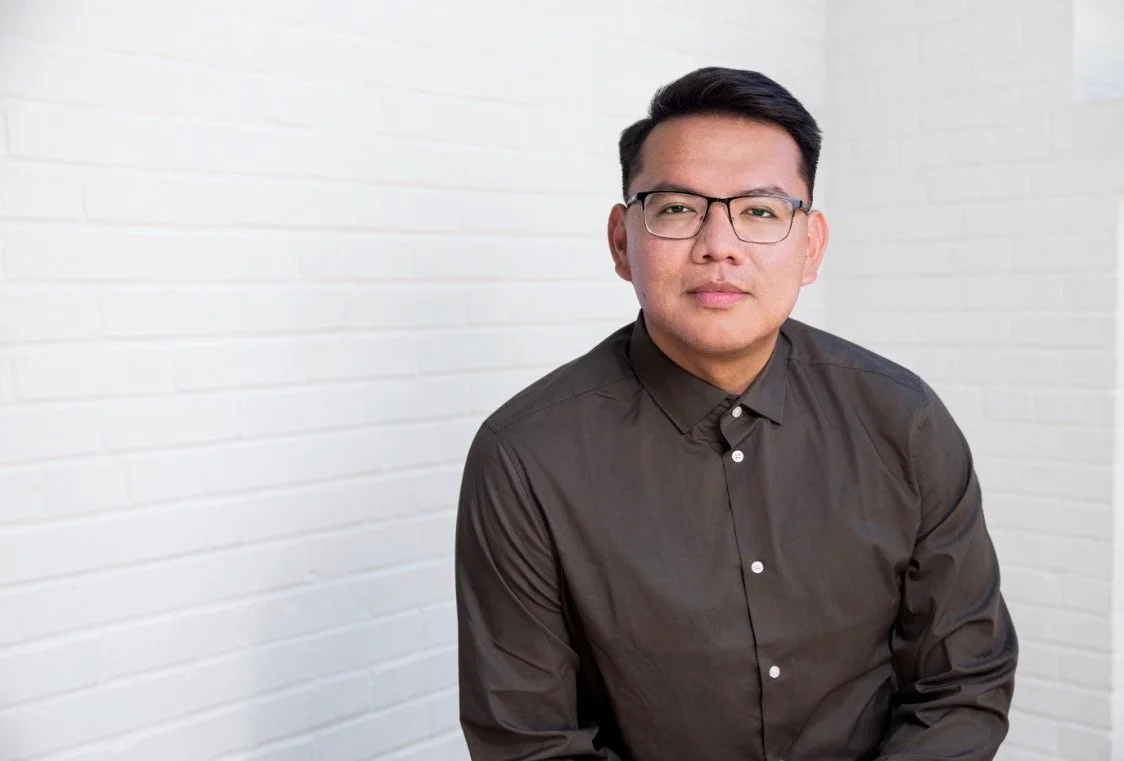
Horses, Jake Skeets’s long-awaited second collection, published by Milkweed Press, is an astounding expression of grief, beauty, and joy. Joy Harjo writes about the book that “Grief is a primary material, here rendered into beauty, and as you listen you will hear, feel, and know that beauty is possible even when it appears impossible.”
Skeets is an alumnus of the Institute of American Indian Arts and the author of Eyes Bottle Dark with a Mouth Full of Flowers, selected by the National Poetry Series and winner of the Kate Tufts Discovery Award and an American Book Award. His second collection, Horses, was selected as one of Literary Hub’s Most Anticipated Books of 2026. He has received an NEA Grant for Arts Projects, a Mellon Projecting All Voices Fellowship, and was the 2023–2024 Grisham Writer in Residence at the University of Mississippi. He is the third Navajo Nation Poet Laureate and recently announced that he will be joining the MFA program at the University of New Mexico as an Assistant Professor in the fall.
Tanya Tyler and Rey M. Rodríguez could not have been more privileged to discuss his new book, Horses, and the image that inspired him to write this marvelous collection of poems honoring the land and all that it means to him, the Diné community, as well as the world. Tyler asked, “Was there a particular line that stayed with you—or one that feels especially important to you now?” Skeets responded, “And the line that keeps coming back to me is: “For now, go out and dream of joy, we know the labor of feeling it.” We hope everyone discovers joy from reading this interview. We certainly did from speaking with Skeets.
RR: Jake Skeets, welcome to Storyteller’s Corner. We’re so glad to have you here.
I’m really happy to be here—truly, it’s an honor.
RR: I’d love to begin with the title of your book, Horses. I’m curious how you arrived at it—whether it came from a particular poem, or a feeling, or something else entirely.
The book, like my first collection, Eyes Bottle Dark with a Mouthful of Flowers, actually began with an image rather than a title or even a clear conceptual framework. I wasn’t thinking, “I’m going to write a book called Horses.” I was responding to something that I couldn’t quite process any other way.
That image—the one I keep returning to—is of these horses that were found dead on the Navajo Nation. It’s a photograph you can find online if you look for it, though I sometimes hesitate to encourage people to seek it out because it is quite difficult to look at. There’s a kind of violence in it, but also something else—something almost formal in the way the horses are positioned.
They’re in a circle.
That detail stayed with me. It felt uncanny, almost intentional, even though I knew it wasn’t. And that circular formation—something about it suggested pattern, repetition, maybe even ceremony, though I want to be careful with that word. It wasn’t just that they were dead; it was the way they were arranged in death.
So the book began there—with that image, that question.
RR: There’s something about the circle that feels ancient, even when it’s accidental. It invites interpretation, maybe even demands it.
Exactly. And that’s where the danger is, too—because as writers, we’re always interpreting. We’re always trying to make meaning. But sometimes the image resists that. It holds something that doesn’t want to be translated so easily.
For a long time, the manuscript had a completely different title. It was something like Field Guide for… and then a long, complicated subtitle. I was trying to contextualize the work, to give readers an entry point.
But it never quite fit.
At one point, I sent the manuscript to Sherwin Bitsui for feedback. And Sherwin is someone whose opinion I trust deeply. His response was… minimal, but incredibly precise.
He wrote back and said: “You have to change the title.”
That was it. No elaboration.
RR: That’s a clear message.
It is—but it was exactly what I needed. It cut through all my overthinking.
So I went back to the manuscript and started asking myself: what is this book really holding? What is at its center?
And I kept coming back to the horses. Not just the literal horses from that photograph, but all the horses that had begun to accumulate in my thinking—horses in literature, in music, in cultural memory.
I had been reading Joy Harjo, Luci Tapahonso, Nia Francisco. I was listening to Patti Smith’s Horses. I was noticing how often horses appeared in these works—not just as images, but as carriers of something larger.
And then I realized: maybe the title doesn’t need to explain anything. Maybe it just needs to hold that accumulation.
So I went with Horses.
At first, it felt almost too simple. But over time, it began to feel inevitable.
RR: You mentioned that the image came to you during a period when you weren’t actively writing. Can you talk more about that moment—what you were doing instead, and how that led you to the photograph?
Yeah, that was during the pandemic. Like a lot of writers, I found it really difficult to write in those early months. There was so much uncertainty, so much disruption. It felt like language itself had become unstable.
So instead of forcing myself to write, I turned to research—what I think of as “creative research.” I started reading old issues of the Navajo Times. At first, it wasn’t for any particular project. I just wanted to stay connected to something, to feel like I was still engaging with story in some way.
I would spend hours just reading articles—news, features, whatever I could find. And then I came across this piece from 2018 about these horses.
It wasn’t a long article. But it included that photograph.
And once I saw it, I couldn’t unsee it.
RR: It sounds like that moment split your attention in a productive way.
It did. That’s exactly right.
On one hand, I started writing poems that responded to that image. That became the beginning of Horses.
On the other hand, I gave myself a kind of constraint: I decided to read an entire decade of the Navajo Times—from 1980 to 1989. At the time, the paper was still a daily publication, run by a relatively small but very dedicated team.
So I was reading day after day, year after year, watching how stories accumulated, how narratives formed over time.
That research eventually became the foundation for a novel.
So I found myself working in two directions at once—poetry and prose, image and archive.
And in a way, both projects were about the same thing: attention. About what happens when you stay with something long enough for it to change you.
RR: Let’s talk about the horses themselves—not just as a title, but as a presence in the work. Horses carry so many associations: labor, movement, freedom, violence, kinship. In your collection, what do they hold that language alone cannot?
I’ve come to think of the horses as a kind of embodied language.
They’re not just symbolic in the way we often use that word. They’re not standing in for something else. They are something—alive, historically situated, relational.
At the same time, they allow me to approach certain ideas indirectly. They give me a way to talk about things that might be too overwhelming or too abstract if addressed head-on.
For instance, I started to see the horses in that photograph as a kind of mirror for our current moment—particularly in relation to climate change.
These were feral horses, searching for water. They were digging into a stock pond, trying to reach something that could sustain them. But in the process, they became trapped in mud and died.
That image—of searching, of striving, of becoming trapped in the very act of survival—felt incredibly resonant.
Because in many ways, that’s where we are as a society. We’re digging deeper, extracting more, trying to sustain ourselves, and in doing so, we may be contributing to our own undoing.
So the horses become a way of telling that story without reducing it to a statement.
They carry it.
RR: And they carry history as well.
Absolutely. Especially in the context of the American West.
When we think about horses, we’re not just thinking about animals. We’re thinking about a whole mythology—frontier narratives, Manifest Destiny, ideas of freedom and expansion.
But for Indigenous communities, the relationship to horses is different. It’s more complex, more layered.
There’s spirituality there. There are songs, ceremonies, histories of care and companionship.
And then there’s also the present reality—the ecological impact of feral horse populations, the tensions between preservation and sustainability.
So the horse becomes a site of contradiction. A place where different histories and values intersect.
And that felt important to me—to hold those tensions rather than resolve them.
Tanya Tyler: I want to come back to the image of the horses, because I found it incredibly difficult to shake—especially the ending notes you describe, where the horses are stuck in the mud.
What stayed with me wasn’t just the image itself, but the feeling of it—like they were frozen in time. I actually felt like I didn’t need to look up the photograph, because your description was already so vivid.
And then I started thinking about it in another way—as almost a kind of warning. Like an image of what life could become if nothing changes.
I was also struck by your mention of the use of hydrated lime. It’s something that addresses the immediate situation, but it made me wonder about the long-term consequences—what it might do to the land, to the environment later on.
So my question is: how can artists, writers, and poets continue to advocate for places like the Navajo Nation—or really any place facing these kinds of changing environmental conditions?
Yeah… that’s a really important question, and I think about it often—this idea of what responsibility a poet or artist has, if any.
I think in the past, some of our greatest thinkers have been poets and artists, right? And they’ve offered a wide range of ideas about what we should or shouldn’t be doing. So I don’t necessarily feel like I need to add something entirely new to that tradition of giving advice.
What I can say is that for me, the work is rooted in love.
And here I’m thinking of James Baldwin, who talked about the artist’s role as being fundamentally tied to love—the ability to love, to be loved, to enact love.
That might sound abstract, but I think it’s actually very concrete.
To love something is to pay attention to it. To remain accountable to it. To stay with it even when it’s difficult.
For me, storytelling comes out of that.
It’s not something we’re required to do. It’s not like breathing—we could choose not to tell stories.
But for many of us, especially in Indigenous communities, storytelling is a way of surviving. It’s how knowledge gets carried forward, how memory persists.
So in that sense, the responsibility isn’t imposed from outside. It emerges from within—from the relationship between the storyteller and the story.
It’s not about having answers. It’s about paying attention.
In my own journey, I’ve been trying to understand what draws me to storytelling in the first place.
And I think that necessity comes from love. It’s the same kind of love that has carried communities—especially Indigenous communities—through multiple crises, through what might be called apocalypses.
Storytelling becomes a form of survival.
So when I think about advocacy, I don’t necessarily think of it as speaking for something in a direct or prescriptive way. I think of it more as staying committed—continuing to tell stories, continuing to pay attention, continuing to hold space for what is happening.
There’s a story I often think about that really shaped how I understand this.
I was at a reading on the Navajo Nation with Herman Cody, who is a singer—someone deeply rooted in tradition. After I read, he spoke about my clan, Tsinajinnie, which can be translated as “those who walk ahead.”
He explained that traditionally, people from this clan would go ahead of the group to scout for danger. They would observe, gather information, and then return to tell the community what they had seen.
And they didn’t just report facts—they told stories. They sang.
So in a way, they were early versions of what we might now call artists.
That idea has stayed with me. The notion that part of the artist’s role is to look ahead—not in a prophetic sense, but in a careful, attentive way—and then to return with something that might help others navigate what’s coming.
TT: I wanted to ask something more specific about the collection itself. Was there a particular line that stayed with you—or one that feels especially important to you now?
That’s always a difficult question, because it changes.
There are lines that I felt very close to during the writing process—especially the opening line. It took a long time to get there. Multiple drafts, multiple attempts to find the right image, the right entry point into the book.
But now that the book is out in the world, my relationship to it is shifting.
I finished the book back in 2023, and for most of that time, it was something I worked on in isolation. I didn’t workshop it. I didn’t have a large group of readers. It was really just me and the texts I was reading—Joy Harjo, Luci Tapahonso, and others who were guiding me in a different way.
So for a long time, the book felt very private—almost like something I was protecting.
Now, as I’m talking to readers, I’m starting to see it differently.
And the line that keeps coming back to me is: “For now, go out and dream of joy, we know the labor of feeling it.”
Partly because that line feels like an acknowledgment of what the book became.
When I first started writing, my intention was actually to write a book about joy—what it means to feel joy, what it means to be a joyful poet.
But then I encountered this image, and everything shifted.
The material demanded something else.
And so that line feels like a kind of admission—that I tried to move in one direction, but the work required me to move somewhere else.
Tyler: It’s interesting that you say that, because as a reader, I did feel that tension. There’s grief in the book, but it doesn’t feel like it stays there—it feels like it’s moving toward something.
Yeah, and I think that’s something I’m only now beginning to understand more fully, through conversations like this.
Because when you’re writing the book, you’re inside it. You’re not thinking about how it will be received, or how people will respond to it.
But once it’s out there, you start hearing from readers. And they bring their own experiences, their own interpretations.
Some people talk about how the book makes them feel uneasy—especially in the way it moves through grief.
And that’s something I recognize. It reminds me of the grief that’s embedded in the work, even if that wasn’t my original intention.
So there’s a kind of letting go that has to happen.
You realize that the book will be read in ways you didn’t anticipate, and that’s part of its life now.
Tyler: I also wanted to ask about your essay “Summer Light.” As someone who primarily writes prose, I was really interested in how you move between poetry and essay.
The essay brings in elements like heat waves and environmental change, but it feels very different from the poetry.
How does writing in prose help you process these ideas?
For me, everything starts with a question.
I don’t usually begin with a form in mind. I don’t sit down and decide, “This will be a poem,” or “This will be an essay.”
I start with something I’m trying to understand—something I’m curious about, or something that’s bothering me—and then the form follows from that.
With “Summer Light,” I was working through questions about my childhood, about memory, about how those experiences connect to what we’re seeing now in terms of environmental change.
And prose felt like the right form for that.
Because it has a kind of durability—it can hold more, it can move across different moments more fluidly.
For me, prose often shows up in fragments, especially when I’m thinking about memory. It’s not linear. It’s not a straightforward narrative.
But it allows me to stay with those fragments in a sustained way.
There’s also a difference in how I experience writing in the two forms.
With poetry, I can slow things down. I can step away from a poem and come back to it later without losing too much of what I was doing.
But with prose—especially longer prose—I have to stay inside it.
If I step away, I lose that connection. I lose the thread.
So when I’m writing prose, I’m much more immersed. I’m at my laptop for hours, sometimes late into the night, trying to stay with the momentum of the piece.
Because I know that if I stop, I might have to rebuild that entire space again.
It’s a different kind of intensity.
But it’s also teaching me something—about endurance, about how much a sentence can carry, about how a story unfolds over time.
Rodriguez: I want to return to something you touched on earlier—this relationship between grief and joy. One of the things that struck me in reading Horses is that even when the poems are moving through spaces of loss, there’s an undercurrent—not of optimism exactly, but of endurance.
Do you feel that engaging deeply with grief allows access to a different kind of joy—one that is perhaps more grounded, more sustainable?
Yes, I think that’s exactly right. Though I might phrase it slightly differently—not necessarily a “deeper” joy, but a hard-earned one.
For me, joy is not something that simply arrives. It’s not a passive state. It’s something we have to work toward, sometimes even fight for. And that’s where the idea of labor comes in.
When you move through grief—when you don’t turn away from it, when you allow yourself to fully inhabit it—you come to understand just how fragile joy is. You realize that it can be taken from you at any moment. That awareness changes the way you relate to it.
It becomes something you actively sustain.
That’s part of what I was trying to get at with that line: “Go out and dream of joy. We know the labor of feeling it.” It’s almost a kind of confession. A recognition that even the desire for joy carries weight, carries effort.
Rodriguez: There’s something in that line that feels communal as well—not just I know the labor, but we know it.
Exactly. Because grief is rarely an individual experience. It might feel that way in the moment, but it’s always connected to something larger—family, community, history.
And the same is true of joy.
I think what I’ve come to understand, especially in writing this book, is that joy doesn’t exist outside of grief. It’s not the opposite of grief. It emerges through it.
You can’t bypass one to get to the other.
And so the question becomes: how do we live with that knowledge? How do we continue to create, to love, to find moments of light, even when we’re carrying so much?
Rodriguez: That resonates deeply. I’ve often thought about joy not as something that ignores pain, but as something that acknowledges it—and then transforms it into a way of continuing.
In many Indigenous communities, as in many Latino communities, there’s this remarkable coexistence of grief and laughter. There’s humor, even in the midst of hardship. And that humor doesn’t feel like denial—it feels like resistance.
Yes. That’s exactly it.
Laughter, in those contexts, is not frivolous. It’s not escapism. It’s a way of asserting presence. A way of saying: we are still here.
And that’s incredibly powerful.
Because when you think about the histories that Indigenous communities carry—histories of displacement, of violence, of systemic erasure—the fact that there is still laughter, still joy, still storytelling… that’s not accidental. That’s intentional.
It’s a form of survival.
I think sometimes people misunderstand that. They see the laughter and assume that it diminishes the seriousness of what’s being carried. But it’s actually the opposite. It’s because of that weight that the laughter matters so much.
It’s a way of redistributing that weight, even if only for a moment.
Rodriguez: You mentioned earlier this idea of sustaining joy, of enacting it almost as a daily practice. I’m curious how that connects to where you are in your life right now. Do you feel like this book—and the conversations around it—are arriving at a particular moment of transition for you?
Yeah, I think that’s exactly what it feels like—a transition. And I’m still trying to understand what that means.
I’m in my early thirties now, and there’s something about that shift that feels… subtle, but also profound. It’s not like there’s a clear line you cross, or a moment where everything changes all at once. It’s more like a gradual reorientation—like you’re turning slightly, and the world begins to look different from that new angle.
For a long time, I think I understood myself in relation to a kind of extended boyhood—not in a literal sense, but in terms of how I moved through the world. There was a certain openness, a certain looseness, maybe even a kind of refusal to fully settle into what adulthood is supposed to look like.
And I don’t think that entirely disappears. I don’t think it should.
But I do feel something shifting. A kind of awareness settling in. A recognition that time is moving in a different way now, that the things I choose to carry forward—emotionally, creatively, relationally—matter in a more deliberate sense.
Rodriguez: I have to say, I’m still holding on to that boyhood myself, so I’m not sure the transition ever fully completes.
Skeets (laughing): I hope it doesn’t. I really do.
Because I think that sense of play, that sense of curiosity—that’s essential, not just for writing, but for living.
But I do feel like I’m entering a different phase of it. Maybe it’s not about leaving boyhood behind, but about carrying it differently. About understanding it as one part of a larger self, rather than the whole of it.
And I think writing Horses—and now talking about it—has made me more aware of that.
In what way?
I think it’s made me more conscious of the distinction between being a poet and being a person.
For a while, especially after my first book, there was a sense that being a poet was becoming my primary identity. And in some ways, that’s exciting—it opens doors, it gives you a platform, it allows you to enter into conversations like this.
But it can also become… overwhelming.
Because if you’re not careful, you start to feel like you have to inhabit that role all the time. Like you have to be the “poet” in every space—the one who is always serious, always reflective, always carrying the weight of the work.
And that’s not sustainable.
Rodriguez: That sounds exhausting.
It is. It really is.
And I think that’s part of what this transition is teaching me—that I have to allow myself to exist outside of that identity.
To be, as I said earlier, a little silly. To laugh. To not always be in that heavy, contemplative space.
Because the work itself is already carrying so much. The poems are already doing that labor—of holding grief, of engaging with difficult histories, of moving through these complicated emotional terrains.
So in my life outside the work, I need balance.
I need color.
I need moments that are not defined by that weight.
Rodriguez: It sounds like you’re describing a kind of recalibration—between the intensity of the work and the expansiveness of living.
Yeah, that’s a good way to put it.
And I think it also connects back to what we were saying about joy. If joy is something we have to enact—if it’s a form of labor—then part of that labor is making space for it in our lives.
Not just writing about it, but actually living it.
Allowing ourselves to be in moments that are light, that are playful, that don’t necessarily carry a deeper meaning beyond themselves.
Because those moments matter too.
They sustain us in a different way.
And I think, for me, entering my thirties has been about recognizing that more clearly—that I can be both things at once. That I can write into grief, into history, into complexity, and still step away from that and be a person who laughs, who jokes, who exists in a more ordinary, everyday way.
That doesn’t diminish the work.
If anything, it makes it possible.
Rodriguez: I want to shift toward your relationship with land, because your poems feel inseparable from it. Not just in terms of imagery, but in terms of emotional structure.
Can you talk about how Diné land shapes your work—not just what you write, but how you write?
I think the simplest way to say it is that the land was my first teacher.
Before language, before formal education, there was the land.
And it teaches in ways that are not always gentle.
I remember growing up and spending entire days outside—especially during the summers. We would wake up early because our parents were getting ready for work. They’d make us breakfast, and then they’d leave, and we’d be on our own for the rest of the day.
We’d get on our bikes and just go.
We’d pack something simple—bologna sandwiches, maybe—and we’d be out there from morning until evening. We drank water wherever we could find it—hose spigots, troughs, whatever was available.
And we learned.
We learned where not to step. We learned how far we could climb before it became dangerous. We learned what happens when you fall.
I saw cousins break arms from falling out of trees. The first time, it’s terrifying. But over time, you start to understand the land’s logic—its limits, its consequences.
That’s education.
It’s not abstract. It’s embodied.
Rodriguez: There’s something in what you’re describing that feels like a kind of apprenticeship—learning through experience rather than instruction.
Yes, exactly. And that kind of learning stays with you in a different way.
So when I write now, it makes sense that the land shows up so prominently. It’s not something I have to consciously insert into the work. It’s already there, because it’s part of how I understand the world.
In many ways, the land feels like a second parent. It cared for us, but it also disciplined us. It taught us what happens when you push too far.
And I think that relationship carries into the poems—not just as imagery, but as structure, as pacing, as silence.
Even now, when I travel and then return home, there’s a moment—a very specific moment—when everything shifts.
It usually happens when I’m driving back from Albuquerque toward Gallup. There’s a turn near Grants where the landscape begins to open up. The mesas start to come into view. The horizon stretches in a particular way.
And I feel it physically.
It’s like something in my body recognizes that I’m home before my mind fully registers it.
There’s a release. A kind of exhale.
And all the memories, all the emotional connections tied to that land, come rushing back.
That feeling—that threshold—is something I try to capture in the work. Not directly, necessarily, but in the way the poems move, the way they hold space.
Because home, in that sense, is not just a location. It’s a relationship.
Rodriguez: I want to turn now to craft—specifically, your use of fragmentation, silence, and white space. There’s a sense in your work that certain things resist being spoken directly.
How do you approach form when you’re writing toward that kind of resistance?
I often say—somewhat provocatively—that obscurity is a Native writer’s best friend.
And I don’t mean that in the sense of being intentionally difficult or inaccessible for its own sake. I mean it as a form of protection.
There’s a long history of Indigenous and Brown writing being misread—interpreted through frameworks that distort or flatten the work. Sometimes those readings can even be violent, in the sense that they strip the work of its context and repurpose it for something else.
So form becomes a way of intervening in that process.
By using fragmentation, by introducing silence, by breaking up the expected flow of language, I can disrupt the reader’s ability to immediately assimilate the text into familiar patterns.
It forces a different kind of engagement.
Rodriguez: Almost like asking the reader to slow down, to sit with uncertainty.
Exactly. To meet the work on its own terms, rather than imposing their own.
And I understand that this can be challenging. Some readers might feel alienated by it. But I don’t necessarily see that as a failure.
I see it as an invitation.
An invitation to read differently.
Because poetry, at least for me, is not primarily about delivering information. It’s about creating an experience. It’s about offering something that feels closer to being alive than to being told something.
And life, as we know, is not always clear or linear. It’s fragmented. It’s full of gaps and silences.
So the form reflects that.
Rodriguez: As we begin to close, I want to return to where we started—with the image of the horses.
After everything we’ve discussed—grief, joy, land, form—what does that image mean to you now? Has it changed?
I think it’s deepened.
At the beginning, it felt like something external—something I had encountered, something I needed to respond to.
Now, it feels internal.
It feels like something I carry.
And I think that’s what writing does, at its best. It takes something that is outside of us—an image, an event, a memory—and allows it to become part of how we understand ourselves.
The horses are still there, in that photograph. But they’re also here, in the language, in the questions, in the way I move through the world.
And maybe that’s enough.
Not to resolve the image. Not to explain it fully.
But to carry it.
Rey M. Rodríguez is a writer, advocate, and attorney. He lives in Pasadena, California. He is working on a novel set in Mexico City. His poetry collection, Todos Somos Sagrados/All Are Sacred (El Martillo Press), released in May 2026. He has attended the Yale Writers' Workshop multiple times and the Palabras de Pueblo workshop once. He participated in Story Studio's Novel in a Year Program. He is a second-year MFA student in fiction at the Institute of American Indian Arts. His poetry is published in Huizache, Anger is a Gift, and Altadena Poetry Review. His other interviews and book reviews can be found at La Bloga, Chapter House's Storyteller’s Corner, Full Stop, Pleiades Magazine, and the Los Angeles Review. He is a graduate of Cornell, Princeton, and U.C. Berkeley Law School
Tanya Tyler (she/her) is Diné from Tséʼałnáoztʼiʼí, New Mexico on the Navajo Nation. She graduated with honors from the University of New Mexico with a Bachelor of Arts and double majored in English and Women, Gender, and Sexuality Studies. Her work has been published in Conceptions Southwest and Yellow Medicine Review. She is a graduate of the MFA program in Creative Nonfiction at the Institute of American Indian Arts and has decided to remain for an additional year in the program to seek another MFA in fiction. She currently lives in Albuquerque, New Mexico.