In the World of Words: Copper Canyon Press Executive Director Ryo Yamaguchi on Poetry, Craft, and Publishing
An Interview with Chris Hoshnic (Editor-in-Chief) & Oona Uishama Narváez (Senior Editor)
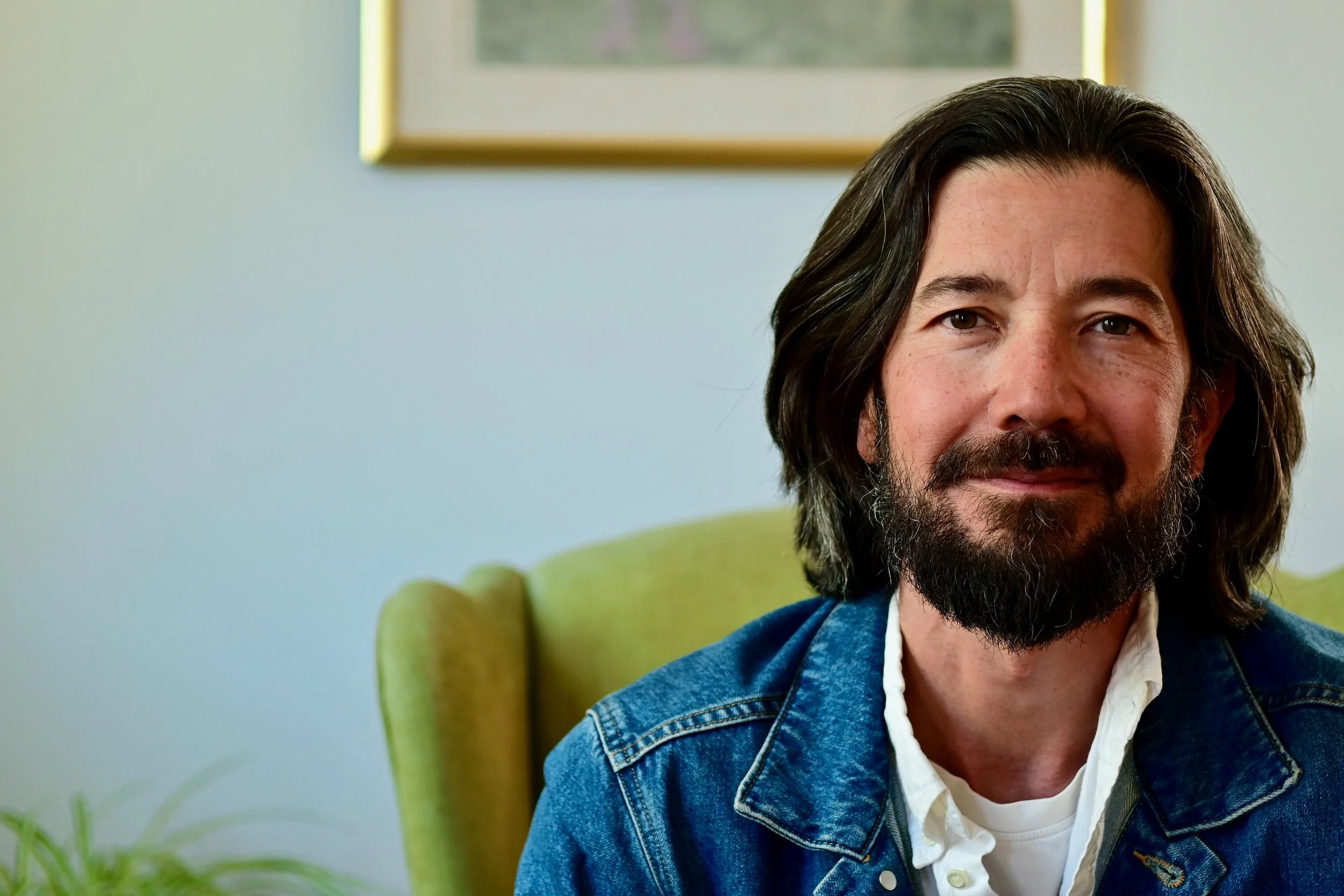
Ryo Yamaguchi on Publishing
“—a talented poet won’t simply mimic, they’ll make it their own, and they may well even enter or build a community of other poets around that same influence. To me, that's the aliveness of lineage.”
In the tradition of writing, we come to the page in search of joy, grief, love—for answers to questions that reach beyond ourselves. Here, we risk what we value most: vulnerability.
When we met Ryo Yamaguchi—the Publisher & Executive Director of Copper Canyon Press, a mission-driven, independent press that has been dedicated to poetry for over fifty years, during residency—Oona and I found ourselves suspended between the quiet and the storm: the uncertainty of the artistic life and the risky crosscurrents of what we are meant to do with our vulnerability once it has found its way onto the page. What becomes of the work after the long months—or years—of devotion? What becomes of us?
Ryo has worked in publishing for over ten years, including roles as the marketing director at Wave Books and a promotions manager at the University of Chicago Press. He is the author of The Refusal of Suitors, a collection of poems published by Noemi Press, and he has been a book critic and poetry feature writer for numerous outlets. He currently lives in Santa Fe, New Mexico.
We sat down with him—as poet, as publisher, and Executive Director of Copper Canyon Press—perhaps to ease that familiar ache of art-making: its long periods of solitude, its persistent uncertainties, and the question that waits at the end of every manuscript: Where do we go now?
What followed was a conversation on poetry as art, the making of a first book, literary patience, and how writers might navigate the space between private creation and public life.
On Craft
“Much of poetry’s power can happen in a handful of words: musicality, idiom, volta, image—”
In your poem “The Present,” featured on the Poetry Foundation’s website, you employ the Japanese poetic concept of kireji — for example, in the line, “We / circled and were encircled.” There is a deliberate break mid-line and recurs again and again. Could you speak a little about your relationship to Japanese poetic forms and how they influence your work?
Oh yes, kireji, and enjambment here. But maybe more than I feel very rooted in Japanese (and broader Asian) poetic traditions, in part because they are a large part of the American tradition. An obvious answer is imagism and deep image, especially those rooted in seasonality and nature.
Speaking more formally, I think the compression of an idea or scene into as efficient a packet of language as one can manage (as in haiku or tanka) that is syllabically or rhythmically aware is an extremely productive exercise that can improve or influence longer form work as well. There’s something dancerly or athletic here—working on focused movement (focused movement of consciousness) as a kind of training. Much of poetry’s power can happen in a handful of words: musicality, idiom, volta, image, and I think Asian forms in particular seek and value elegance in that compression.
In your poetry, nature never feels like background scenery; instead, it seems to mirror emotional and spiritual states. Is this something that comes naturally in the writing process, or is it something you consciously shape over time within the poem’s structure?
Oh yes, very much, nature is the world, and it is the manifestation of one’s consciousness, for the simplest reason, because one interprets it. And by nature, I might extend to life and forces taking place in built environments as well. I suppose nature feels natural, ha! It comes out of the poem. But that’s a bit of a lie because the poem is also interrogating it, and from that arises the mirroring of one’s emotional and spiritual state.
Embedded in this question is maybe a different question about whether all poems are about the self, and I wouldn’t necessarily say that’s true, though of course the self is inescapable, and maybe that in itself (oh dear) is an issue, is something to interrogate. Forever and ever, I had a small quote of a Wallace Stevens line hanging above my desk: “In the world of words, imagination is one of the forces of nature” - I believe that.
There is a remarkable compression in your language, especially in “The Past,” featured in wildness, where the word “since” is repeated 27 times. Because “since” typically signals duration, causality, or explanation, its repetition creates a rhythmic and incantatory accumulation. I’m curious how you arrived at that structure and what drew you to that repetition.
This is great, and that poem is part of a trio of “temporal” poems - the others are “The Present” and “The Future.” In each, the genesis was exactly that incantatory repetition with some temporal concept (in this case, since something) that was meant to give a springboard to some accounting, a description of something that happened. That’s unhelpfully vague, but that was the idea.
I loved, in these poems, the kind of associational freedom this small formal ploy allowed—that I could just write a sequence of sentences, be in a groove, and that the art would come (in revision) on the tuning of those accounts, on their tenuous relationship with an overall narrative that was, in some ways, the montage of a life.
On Editorial & Publishing
“…the core remains the same - that the work is exciting, original, true to itself.”
A lot of new writers imagine publishing as editorial taste alone, but presses are also ecosystems of fundraising, distribution, design, and audience-building. What part of literary publishing is the most misunderstood & optimistically, your favourite to be able to have a helping hand in?
That’s absolutely right, and I love the word “ecosystem” for this. I’ve worked a lot in marketing and publicity, and while I wouldn’t necessarily say it’s misunderstood, I think expectations and energy around that part of a book can vary widely.
When you are publishing a book, especially if it’s your first book, I think it’s worth taking a few minutes (or days, or weeks) to ask yourself how you want it to be in the world. What sort of audience are you looking for? What sort of reception? Do you want a New York Times review or a 3,000-word essay in a literary journal? Do you want to do a lot of readings? Are you going for tenure? All of these goals have differing levels of difficulty and probability, but you can work toward them (or choose not to).
The point is that none of these are wrong desires (wanting fame is OK!), but to achieve them takes work—you, as the author, have to get out there, work with the publicist (if you have one), have ideas, and know how to talk about your book. You have to shepherd it into the world, and with the right attitude, that can be really fun.
You’ve occupied various hats of the publishing industry for more than a decade now. How has moving through those various levels changed the way you approach reading a manuscript?
My experience with publishing has always been with tight-knit teams. Just for clarity, my role now does not include reading or selecting manuscripts, though I advise with an excellent team of editors. Determining the possible success of a book and author is, of course, a very challenging activity with a lot of unknowns.
But the core remains the same - that the work is exciting, original, true to itself. The reason we are a nonprofit is so that we can prioritize this core of literary quality over other qualities, such as viability in a publishing marketplace or an author’s presence in the literary milieu. Though my many hats have taught me that the latter, especially, is important: first things first, the poems have to be great. Second, we love publishing poets who are committed to their community, who read, organize, and support other poets.
Through your work with Copper Canyon, you’ve talked about building conversation between generations of poets. What makes a literary lineage feel alive rather than institutional?
Oh, great question—literary lineage is alive most immediately in the gathering of poets!
Institutions are a framework, and they can have bureaucratic homogeneity to them, but they still have the basic function of creating student-teacher relationships, and that’s critical and something we see (all the time) extend beyond school walls in any manner of other settings. And when we talk about lineage, we also talk about influence, which can “jump” across millennia at times.
It’s thrilling to see a young, contemporary poet writing poems explicitly influenced by, say, ancient Chinese poetry. Because a talented poet won’t simply mimic, they’ll make it their own, and they may well even enter or build a community of other poets around that same influence. To me, that's the aliveness of lineage.
How do you balance preserving a press's identity with responding to changes in contemporary poetry?
Another great question, and the wonderful thing is that, in some ways, we don’t have control over it. Our identity is the poetry we publish, and we can only publish poems that poets are writing. For us, the “preservation” part of our identity is likewise oriented to the community we are in and the commitments we have. We preserve by fostering relationships, by being a part of a poet’s career, hopefully over many books. As their body of work takes on definition, so does our identity.
You’ve spoken about poetry as something tied to survival, joy, and daily life. How do you maintain that relationship to poetry while working inside the machinery of publishing?
I read this question as how to maintain a fresh and enjoyable relationship with something that is also work.
The great thing about art is that it’s supposed to surprise you, and maybe I feel lucky that poetry still does. We are all lovers of poetry at the press. We thrill to new books and new authors. We read poems at the start and close of our meetings. If we have an event, there must be poets at it, and if we can choose the programming, it will include a reading. Much of this is deliberate to foster and maintain connection with the work, but it’s not hard to keep up, and there’s been some version of this at every press at which I’ve worked.
On The Refusal of Suitors
“I consider repetition (or even more specifically, tautology) to be an extraordinary journey, a development of consciousness—”
Drama and incantation seem to lie at the center of The Refusal of Suitors, and much of the language feels reminiscent of poets like John Keats and Walt Whitman. Did American Romanticism, or 19th-century poetry more broadly, influence your book in any way?
This is interesting, and in many ways yes—in any case, I felt myself as part of their lineage, if all else because I was an English major and shaped by the canon of which they are giants. But I don’t want to overstate how deliberate that may have been—it may simply be that I had them in my ear at a time I set out (in a good chunk of those poems, anyway), to write in a hyper-lyrical mode, these odes. I really just loved the music, the genre of music, that they helped create.
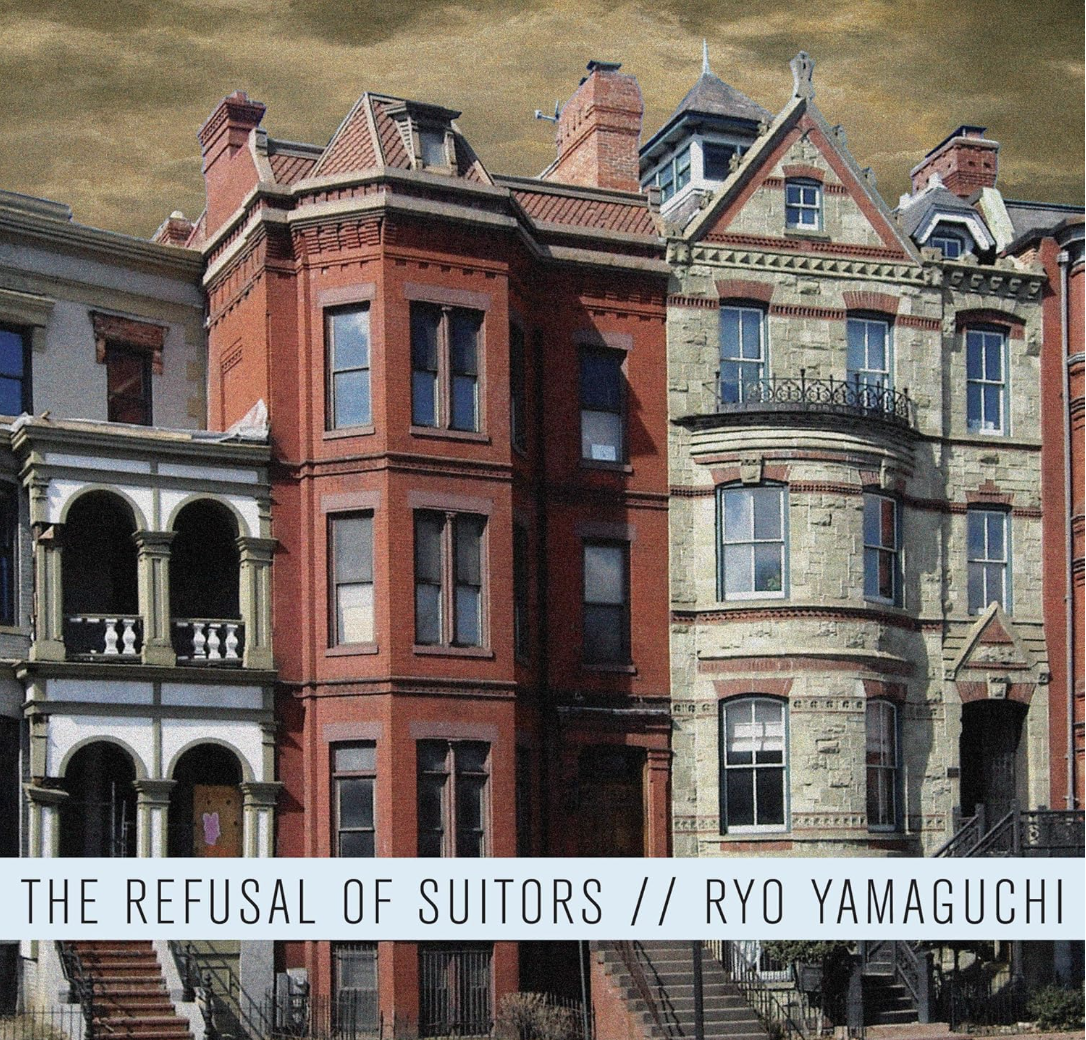
The Refusal of Suitors recurs as a title throughout the book. I’m very interested in the way repetition and sound can re-mean or transform language in poetry. I wonder if you could speak a little about your interest in that construction of meaning, specifically, how and why this title reappears so many times.
I’m very aligned to this question because I gave that choice a great deal of thought, though the origin was somewhat less artful—simply that I had a few poems in mind to carry the title of the book and couldn’t decide between them.
What all those poems share, in the way I remember it, is a central emotional drama. And because the book was assembled from several mini projects (like the odes discussed above), I had an obvious question to answer in their sequencing - are they grouped, or are they scattered? I chose the latter, as I loved the kind of episodic return to different forms, locales, and energies. The title poems were, in some ways, just another mini-project to sequence in this way, but they carried a significant role in their emotional weight.
To the broader question of (re)meaning, which I love - oh yes, I think one of the key things repetition does is break open the meaning of a single word (or phrase). Whether its simultaneous definitional meanings or nuanced alterations of feel, I consider repetition (or even more specifically, tautology) to be an extraordinary journey, a development of consciousness (I should find a better word!).
I’m very much thinking of the great poet Robert Lax, whom I very much recommend - and allow me to end this wonderful conversation with a nod toward him!
Chris Hoshnic is a Diné poet from Sweetwater, Arizona. Born to kinlichii'nii and born for tachinii, he is the recipient of the Poetry Northwest 2025 James Welch Prize. Hoshnic’s work appears in POETRY, Kenyon Review, and beyond. He is Editor-in-Chief of Chapter House Journal, directs Diné Kids Film Club, and is an MFA candidate at IAIA.
Oona Uishama Narváez (she/they) is a writer and artist from El Paso, Texas and obtained her MFA in Poetry at the Institute of American Indian Arts. Her fascinations lie in affect theory, hybrid narrative structures, and translingual poetics. Currently she is working on a mixed media project interrogating lineages and limitations of language and illness.