An Interview with Viet Thanh Nguyen, author of “To Save and To Destroy.”
by Rey M. Rodríguez
Pulitzer Prize–winning novelist, essayist, scholar, and critic Viet Thanh Nguyen has spent much of his career examining the stories nations tell about themselves—and the stories refugees, immigrants, and other marginalized people tell in response. Born in Vietnam and brought to the United States as a refugee at the age of four, Nguyen is the author of The Sympathizer, The Committed, Nothing Ever Dies: Vietnam and the Memory of War, The Refugees, and the memoir A Man of Two Faces, among other works.
His book To Save and to Destroy, developed from his Norton Lectures at Harvard University, turns his attention toward the humanities themselves: literature, art, education, and culture as forces capable not only of liberation and human connection, but also exclusion, colonization, and destruction.
In this interview, Nguyen speaks about his beginnings as a writer, ethnic studies, institutional power, otherness, writing without translation, artistic play, complex joy, radical solidarity, and why writing remains a lifelong calling. What follows is an edited version of our conversation. We hope you enjoy it.
I want to begin with something you’ve said about your childhood. You’ve described yourself as an “eyewitness to the eyewitnesses of history.” How did that experience lead you toward storytelling?
I came to the United States as a refugee when I was four years old. I was too young to understand the history that had happened to me, but my parents were the eyewitnesses to that history. We were routed through a refugee camp at Fort Indiantown Gap in Pennsylvania, and eventually we ended up in San Jose, California. Growing up, the public library saved me. We didn’t have books at home. My parents were working constantly. So reading became entertainment, escape, and also, I think, a way of processing things that I didn’t yet have the language to understand.
When I was in the third grade, my teacher, Mrs. Bullock, gave us a writing assignment. I wrote a story called “Lester the Cat.” I entered it in a contest at the San Jose Public Library and won an award. That was probably the first moment when I understood that writing could be something important in my life.
Do you remember what “Lester the Cat” was about?
Lester was an urban cat suffering from ennui. He flees the city for the countryside, where he finds love with a country cat. Looking back, obviously Lester was me. I didn’t understand that at the time. But now I can see the alienation, the longing, the fear of loss and abandonment. That’s part of the refugee experience.
My parents were working all the time because they were trying to survive. They were so busy trying to save their children that they didn’t have time to spend with their children. That contradiction was something I experienced without being able to articulate it.
Writing gave me a way to articulate it.
Were there books that were especially important to you then?
One of the books I remember vividly is Where the Wild Things Are. I remember it almost as a negative example because it frightened me. But that’s also part of its power. A child leaves home on a boat, enters this strange world, encounters monsters, becomes king of the monsters, and then comes back. Obviously, there are parallels to the refugee experience. Stories can be dark. Stories can be terrifying.
And stories can save us or destroy us.
I also read Curious George, Tintin, Encyclopedia Brown—all kinds of things, some of which would probably be considered problematic in various ways today. But I read everything.
Then you went from San Jose to Berkeley. What happened to you there intellectually?
As an adolescent, I thought San Jose was a cultural wasteland—which is probably unfair. I had gone to Catholic schools, and I was rebelling against Catholicism. Then I arrived at what I jokingly call the University of Communists at Berkeley.
Berkeley transformed me.
Suddenly I encountered all these questions about life, history, politics, race, war, and my own past. I studied English and ethnic studies. And ethnic studies gave me language for experiences I had already lived through but didn’t understand.
I learned the term “Asian American.” That gave me a way of thinking about myself in relationship to the Vietnam War and racism in the United States. But I deliberately chose ethnic studies rather than simply Asian American studies because I wanted to understand these questions more broadly. I wanted to understand Asian American experiences in relationship to Black Americans, Chicanos and Latinos, Native and Indigenous peoples, and colonized peoples elsewhere.
That comparative framework became fundamental to how I understood the world.
Ethnic studies is once again under attack politically. What do you think people misunderstand about it?
I have an ambivalent relationship to things like diversity, equity, and inclusion because DEI can become a neoliberal capitalist tool. But the attacks on ethnic studies, Black studies, gender studies, queer studies, and DEI are often cynical. And there is something interesting about the critique from the right and the far right. They say these fields are subversive.
My response is: Yes. They should be.
We should embrace their subversive capacity. Ethnic studies emerged from the radical revolts of the 1960s. It emerged from people making connections between white supremacy in the United States and imperial warfare abroad, including the war in Vietnam. At San Francisco State and Berkeley in 1968 and 1969, students were demanding a Third World college. These weren’t simply academic questions. They came out of political organizing, community work, and struggle. Of course, once ethnic studies became institutionalized within universities, some of that radical energy was domesticated.
That’s what institutions do.
But theoretically, the field retains a subversive potential. And the ideas produced within universities can ripple outward. People sometimes imagine academic debates as irrelevant, but ideas move and move people. Think about somebody like Judith Butler. Ideas that began in relatively specialized academic contexts eventually became part of much broader cultural and political debates.
Ethnic studies has always understood that storytelling operates in multiple places.
It happens in literature.
It happens in history.
It happens in politics.
It happens in labor organizing and community mobilization. Storytelling is an art, but storytelling is always connected to struggles over power and narrative outside the arts.
Let’s get into To Save and to Destroy. The book grew out of the Norton Lectures at Harvard. That series places you in conversation with writers like Jorge Luis Borges, Italo Calvino, T. S. Eliot, and Toni Morrison. What did it feel like to receive that invitation?
When I was growing up as a refugee, I wanted to be a writer. I knew what that word meant. What I did not want to be was a professor. I had no idea what that meant. My older brother was the first person in our family to get a college degree, and I was the second. We had no tradition of academia or scholarship in our household. My father had a high school education; my mother had a grade-school education.
I became a scholar and got a PhD almost by accident.
I went to Berkeley, reached my senior year, and thought, What am I going to do with my life? I don’t want to become a lawyer. I don’t want to get a job. I’ll get a PhD in English. And then I became a professor. By the time Harvard invited me to give the Norton Lectures, I had been a professor for about twenty-five years. I was actually trying to detach myself from academia.
Being a professor had been a very good day job, but what I really wanted was to be a full-time writer. And academia kept pulling me back. When the invitation from Harvard arrived, my reaction was basically: I’m going to accept this invitation, and I don’t want to.
Part of that is because I’m a model minority—as ambivalently as I occupy that position. When Harvard offers you something and you’re a model minority, you feel that institutional seduction.
I knew I wasn’t going to be able to resist it.
And I’m implicated in that. I still get seduced by these gestures of institutional recognition. The Norton Lectures are extraordinarily prestigious within academia. Harvard chooses people it considers important intellectuals from a range of disciplines. You put those names in front of me and I think: Oh my God, I’m going to be part of this genealogy?
So yes, I accepted.
But I also made something very clear to myself and to the audience at Harvard: I was coming to those lectures not only as a professor and a writer, but as a refugee. The book is almost a verbatim version of the lectures I delivered. And in the first five minutes of the first lecture, I talk about my ambivalence about being there.
I talk about the money Harvard is paying me. I talk about being a refugee. And I talk about the complicated position of someone like me—a minority, an “other” within the Western and American imagination—being inserted into the genealogy of the Western canon.
That should be an ambivalent moment.
At the same time, it was an invitation I felt I couldn’t refuse because it gave me access to an enormous form of amplification and recognition. So giving the Norton Lectures became a kind of double movement.
I was participating in the institution while also trying to remain conscious of what the institution represented. Culture, literature, art, academia—these are all forms of power.
We shouldn’t simply praise them because they’re beautiful. That’s the standard discourse of the humanities: literature humanizes us, art makes us better people, culture expands our moral imagination. All of that can be true.
But those of us who have been on the receiving end of Western power also know that the humanities have been used to justify profoundly inhuman behavior.
Entire peoples, cultures, civilizations, and countries have been described as savage, primitive, or less civilized. Literature, religion, art, and culture have often been enlisted in that process. Unless we can think about the humanities in that complicated way, we’re not really understanding their power.
That’s where the title To Save and to Destroy comes from.
Art, literature, culture, the humanities—they can save us. That’s the standard sales pitch.
But they can also destroy us.
Wherever the West has colonized, projects of extraction, domination, exploitation, and conquest have been accompanied by tremendous violence, often justified through the idea that Western culture was being brought to supposedly uncivilized people.
And there I was—one of the so-called savages, one of the barbarians—inside the gates of Harvard University.
That creates a difficult position. Many of us eventually enter institutions that historically excluded our communities, and then we find ourselves wondering: Are we changing these institutions, or are they changing us? Are we being true to ourselves and our communities, or are we being absorbed by the institution?
How do you think about that tension?
I begin by thinking about identity not simply as individual identity, but as a form of political organization and cultural community. And identity is complicated. Identity can be a form of liberation. It can also be a form of oppression. And it can be a form of commodification. I don’t think we can completely separate those things from one another.
That’s why I’ve always resisted the language of authenticity and “selling out.”
We like the idea of authenticity, and sometimes we need it. But authenticity always creates the possibility of inauthenticity. At the most innocuous level, we say: this food is authentic, and that food isn’t authentic. But follow that logic far enough and we begin saying: this person is authentic, and that person is not.
At that point authenticity becomes a function of power.
The state does this. Political movements do this. Communities do this. People decide who belongs and who doesn’t. And those of us who have been categorized as minorities are not exempt from that impulse. We can reproduce the same mechanisms within our own communities. That’s one reason I think politics always has to remain complicated.
It’s too simple to say, “We should never enter an institution because the institution will exploit or commodify us.” Yes, it might. But you can also use the institution. That is a slippery path. There are risks. The only way to navigate it is to maintain some clear sense of politics and ethics, some knowledge of the past, and some vision of a more utopian future.
We also need to know the history of people who have tried to do this and failed. And we need to understand that politics is coalitional. It depends upon solidarity and operates on multiple levels. Some of the work of liberation takes place inside institutions. Some of it takes place outside. We need both happening simultaneously.
That’s ultimately why I thought it was important to go to Harvard.
On one level, I knew perfectly well that I was being captured, commodified, and placed beneath this enormously powerful label: Harvard. But that label also meant that people might pick up the lectures when they became a book.
And once they begin reading, perhaps they’ll encounter some ideas that are more subversive than they expected. There is no completely innocent relationship to power. The more important question is whether we remain conscious of the compromises we’re making, whether we know what we believe, and whether we’re still capable of imagining something beyond the institution that currently recognizes us.
Recognition is powerful. But recognition is not liberation.
One of the ideas that runs throughout To Save and to Destroy is “the other.” But your definition of otherness keeps shifting. At first, the other seems to be the person marginalized by dominant culture. Then the idea becomes more complicated, because the person who has been othered can also become someone who others somebody else.
What do you mean by “the other”?
Part of what I’m doing in these essays is narrative storytelling. I’m conscious of my audience, and it isn’t primarily an academic audience. When you’re writing as an academic, you often assume your readers are already experts. They know the background, so you can move directly into the argument.
But storytellers and writers have different kinds of audiences.
I sincerely believe that the complicated ideas academia produces—ideas about colonization, otherness, power, art, history—can be understood by people outside academia if we find the right method. For me, that method includes narrative. That’s what happens in these lectures. I’m dealing with complicated ideas about otherness, colonization, and what art means, but I trust the audience.
There’s a narrative arc to the lectures, and eventually it leads toward what I call the joy of otherness. Originally, I didn’t want to write that lecture. A friend looked at my outline and said, “I think you should end with the joy of otherness.”
And I thought: I hate joy. I’m a negative critic.
But that was exactly why I had to write it. If I had a problem with joy, then I needed to interrogate what that meant. And that brought me back to the question of the other. Otherness can mean many different things.
For people working in ethnic studies, Native studies, Asian American studies, queer studies, and related fields, there is often a very understandable sense that we are the other.
We have been transformed into the other through structures of Western power—through racism, patriarchy, colonialism, homophobia, and other systems of domination.
That is true.
But it becomes more complicated. Otherness is both collective and individual. Those of us who have been targeted collectively as others also have to recognize that within our own communities, we create others. Every community has people who are anomalous, unorthodox, or who don’t fit neatly into the identities that a community has established for itself. And communities that have been oppressed are not exempt from the impulse to discipline those people.
Others can have others. That’s an important lesson.
It’s important because the impulse to create an other is a human impulse. If we understand it only as something done by powerful people to powerless people, then we risk imagining ourselves as morally exempt.
We aren’t.
Those of us who have been othered are also capable of exercising power. We are capable of doing some of the very things that have been done to us. That recognition has ethical consequences, political consequences, and aesthetic consequences. If we object to being othered, what happens when we gain power?
Do we repeat the same mechanism?
The structural conditions of otherness—colonization, exploitation, appropriation, invasion, sexual violence—are inseparable from something internal as well: our fears of ourselves, our fear of what we cannot articulate, our need to project those fears outward and create an external other.
Toni Morrison understood this extraordinarily well. Otherness operates on all these levels: individual, collective, psychological, political. Nobody is entirely exempt from it, including the victims of othering. For writers and artists, understanding that complexity gives us a more sophisticated way to tell stories.
Stories should never be as simple as: Those people are the victimizers, and we are the victims. History tells us that human beings are more complicated than that.Recognizing that complexity does not disempower us. I think it actually gives writers more power.
Look at Morrison.
Beloved is absolutely clear about the evil of slavery. But Morrison also gives us the unbearable complexity of a Black mother living under slavery who feels compelled to kill her own children. That’s what literature can do. It allows us to understand human beings as more than victims or victimizers.
Even under terrible conditions, people possess power. We have the power to create. And we also have the power to destroy.
That complexity connects to something else you write about: the expectations placed on writers from marginalized communities.
How does a writer resist becoming an interpreter of their community for a dominant audience?
You begin by becoming conscious of the audience and what that audience is asking you to do. If you find yourself explaining things or translating things, you have to stop and ask yourself: Who am I explaining this to? Who am I translating this for?
I look at some of the other writers associated with the Norton Lectures and think about T. S. Eliot.
Did Eliot explain everything?
No.
He gave us the work, and we were expected to figure it out. More power to him for doing that.
Eliot was part of a majority tradition. He was a white man writing within Anglo and American literary traditions, and he could safely assume that what he published would encounter readers equipped with similar histories, educations, references, and cultural backgrounds. Those of us who are so-called minorities shouldn’t respond to that by trying to become like Eliot or by trying to become white writers.
We should respond by claiming the same assumption for ourselves.
We should tell our stories with the assumption that our audience understands us as we intend to be understood. That gives us the courage to write without explanation. To write without translation. To enter fully into our own mythologies, references, histories, languages, and universes.
We have to assume—and hope—that we will find the ideal audience for that work.
Everyone else can listen in. If you look across different literary traditions, the artists and writers people often respond to most powerfully are the ones who have been the most unapologetic. They are the writers least willing to translate themselves or explain themselves.
They have the courage to tell the stories that are most deeply their own—to use that dreaded word, “authentic”—authentic not only to their communities but also to their own interiors. Those are the writers we follow. This isn’t a new problem. Writers have confronted it many times before. But every generation encounters the same temptation: submission to dominant power.
Dominant power operates politically and culturally, but it also operates through the marketplace.
Publishing, academia, art institutions, prizes, recognition—all these structures are inevitably drawn toward writers who are most legible to the dominant culture and dominant class. There’s nothing inherently wrong with being read by white readers. Of course not.
The problem arises when we begin imagining them as our primary audience.
When that happens, we have to recognize the temptation within ourselves and resist it.
You mention Gloria Anzaldúa and Layli Long Soldier in the book. Both seem to embody what you’re describing. Neither writer asks permission to use the language, history, form, or cultural references they need.
Anzaldúa does that through the border and through language. Long Soldier does it in Whereas through her response to the federal government’s apology to Native peoples.
Absolutely. Their politics and aesthetics are enormously important. But there’s something about both of them that I think sometimes gets forgotten.
They’re playful.
That matters.
When people talk about writers responding to history and politics, everything immediately becomes very serious. And obviously the subject matter is serious. But one of the reasons I’m attracted to Anzaldúa and Long Soldier is what they actually do on the page.
Look at Borderlands/La Frontera. Look at Whereas. Beyond the content, there’s an extraordinary amount of play: typography, language, spacing, words, arrangement, form. These aren’t random acts of play. They’re deliberate aesthetic choices, and those choices are connected to the politics of the work.
That distinction matters to me.
When I published A Man of Two Faces, it was described as an “experimental memoir.” I’m not sure I agree with that description. Almost everything I do in that book has been done by other writers before me.
The better word might have been playful.
Because that’s what the writer is doing. The writer plays. The writer looks at all the adults—the institutions, the traditions, dominant power—saying: A genre should look like this. A sentence should look like this. A paragraph should be formatted this way. And the writer says: I’m going to do whatever I want.
That’s what children do.
And that’s what I was doing when I wrote “Lester the Cat,” and what I learned from my five-year-old son when he came up with the story of bored chickens who run off from the farm to become pirates. We had a lot of fun with that and published it as Chicken of the Sea.
For me, one of the most inspiring and liberating things about being an artist is precisely that possibility of play.
We can play with form.
We can play with power.
We can play with expectations.
We should surrender ourselves to that play because play itself can become a form of freedom and liberation.
Political liberation matters.
Material liberation matters.
But artists should also be liberated enough to play with the forms of art and writing themselves.
You’ve said that you resisted ending these lectures with joy. But eventually you arrive at what you call a “complex joy.” What does that mean to you?
I have a problem with joy. There’s a lot of discourse around joy right now, especially in relation to marginalized communities—the idea of Black joy, Asian American joy, queer joy, Indigenous joy, and so on. I understand why that language exists.
When people have experienced oppression, violence, colonization, racism, displacement, there is something powerful about insisting upon joy. But I’m suspicious of simple joy. I’m suspicious of the idea that joy somehow cancels out suffering, or that joy means we’ve overcome history.
I’m much more interested in what I would call complex joy. Complex joy does not deny pain. It does not deny grief. It does not deny contradiction.It contains all those things.
Maybe that’s partly because of my own personality. I’m a pessimist. I tend toward negativity. I’m suspicious of easy resolutions. But I also know that joy exists. I’ve experienced it.
And sometimes the most profound joy comes precisely because we understand what has been lost.
My family experienced that. My parents were refugees. They left Vietnam. They lost their country, their home, their property, their relationships. They were separated from people they loved. And one of the people they were separated from was my adopted sister. When my parents fled Vietnam, she remained behind. I was four years old. She was sixteen. I didn’t see her again for twenty-seven years, and she didn’t visit the United States until forty-nine years after we left.
These are enormous absences in a family.
What is the emotion in meeting after twenty-seven years, forty-nine years? Is it happiness?
Yes.
Is it joy?
Absolutely.
But it’s not simple joy.
Because inside that joy are decades of separation.
Inside that joy is war.
Inside that joy is the refugee experience.
Inside that joy is everything my parents lost.
Inside that joy is the knowledge that we can never recover those forty-nine years.
That’s what I mean by complex joy. It’s a joy that understands history. It’s a joy that doesn’t erase grief but incorporates grief. It’s a joy made more profound because loss remains present. I think that kind of joy is politically and aesthetically important because it allows us to resist the idea that our lives can be reduced either to suffering or to triumph.
Neither one is enough.
That makes me think about something else you discuss: solidarity. You move beyond identity and toward what you call radical solidarity. How do you distinguish solidarity from identity?
Identity is necessary. People need communities. They need histories. They need a sense of belonging. But identity has limits.
If our politics stops at identity—if our politics is only about people who look like us, come from the same country, speak the same language, belong to the same race or ethnicity—then we haven’t gone far enough.
That’s why solidarity is so important. And by radical solidarity, I mean a solidarity that extends beyond the people we already recognize as being like ourselves. It asks us to feel kinship with strangers.
That’s difficult.
It’s much easier to feel solidarity with people who resemble us or who have experienced the same kinds of things we have experienced. But radical solidarity requires something more. It asks: Can I recognize myself in someone whose history is different from mine? Can I see my struggle in another person’s struggle without pretending those struggles are identical? Can I understand that my liberation is connected to the liberation of people I may never meet?
For me, this goes back to ethnic studies.
One reason I chose ethnic studies rather than simply Asian American studies was that I wanted to understand Asian American experiences in relationship to Black experiences, Chicano and Latino experiences, Native and Indigenous experiences, and the experiences of colonized peoples elsewhere.
The histories are not identical. The forms of oppression are not identical. But there are connections. Radical solidarity asks us to find those connections without erasing the differences.
It’s not about saying, “We are all the same.”
We aren’t.
It’s about saying, “Your fate matters to me.” And that has to extend beyond national borders. It has to extend beyond race. It has to extend beyond the communities we already know. Otherwise solidarity becomes another form of self-interest.
So there’s a kind of kinship involved?
Yes.
Kinship with strangers. That phrase matters to me because the stranger is one of the fundamental figures of otherness. The stranger is the person we don’t know. The stranger is the person we’ve been taught to fear. The stranger is the person who arrives at the border. The stranger is the refugee. I was the stranger.My family members were strangers when they arrived in the United States. But all of us are strangers to somebody.
The ethical challenge is whether we can imagine a form of kinship that doesn’t depend upon blood, nationality, race, or familiarity.
Can we care about people simply because they are human beings? And can we build political structures around that recognition? That’s much harder than saying we should take care of our own. Almost everybody believes in taking care of their own. The radical move is expanding the definition of who counts as our own.
That almost sounds spiritual.
It does. And that’s complicated for me because I’m an atheist. I grew up Catholic. I went to Catholic schools. I rebelled against Catholicism. I don’t believe in God. But I do believe there are dimensions of human experience that we might call spiritual. Art can take us there. Literature can take us there. Love can take us there. Solidarity can take us there. There are moments when the boundaries between ourselves and other people become less rigid.
There are moments when we understand ourselves as part of something larger. I don’t necessarily need a religious vocabulary to describe that.
But I understand why people use one.
You’ve called yourself a pessimist and an atheist, but I find you almost the opposite. I experience you as very much an optimist and as someone who is deeply spiritual. I’m wondering whether that resonates with you at all.
You’re the first person who has ever called me an optimist, so thank you for that.
The spiritual part does resonate with me. I struggle with my Catholic education because I completely reject institutionalized Catholicism for all the obvious reasons. But, in a strange way, I continually find myself returning to my interpretation of the Bible—or at least the New Testament—and to Jesus as a literary figure.
For me, Jesus is a figure of hope: radical hope, radical joy, radical solidarity, and a radical sense of justice. And I’ve come to understand that every culture and every religion has some version of that impulse toward justice. The problem is what happens when institutions corrupt that impulse and transform justice into authority.
In my novels The Sympathizer and The Committed, which are part of a trilogy, I’m working through some of these questions. Anybody who has read The Sympathizer knows that it ends with this notion of nothing.
People have said, “Well, that’s a nihilistic novel. It’s about nothing. It believes in nothing.”
That’s true.
But I hope that by the time we get to the end of the third novel, there will be a sense that nothing is something you can believe in.
There’s an infinite number of possibilities within that.
Right.
Because authority always wants to tell us that everything is just one thing. A religion might tell us there is only one God or one set of beliefs. Political authority does something similar. It wants singularity. But actually everything is at least a duality—and usually much more than that.
Something is always also nothing. And that complexity is where I find optimism. Maybe I’m a pessimistic optimist. Or an optimistic pessimist.
Take your pick.
But I think that contradiction is necessary because it keeps us from reducing things to something simple. That’s why I react against simple joy and simple hope. I tend to dismiss those things because you give joy and hope a bad name when you make them simple.
I feel similarly about faith. Simple faith can become authoritarian and even genocidal.
But complex faith—complex spirituality—that’s different.
A complex spirituality is humble. It recognizes the limits of our knowledge. It recognizes that there may, in fact, be nothing out there—and that we don’t have to be afraid of that. I find inspiration in that. So perhaps the final goal of the trilogy is to say: Believe in nothing, and that’s where the hope is.
And we’ll see whether I can pull off something that complicated.
But I also think the simple act of writing is an optimistic act.
I think that’s always true.
Because you’re trying to connect with someone. There’s a hope that you’re going to reach another person. You may not. But the hope is still there.
That’s true. I’m also conscious that I may not be the best person to deliver a message that says, “Just write, because writing is what matters.” People can reasonably say to me: You’ve won all these prizes. You’ve published all these books. It’s easy for you to say that now.
And they would be absolutely right.
I got extremely lucky. For the first twenty years of my writing life, I was very much the person saying: I’m going to write, and I hope I publish books, and I hope I win prizes. Eventually, though, I reached a point where I realized that what was most important about writing was something spiritual.
I don’t mean “art for art’s sake” in the conventional sense—as if art should somehow be detached from the world, from politics, or from history. I don’t believe that.
But for the individual writer, I do think there is a sense in which art has to be for the sake of the art itself. When I finally reached that point, I felt tremendously liberated.
I could say exactly what I believed. And I think that’s what all of us as writers are ultimately trying to do: to discover what we actually believe and then to have the courage to express it through whatever art form we choose.
Both of those things are incredibly difficult. It is difficult to know what you really believe. And it is difficult to have the courage to express it with the maximum of your artistic capacity. Of course we hope to find an audience. Some of us will, and some of us won’t. But if we can reach that spiritual moment with our art, that is also a victory. History is full of writers whose work wasn’t published during their lifetimes, or whose most important work wasn’t recognized until after they died. That may not be the fate of most people.
But what matters is the idea that the art itself has value—that the art is also for you, and that you will be transformed by making it.
That is something writers have to hold on to.
Thank you so much for your time.
Rey M. Rodríguez has an MFA in fiction from the Institute of American Indian Arts. He recently released his debut book of poetry, Todos Somos Sagrados / All Are Sacred (El Martillo Press 2026), and he is working on a novel set in Mexico City.
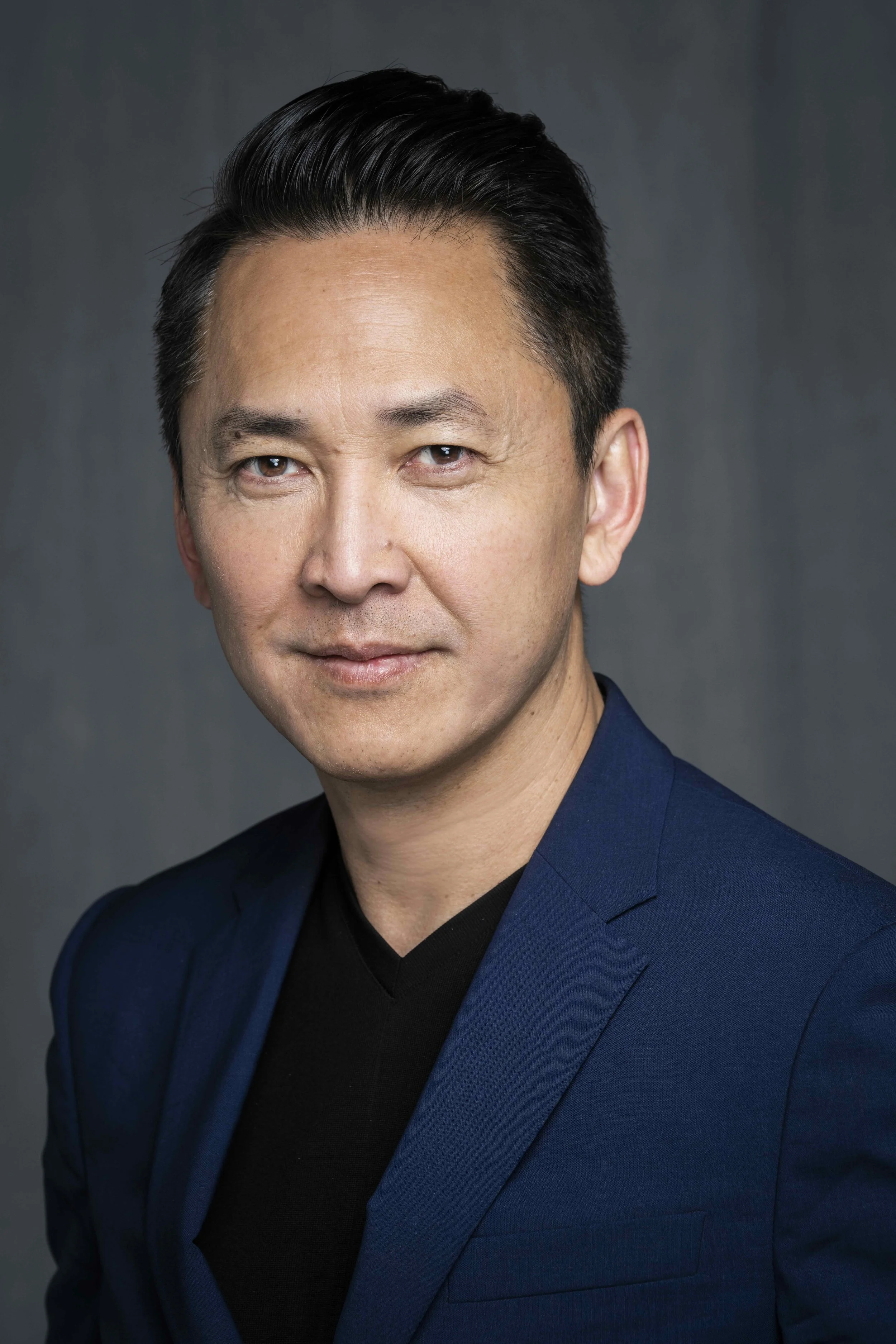
Photo credit: Hopper Stone SMPSP
.