Exclusive Interview with Kimberly Blaeser, author of “Red Ants.”
by Rey M. Rodríguez
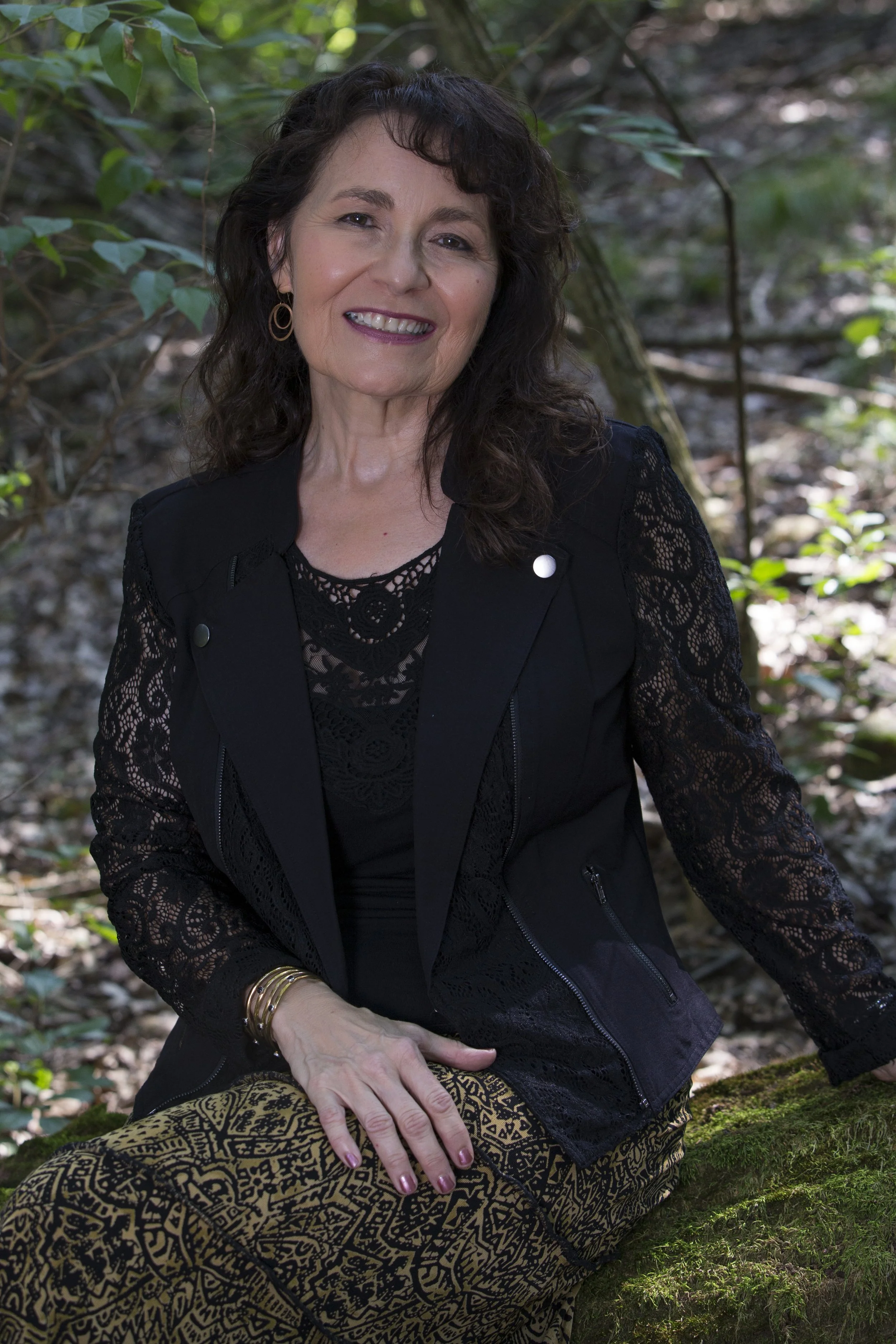
Kimberly Blaeser is an acclaimed poet, writer, photographer, and scholar whose work draws deeply from Indigenous experience, the natural world, and the power of language and memory.
Blaeser is an enrolled member of the Minnesota Chippewa Tribe, White Earth Nation, and served as Wisconsin Poet Laureate from 2015 to 2016. She is the author of several books of poetry and scholarship, and her newest collection, Red Ants, continues her remarkable exploration of kinship, history, land, and our responsibilities to one another. Her latest book, Red Ants, was recently longlisted as a National Book Award finalist.
Her poetry asks us not simply to observe the world, but to recognize ourselves as part of it—to understand story, place, and community as interconnected.
It is an honor to interview Professor Blaeser because I was present at the Institute of American Indian Arts when she read for the first time from her latest book, and we knew when she finished her reading that she had created something special. It is so exciting now to see her receive her flowers from a national audience.
What follows is a wide-ranging interview, where Blaeser discusses growing up among so many wonderful White Earth storytellers, honoring the reader, understanding how poetry impacts one’s fiction, using red ants as a metaphor, writing about the unexpected, employing “magical realism” as a natural way of storytelling, and many other topics.
Kimberly Blaeser, welcome to the Storyteller’s Corner of Chapter House, the literary journal of the Institute of American Indian Arts. And congratulations—you’re a finalist for the National Book Award. How incredible is that?
It’s great to be here and to celebrate with you. It’s wild! So, miigwech for setting this up.
It’s my pleasure. We’re thrilled for you and so proud of you.
You’ve described growing up at White Earth in a family of extraordinary storytellers, where listening was itself an education. What part of that early world of oral storytelling lives most deeply inside Red Ants?
Wow, that’s a really great question.
The final copy of Red Ants has a longer acknowledgment where I talk a little about some of the storytellers in my family—not extensively, but I name some people and talk about why that was important.
I think it begins with the everydayness of telling stories, the way storytelling is simply part of family gatherings. It is a way of life. Growing up, I was this shy little person on the edges of a lot of really beautiful storytellers. I’m not saying I didn’t eventually find my place and start telling stories, but from the time I was tiny, I was mesmerized by the crazy, wild people in my family.
It was such a joy—everything from hunting stories to women’s stories. That love for telling stories, repeating stories, adding onto stories, and people coming together with multiple voices to create a story: “Oh, that’s not what happened!” or “Don’t you remember?” That conversation of stories is such a gift. That energy gets inside of you.
And having read the book, you realize there are literally Anishinaabe stories in it. I always say that we become the stories we tell. We become the people and places of our past because our identity is made of them.
The lens through which we view the world is the lens of story. It’s the stories we’ve been told. That’s how we understand our reality. We have experiences, and we can survive them, interpret them, enjoy them, because we have the frame of story to create understanding.
Many of the characters in my fiction are also living their lives through that lens. Something happens and they think: This has happened before. I understand this. Or they remember a traditional story that gives them a way to do something in the present. Maybe it offers a path of action or a way of understanding.
So there are stories within stories, and those stories have different functions. Sometimes they’re for fun, and sometimes they’re for survival—and everything in between. I enjoy that embedding of stories within stories because I feel like that’s realism. That’s the way we really live our lives. That’s the way we engage with the world.
Were there particular aunties or other storytellers in your family who stand out?
One of the wonderful things about the collection is the voice. Each character feels so authentic. And I’ve never heard you cuss, but there are definitely characters in Red Ants who use the F-word.
Yes, they do!
After the January reading at IAIA, Kelli Jo Ford said to me, “You said fuck!” And I said, “No, Kelli Jo, I didn’t. My character did!”
But I grew up with people who have a very creative, colorful way of speaking, so it’s all in my head. I have the rhythm. I have the sound. I know how they speak. It’s just that I don’t speak that way myself (or at least not often).
My brother is a beautiful storyteller, especially with hunting stories. I don’t care if I’ve heard a story five times. If he tells it, I want to hear it again. My uncles were all big storytellers, my aunties, my cousins. They’re funny. Some of the stories they tell are just hilarious.
I really wanted to carry voices that seemed authentic to the people I grew up with and the people I live with now, my family at home. I didn’t want the stories to be staid. I wanted them to be alive—to convey the way people are truly, energetically living their lives. Part of that is verbally playing: teasing and joking and singing and creating.
And what about the land? The land itself seems almost like a character throughout the collection, particularly in the beauty of the places where these characters live. How important is that to your writing?
Rey, I grew up in watery Minnesota. People always say “the land of 10,000 lakes,” but it has something like 20,000 lakes. There are so many lakes, and many of them don’t even have roads leading to them.
Every weekend of my life, except for freeze-up and breakup, we were on or near the water. We were doing everything you could do in the water and on the water—fishing, skating, ricing, spearing, swimming, etc. So there’s a really deep sense of knowing and belonging to that place.
When I got older, my husband and I found and purchased this water-access cabin adjacent to the Boundary Waters Canoe Area Wilderness. We are literally surrounded by water. We have water on two sides of us, and the cabin sits on ledge rock. The environment is stunningly beautiful. We can jump into a kayak or canoe, and paddle into the Boundary Waters—this million acres of water and islands.
We’ve spent an enormous amount of time there, in that ecosystem and among all the beings that inhabit that place. There aren’t many people. During the pandemic, for example, we simply lived there until freeze-up. We didn’t see people; we saw creatures of all sorts.
I feel at home in that place. I belong there and understand it. The way the world works there is inside me—the rhythm of the seasons. Even when I say “freeze-up” and “breakup,” there’s a whole cycle contained in that. There’s a cycle of berry picking and wild rice and all the things that are part of the subsistence economy I grew up with.
That rhythm inhabits me. That’s the world I know. I don’t know an urban world very well. There are other kinds of worlds I’m not very efficient at navigating, but I do know the world of the Northwoods and waterways.
And I care deeply about it. There are ecological themes running through some of these stories because these natural places are under such threat. I fictionalize things we know are happening. They involve the environment, Native people as protectors of the environment, and the threats we face as we try to protect our relatives—our natural relatives—and keep a safe place for the next generation.
Stories have taught me things. They’ve saved me so many times in my life. They’ve given me inspiration. It’s a big thing to try to step in and do that for other people, but I feel that story has a role to play in getting people to love and protect our planet.
So I try to put into the fiction as much of the magnificence of the natural world—and our responsibility to it—as I can: the idea of reciprocity, the idea of animacy, the understanding that there are animate, intelligent beings all around us.
Having people in the stories develop relationships with those beings is a way of modeling another way of being in the world—one that isn’t capitalism or consumerism. If the stories can plant that seed in any way, I’m delighted.
The stories are for entertainment, but they also contain many of my preoccupations. And alongside those serious concerns, there’s the play and humor of growing up on the rez.
That’s what I love about them—the joy. Each story feels like an invitation into a world that some readers may not know or may never have engaged with.
You describe a heron, for example, in such a beautiful way. When it takes flight, it almost turns into a line. You describe the way it eats a fish, and how its behavior can announce danger to others.
It’s a sentinel bird.
Exactly. It feels as though the animals are teachers in these stories, too.
Yes, because they are. They are our teachers.
As Indigenous people, we know that. We learned some of our hunting techniques from animals. We learn many things from them. There are clan animals for a reason: they exhibit certain qualities that we want to model ourselves after.
And I love that you noticed the visual aspect of it, because paying attention to what I see also comes from my work as a photographer. When you mention the line of the great blue heron—I’ve actually made a photograph of a great blue heron with its wings out, legs extended into forever, creating that line.
I’ve looked closely and been enraptured by many of these beings. I get really close to a lot of wildlife—not seeing the creatures through binoculars or on some television channel, but sitting there close, watching or interacting for a long time.
Simply to be in the presence of these beings feels like a gift. Such encounters change me. You might call them transformational.
Maybe somebody else wants to play golf. I don’t want to play golf. I want to go have conversations with these beings or make photographs or write their stories.
Whatever our natural element, it’s going to come through our stories if we let it. I feel like that nibi and the watery environs comes through mine.
I want to touch on the other thing you mentioned—about each of the stories being different.
People notice a poetic quality in my fiction, and I’ve thought a lot about what that means exactly. There were things I had to learn moving from poetry to fiction, but there were also things I didn’t leave behind. There’s a way you live in poetry that continues in the writing of fiction.
In poetry, you training your ear. You know this well yourself. As a poet, you read everything aloud because you need to hear it. It’s a song. It is rhythm, cadence, inflection, rising and falling. And what is dialogue if not the rising and falling song of human voices?
Because poets spend so much time paying attention to that soundscape, I think it helps us create individual voices in fiction.
And we pay attention to the word: What is the best word for this? Every person has a dialect, a signature way of speaking. I could be sitting next to three people from my family, but that doesn’t mean we all have exactly the same vocabulary, dialect, or signature way of speaking. You have to listen for those things and individualize the voices.
A lot of the other things I carry over into fiction have to do with techniques from poetry—alliteration, assonance, consonance. But I don’t sit there thinking about those things when I’m writing poetry. I have concentrated on sonics for so long, that much of the music comes instictively.
With fiction. I don’t sit down and say, “Oh, I’m going to be poetic here.” That’s not how we write. We write to this music in our head. Then we have to replay it and hear it anew. And if it’s clunky or inauthentic, you tinker more in revision to fix it. I can spend inordinate amounts of time on one word or phrase.
I love that. Having had the good fortune of reading your poetry, I noticed that quality immediately in Red Ants. Your poetry is lyrical, but there’s also storytelling in it. Poetry can almost become a kind of shorthand, whereas prose gives you room to expand.
I noticed it even in the construction of your sentences. Some are quite short, almost as if they were lines in a stanza.
Yes. And you see how some of the stories are divided into sections. I intuitively construct that way.
Think about what we do in poetry. Maybe we have a four-line stanza, another four-line stanza, and then suddenly one line. What does that one line do? It stands out. It gives emphasis. Something happens there.
I use that similarly in fiction. There are one-line sentences. I think there are also one-word sentences. I’m very conscious of wanting to use the architecture of the page, even in fiction.
That makes perfect sense to me. In a way, it feels as though you’re honoring the reader because you’re being so economical with the writing, even in prose.
What you just said is something I think about a lot. You know I’ve talked before about my theory that Indigenous writers want to honor the reader. They want to bring the reader into the making of the poem or the story.
Part of how you do that is by leaving room for them. That invitation you’re talking about sometimes comes in the spaces, sometimes in what we don’t say. It comes in the allusion or gesture of the language.
I try not to let that go in fiction because it’s one of the tools I love. I talk about it as generosity to the reader—making a space for the reader within the writing. I wanted to continue building that into my fiction.
So how did you begin writing these stories? Had you been writing fiction for a long time?
I’ve always dabbled in fiction. Stories of mine have been coming out for a long time. In fact, the former head of IAIA’s MFA program hired me as a fiction writer because an anthology of Indigenous women writers had included two or three of my stories.
I’ve done many different kinds of writing, and for me, that’s simply part of being an Indigenous writer. Indigenous writers write across genres. We’re not stuck. Think about how many Indigenous writers have written both fiction and poetry—N. Scott Momaday, Louise Erdrich, Simon Ortiz, Leslie Silko, Gerald Vizenor, and so many others.
I don’t think we believe in genre divisions as strictly as the Western canon might. So moving between genres always seemed natural to me.
But there’s a funnier part to the story of why fiction, why now.
I went to Italy for a six-week residency. I had planned this beautiful poetry project and mailed myself a box containing all the materials I needed. I also included a gift for my hosts: wild rice from White Earth.
But, it wasn’t commercially packaged wild rice. It was just wild rice in a baggie, inside another baggie. When the package reached customs, they rejected it. I think they thought it was some “controlled” substance.
So they sent the whole thing back to the United States. Suddenly I’m in Italy for six weeks, and I don’t have my poetry project.
I thought, I’ve been wanting to do more fiction. What better time to do it?
I’m a slow fiction writer. My daughter, Amber, is a very fast writer. We used to write side by side, and she’d write three thousand words while I wrote five hundred.
Also, when I’m writing fiction, my head is completely inside it. That can be difficult in normal daily life. But suddenly I had this retreat space and the large expanses of time.
So I began writing stories in Italy.
And were those the beginnings of some of the stories that eventually became Red Ants?
Yes. And my daughter Amber Dawn comes into the story here. She was in an MFA program in fiction at Arizona State at the time, and I asked her to read what I had written. She encouraged me to send them out.
Probably my biggest flaw as a writer—I’ll sit on things forever and not send them anywhere. I’ll keep thinking, No, I have to do this to it. I have to do that to it. But she nudged me. So I submitted.
Wow.
It was really Amber Dawn who got me going. The first story was picked up by The Kenyon Review and ultimately received the O. Henry Prize. Another received recognition from The Masters Review. I also submitted fiction for the Maureen Egen Writers Exchange Award and was first runner-up.
All these things started to reinforce the work for me. I thought, Maybe I should be doing more of this.
And also, it felt fun to stretch out.
It does seem as though you’re having a blast in these stories.
I really was. And there was nothing at stake.
I’ve been a poet for a long time, and people have expectations. But nobody was expecting anything from me as a fiction writer because they didn’t even know who I was as a fiction writer.
So I could just have fun.
There was another important moment when I was beginning to write fiction. I thought, Wouldn’t it be fun to take a fiction workshop? Instead of always being the person teaching, what if I became a student again?
So I applied to Tin House and, miraculously, got in. The writer I had originally applied to work with pulled out, and they assigned me to Ghassan Zeineddine. The irony was that Ghassan had been one of my PhD students!
Interesting.
So we knew each other well. I thought, Is this going to be weird for Ghassan? But he’s such a lovely human being, and we had always gotten along well, so I accepted.
I had some trepidation. I was just starting out in fiction, and I had never been on this side of a fiction workshop before. And, of course, the workshop went alphabetically, which meant my story was first.
I brought an earlier, shorter version of “River of Dreams.” And I was blown away by how generous people were in their responses. It became another one of those moments of reinforcement for me.
As part of that experience, I also had a conversation with an agent who was interested in my work. But I didn’t feel the connection, and honestly, my work wasn’t ready.
Then at AWP I ran into Theo Van Alst, whom I’ve known for years. He asked what I was doing with my fiction. I told him I was just getting started and had some conversations with agents scheduled.
He said, “Would it be okay if I introduced you to my agent?”
Of course, I said yes.
To make a long story shorter, I loved her. I still took my other meetings, but she and I really connected, and she became my agent.
And then everything happened very quickly.
I sent her what I imagined to be my collection. She prepared it for submission, figured out where to send it, and suddenly we had an offer.
The press told us they thought the manuscript was already quite close to being ready. They could bring it out relatively quickly. They were an independent press, so I would have the attention of their whole team, while still having major distribution.
So it seemed perfect, and we went with it.
Then things just kept happening.
I was at Poets House in New York for a Poetry Coalition gathering. I was sitting at lunch with friends, cleaning out this perpetually full email account—delete, delete, delete—and I saw an email that said “O. Henry.”
I was one click away from deleting it when I thought, Wait a minute. I think that’s addressed to me.
I opened it and realized I had received an O. Henry Prize for my fiction.
I was blown away. I had kept telling everyone, “I’m having so much fun dabbling in fiction.”
And suddenly I thought, Wow, maybe this isn’t dabbling.
And then Red Ants was longlisted for the National Book Award.
Exactly. I’ve joked with people saying if poetry were having a party and I showed up, poetry would be the host who says, “How nice you could make it.”
But fiction has felt more like the host who says, “I’m so glad you’re here!”
And I don’t mean that people haven’t appreciated my poetry or that I haven’t done well as a poet. But there’s been a different kind of enthusiasm around the fiction.
I wonder whether part of that has to do with the way Indigenous poetry has historically been viewed—as if it belongs over in this particular space rather than being fully integrated into the larger poetry conversation.
I see something similar with Chicano art. Extraordinary work can be happening, but it gets placed off to one side, and people aren’t necessarily paying attention to the full range of what the artists are doing.
I do think that’s part of it.
But there’s something else, too. With a book like Ancient Light, for example, I know which poems I could take out if I wanted certain people to like the book better. I know which poems aren’t necessarily going to land with some poetry audiences.
But those poems are important to me.
So there’s a little resistance in me to fully committing to somebody else’s idea of what it means to be a “good poet.” I’m as interested in the work poetry does in the world as I am in the poem as an aesthetic object.
I’m interested in the resistance work of poetry.
And by resistance I don’t always mean something overtly political or in-your-face. But my work isn’t poetry for poetry’s sake alone. I want my poetry to do something in the world. And sometimes that doesn’t fit comfortably within certain schools of poetry.
My only pushback is that Ancient Light is such a beautiful book. It’s a book you need to spend time with.
And I think that’s true of a lot of Indigenous writing, as well as Chicano, Black, Palestinian, and other literary traditions. We don’t always spend enough time sitting with the work and really listening to what it’s conveying.
That’s part of why Chapter House feels important to me. It can shed light on writers who are doing extraordinary work and bring those voices into conversation with one another.
I agree. And I’m grateful for what you’re doing. Some of the people you interview I know, of course, and some I’ve never heard of. It’s lovely to get to meet them through a conversation.
For me, it goes back to what you were saying about reciprocity. That’s one of the beautiful things about being part of a writing community. You get so much back from what you give—not because you’re approaching it transactionally, but because reciprocity develops naturally.
Yes. Even when it comes to readings, I prefer reading as part of a group. I like hearing other people. I like that gathering of voices.
Let’s turn directly to Red Ants. I’d love to talk about the title and the story behind it.
I learned so much about ants from the story. You use them as such a powerful metaphor. Where did that idea begin?
I want to talk about the ants themselves, but the story really begins with the debate over tribal membership: Is citizenship determined through lineal descent or through blood quantum?
That has been a huge debate in Minnesota and at White Earth. At White Earth, constituents voted that they wanted lineal descent and wanted the constitution changed accordingly, but that change wasn’t put into place.
The Minnesota Chippewa Tribe also surveyed its members on the question. A majority favored lineal descent, but it was not a binding vote.
Meanwhile, there is this very real possibility—as the story tries to expose—that if we rely solely on blood quantum, Native people can mathematically disappear over the generations.
I’m enrolled, so I’m not arguing this for myself. But the disenfranchisement of our own people doesn’t seem right to me.
And I want to distinguish that very clearly from people claiming an Indigenous identity when they aren’t Indigenous. That’s a completely different issue.
I’m talking about legitimate descendants who are being disenfranchised by a legal structure. I’m on their team, because belonging to a community isn’t simply about blood quantum.
It’s about understanding the beliefs and acting from that inherited understanding of relatedness—to our human relatives and more than human relatives—and carrying on the traditions.
That was really the inspiration for the story.
I kept thinking about people I grew up with who don’t have the required blood quantum. They don’t get to vote. They don’t get counted in the same way. I decided to create these young characters who take the issue on.
Then there are the red ants themselves.
Ants become symbolic. Think about how small an ant is and how much weight it can carry. There are power imbalances there the story is interested in. The red ants emphasize the resilience of the Native characters—what they can carry and what they can accomplish.
And it isn’t only about blood quantum. There’s also the standardized testing in the story. These young people aren’t expected to do well. There’s a way they’re addressed and treated, a set of expectations imposed on them.
And they exceed those expectations.
That reveals their tenacity—especially the young girls, who figure out a way to bring the rest of the tribe around and get people thinking about something they may not have been thinking about before.
It’s also a trickster story in that way. It’s playful.
I use all the information about ants metaphorically, but I also like having characters who know unlikely things. You may have noticed there’s a lot of math brain running through this collection, and some science brain, too. That’s partly because I love math and science.
Many of my personal fascinations come out in these stories. I find the symbolism of ants amazing, so it was fun to bring that symbolism into the action of the story.
There’s a place where we learn that ants can glide but may become lost if they fall to the forest floor. One of the characters, even though she wants to fight, doesn’t want to throw herself to the ground in a fight because she wants to remain on the same “tree” as her friend.
You do feel as though you’re on the tree with them. And they’re so carefully drawn that you’re heartbroken for the character who isn’t included.
There’s also a kind of wisdom in these young people. They recognize: There shouldn’t be this separation between us. Yet there’s this legal structure, created generations ago, that continues to define who belongs.
Yes. And the whole history of how blood degree was determined in the first place is questionable.
There were periods when the ability to sell land depended upon whether someone was classified as full-blood or mixed-blood. If timber interests wanted access to land in Minnesota, for example, there could be an economic interest in having Native people classified in ways that made that land available.
So there’s a lot of questionable math in that history. Even some of the methods used to determine Native identity were based on these bizarre physical measurements and racial theories.
The whole thing is questionable to begin with.
And I can give you an example from my own life. I sometimes joke that I’m “more Native” today than I was the last time we talked.
Are you kidding?
No! I’m enrolled at White Earth, and I have a certain degree of Indian blood recorded there. I also have an ancestor who was enrolled at Red Lake. In the past, that Red Lake ancestry didn’t count toward my degree of Indian blood.
Then that changed.
Suddenly, my great-grandmother’s Red Lake ancestry could be counted toward my White Earth degree of Indian blood. So my degree of Indian blood on the records increased.
That’s how strange the system can be. I’m exactly the same person, but according to the records, I suddenly have a higher degree of Indian blood.
Fascinating.
That tells you it’s a numbers game.
And that’s one reason I play with numbers throughout the book. There are other people—people in power—playing with numbers. I want to raise questions in the reader’s mind. The science, the math, the ways we use numbers to categorize people—all of that is important to me.
What I particularly love about “Red Ants” is that you give so much of that insight to these young characters. They aren’t naïve children. They’re savvy. In some ways, they’re telling the adults: Wake up. Look at how irrational this structure is.
They understand the essential thing: Of course we should belong to the same tribe. We’re practically sisters.
And yet the two characters remain completely individualized. Their voices are so strong.
Now that you’ve written this book and received this recognition, what would you say to emerging writers—particularly emerging Indigenous writers—based on what you learned writing Red Ants?
Draw from the deep well of your experience. People always say that, but I think it’s really important because you will tap that depth even when you don’t consciously know you’re doing so.
Because I know what it is to live in a watery environment, water is always going to come through my writing. I don’t have to sit down and think, Now I’m going to talk about water. I simply always think about water.
And we shouldn’t cut ourselves off from the voices we carry. We should continue to relish, celebrate, and immerse ourselves in our cultures. We should allow the well of stories those cultures hold to rise into our own writing.
We have to write the stories we know—write the voices you hear in your head, in your past, and in your present.
And the other thing I learned more than anything, Rey, is this: You’ve got to have fun—let loose and enjoy the story.
I have fun writing poetry, too, but there’s a certain weight of expectation around what I might produce. Sometimes it’s difficult to get out from underneath that.
Even if no one else does, we have to give ourselves permission to liberate our writing and have fun with the process. You can always go back later and edit it or hone the craft. But you can’t do any of that until you first get it onto the page.
I think there’s a wildness that we’re always trying to control as writers. We give ourselves rules. We give ourselves quotas. We say the story should be this long or this short. We have all these parameters.
I broke a lot of rules while writing this book. And it worked for me at this time.
I describe myself as a recovering academic. I’ve published critical scholarship and spent years teaching, and in that world you’re always trying to be clear: Be clear. Make sure people understand exactly what you’re saying.
I realized I had to let some of that go in my creative work. I had to allow the wild voice to come out.
Let the surprises of language find you. Let them come out in the writing.
Everything doesn’t have to be crystal clear. That’s part of leaving space for the reader, too.
I’m doing that more in my poetry now, too: worrying less about clarity and more about the aliveness of the language.
That has been a big lesson for me.
So I would tell writers: Let yourself loose. Really and truly, write with a sense of liberation. Leap. Unsettle the language. You can always pull back later. You can order, do whatever needs to be done.
But first we have to liberate ourselves to become the playful storytellers, poets, and prose writers we want to be.
We come from people who upset the rules all the time. So why should we follow the rules so steadily in our writing?
And why shouldn’t we cross genres? Indigenous arts have always crossed genres. Indigenous stories, poems, and songs have never stayed in one place. They’re alive. They cross and change.
We have this enormous opportunity to draw from our own backgrounds without being confined by a Western aesthetic.
In Red Ants does there’s horror, there’s humor, there’s literary fiction. There’s flash fiction and then a story is something like thirty-five pages long.
Nobody else is holding an anvil over your head, so don’t do it to yourself.
Just have fun. Play.
m.s. RedCherries has talked about something similar. She didn’t necessarily think of mother as a conventional book of poetry. She simply made the work.
Do you feel that all your years of writing poetry have, in some way, led you to this kind of liberation?
I really do.
There’s still a through-line in my writing, even if other people may not necessarily see it because the form has changed and, to some extent, the voice has changed.
But I feel like I’ve been on this path to more joyful writing, more liberation in my writing.
Do you feel as though you had to write Red Ants? Because there are stories in the collection that feel necessary. “River of Dreams,” for example, feels like a story you had to write.
That is my favorite story in the collection.
It’s extraordinary. I feel as though I’m in that kayak. You can feel the movement of the river. The dialogue is incredible. Then there’s the mystery of what happened to the uncle, the presence of industry, the threats to the environment. It’s incredibly layered.
We all carry stories about Indigenous people who were murdered for their causes. We know those stories.
I’ve been involved in some of these activities myself. There have been times when I’ve felt I might be in danger. I know people who have been threatened. This isn’t simply fiction. This is the real world.
I wanted to be able to tell that.
But so much of “River of Dreams” is also about relationships across generations. The main character is educated, and the experience of becoming educated and then going back to the rez is itself something worth talking about. I weave many different strands in that story.
There’s a passage that particularly struck me, where the narrator essentially says: if I told you I had been incarcerated, you might assume you would find my name among juvenile-offender statistics—but her “crime” was wanting an education.
Knowing a little about your own story, I wondered whether some of your life was becoming embedded in this character.
I think that’s true. There are a lot of places where my own story is embedded in the book, but particularly in this story.
And the cousin relationship—that’s very familiar to me. I have so many cousins like that.
Even the details of where you sleep, being on the porch, sometimes feeling part of the family and sometimes not—it captures something about having an enormous extended family and negotiating that question: When do I belong? When don’t I belong?
Yes. Absolutely.
And another part of that story that draws on my personal experience is what people might call the “supernatural” scenes—although that isn’t how I understand those moments.
We, Indigenous people especially, feel spirit connections. We have encounters, perhaps we have communications or even relationships with spirits.
People might call those experiences magical realism.
Right, magical realism is often the label. But Indigenous people think: This is real. This is simply part of life. It happens. I wanted to reinforce that in the story.
Other elements of the story also arise from my known reality. For example, the idea that you don’t tell people your Native name. We were always told to keep it safe, because otherwise people might want to buy it, sell it, or somehow gain control over you.
Many parts of the character’s anxiety emanate from me, including the weighing of Indigenous versus Western values. Native families can have different understandings of value or ownership: Who owns the house? Who takes care of the house? Who owns the car? Who drives the car?
I wanted to play with those notions. What constitutes a “good job” on a reservation? Who is important to the community? It might not be you or me coming home with a law degree or a PhD. Someone else may be making a far greater contribution.
It actually comes back to belonging. And the way you belong is by contributing, supporting, loving, teasing—all those things.
I felt that when she gives the family the fish. You never have to explain what it means, but you can feel something change in her. There’s almost a sense of grace because she’s finally able to offer something to the family.
Right. And then there’s her unbelievable love for her uncle.
Nobody could love their uncles more than I have. I love all my uncles. Some of them had hard lives, and there are probably still stories I need to write about them. But I also think about everything they gave me and the important roles they played in our family. I wanted to carve out some space for that.
And my brother is all over this book, too. My brother is incredibly important to me. He’s an attorney, a poker player, a wonderful storyteller, an outdoorsman. There’s a lot of him in these stories.
He’s also one of my best readers. I’ll send him something and say, “Did I get this right?” There are details about the natural world that he knows better than I do. Or I’ll want to make sure I have some legal detail correct. There are certain things I know I can take to him.
He appears in Ancient Light, too.
Yes, he does.
Writing fiction also allowed me to open up some difficult subjects. Some of the flash pieces deal with abuse.
There’s one story, “A Tally in Birch,” that broke my heart and took me years to write. I kept trying and couldn’t get it right. I hope I finally did, although I’m still not sure. It deals with babies born into the drug crisis and with the larger drug culture. I touch on that in another way in “Waiting, a Quintet.”
And then there’s the question of what it means to be a young adolescent from the reservation attending a white school.
There were many stories I explore that had seeds in my own experience or that of family or friends.
You should be proud of the collection. It’s extraordinary.
Many thanks for your careful reading.
And I realize you asked me earlier for advice. My advice is always the same: Read. That’s one of the most important things a writer can do. And then—something I’m not particularly good at myself—you have to send your work out.
But first, read widely. It’s wonderful to be in a program like IAIA and to workshop with other writers who are striving alongside you. But you can’t read only other developing writers. You need to read writers whose work has been recognized as extraordinary..
Expose yourself to many different kinds of writing. Read eclectically. Don’t decide, I’m only going to read this one kind of work. Read broadly within whatever genre you’re working in and beyond it.
And, you knew I was going to say this, keep a journal. That’s huge for me.
Just yesterday I was at a writers’ gathering and suddenly had an insight about a story I’ve been trying to revise. I knew exactly what I needed to do. I thought, I’ll pick that up tomorrow.
I didn’t write it down. Today I opened the story and thought, What was that insight?
I still haven’t remembered.
So keep a journal. Keep a notebook. Write things down when they come to you—your dreams, your ideas, something the person sitting beside you on a bus says. Whatever it is, capture it at the moment so you can return to it.
And experiment in your journal. Nobody else has to read it. Sketch in it. Tuck objects into it—playbills, feathers, photos. Add anything that might help your writing.
Even if you’re incredibly busy—maybe you have a full-time job and can’t get to the larger work—you can scribble something down.
You have to keep the juices flowing. Otherwise, it can take days or weeks to get that creative energy moving again.
And find a way to be around other people who are striving as writers. For IAIA students, that might currently be the workshop community. Later, it could be a writers’ group. Work on a journal. Support a reading series at a bookstore. Very few people can simply go off alone and never need the energy that comes from engaging with other writers.
And, as you said earlier, Rey, support other writers. You get so much back. There’s an exchange of goodness that infuses the work.
We ask much of ourselves as writers, but sometimes we forget the fun part. Ask yourself: What part of writing do I enjoy most? Maybe it’s making lists. Fine. Make a million lists in your journal. You can go back to them later and look for a thread. Just find the thing that gives you pleasure.
One of my favorite things is when I see something and it triggers something completely unexpected.
Yesterday I was driving and looked to my right. I saw an older woman in a wheelchair and a man pushing her. When I saw the woman’s face, I saw my mother.
My mother had spent time in a care facility after suffering a blood clot in her brain, and there was something in this woman’s expression that immediately brought her back to me.
And suddenly I had the title of a poem: “Today I Saw My Mother.”
That’s wonderful.
And I did write it down.
Good!
What that makes me think about is parallels—recognizing how one thing speaks to something seemingly far away from it.
We have to remember to make those leaps. Being too literal is not always our friend.
Poetry thrives on juxtaposition. You can put two things beside one another and ask: What happens between these? What connection appears? What spark?
That’s one reason I think the training of poetry is so valuable. “Poetry” is such a broad term, but learning to read and think poetically applies far beyond poetry. It applies to law, teaching, parenting—and certainly to fiction, as you’ve demonstrated.
Reading Red Ants, I have the feeling that all the work you’ve done has brought you to a place where, in this particular form of storytelling, you’re simply being yourself.
That’s lovely.
When you bring out a book, you’re always on pins and needles wondering, Are people going to like it? I remember getting the first starred review and thinking, Oh my gosh, thank you. You just want someone to affirm that the work is reaching people.
What has happened since then has been a much larger affirmation than I expected, and I’m incredibly grateful.
I don’t want to turn that into a new pressure, where I start thinking people are expecting a particular thing from me. But I’m grateful to know the stories have made a music someone wants to hear.
Maybe the stories themselves are enough—the stories you have to tell.
For each of us. Yes. But I understand what it means to come into a writing career without having a background or mentorship to prepare you.
When I started college, MFA programs weren’t something available to me. Equally significant, I didn’t meet another Native writer until I was a graduate student. From undergraduate school all the way through my PhD, I remember being taught one Native writer in all my literature courses: N. Scott Momaday.
Mine was largely an experience of self-study. So I understand the anxiety of not knowing. I understand the worry that you’re not doing it right.
As much as possible, that’s what I’m trying to address through Indigenous Nations Poets: to ease that journey for someone else. It’s about illuminating a pathway and opening the door.
There’s something meaningful about the idea that a book might sit in a library and, someday, someone you’ll never meet might pick it up. You have no idea how it might touch them.
Exactly. You never know.
You send something into the world, and every so often someone comes back and says, “I read this,” or, “Your work did this for me.”
We have to believe that happens.
We’re not sending our work into the world simply for the sake of sending it out. We want to make a connection.
It’s a form of kindness.
It is. I like that—a form of kindness.
And anthology-making is similarly important because you bring many voices together, including voices that might not otherwise be picked up.
There are so many ways we can contribute to the culture of writing for our people.
Sometimes one of the best things you can do is simply put people in a room together, give them a prompt, and create the space for them to write.
For Indigenous writers especially, there’s tremendous value in being in an Indigenous space where people understand what you’re talking about and you don’t constantly have to educate your audience or explain what everything means.
I wanted to ask you about the way you use Indigenous language without necessarily stopping to explain it. The code-switching is wonderful.
As someone who is bilingual in Spanish and English, I appreciate that. Sometimes the reader has to think, Okay, I have to figure this out. Maybe I need to look it up.
I try to be as generous as I can to readers who don’t know the language so they aren’t completely locked out.
But there are certain gestures the language itself makes. And to explain those realities away would not really work.
I am also grateful for Shane Hawk, who is a wonderful editor and supported my Anishinaabemowin use. In general, throughout the editing, he asked clarifying questions rather than simply saying, “The meaning isn’t clear here.”
He would suggest ways I might open up a story or make comments that made me think about some detail differently.
My agent, too, offered tremendous advice when it came to ordering the collection. That’s not something I’m particularly good at. She and I sat down and talked through what story might work well beside another and what kind of movement we wanted the collection to have.
I’m grateful to both of them for helping the collection find its direction.
And the whole Counterpoint team has been wonderful.
And there’s going to be an audiobook?
Yes.
I hope this interview is good practice for all the conversations you’re going to be having about Red Ants.
It is! And I’m grateful to you, as always.
We are so grateful to have your art in the world.
Rey M. Rodríguez has an MFA in fiction from the Institute of American Indian Arts. He recently released his debut book of poetry, Todos Somos Sagrados / All Are Sacred (El Martillo Press 2026), and he is working on a novel set in Mexico City.