
The Sweet Sweet Popsicle
SHAN Xiaoming
The asphalt radiated heat in shimmering waves that summer, the kind that made your sandals stick with each step. I dragged my feet along the cracked sidewalk, my cotton shirt clinging to my shoulder blades, darkened with sweat. The neighborhood sweltered under a merciless sun that seemed to press down on our small town like a hot iron, flattening everything beneath it. There were no refuges in those days—no refrigerators humming in corners, no air conditioners rattling in windows, and only the occasional electric fan that merely stirred the thick air without cooling it.
In this relentless heat, popsicles were more than treats—they were salvation. They were everything.
I stood before the popsicle vendor’s cart, watching through a veil of perspiration as other children exchanged coins for those frozen treasures. Their faces transformed the instant the popsicles touched their tongues—eyes squeezing shut in momentary bliss, shoulders dropping as tension melted away. I pressed my lips together, swallowing against the dryness in my throat, my empty pockets weighing heavy against my thigh.
I watched his face as he took each coin, his jaw shadowed by stubble, fingers moving with practiced precision as he calculated change without pause. His cart gleamed white against the dusty street, like something from another world. The boxes within were swaddled in thick padded cotton cloth—a detail that bewildered my young mind. We wore such padding in winter to stay warm. The contradiction of using the same material to keep something frozen was a puzzle I couldn’t solve, no matter how I turned it over in my mind.
Through a cloud of dust stirred by passing bicycles, I watched a boy about my age unwrap his popsicle. He didn’t rush. He knew the ritual—first the careful licking around the edges to catch the drops before they fell, then the more confident sucking as it began to melt, measuring pleasure against time, trying to make it last. The popsicle grew smaller and smaller until its very last bit, which he reluctantly consumed with a look of quiet resignation.
Before summer had fully announced itself, when mornings still carried the crisp edge of spring, the popsicle peddlers would appear like heralds of the season to come. Their selection wasn’t vast—red bean popsicles or mungbean popsicles; milk popsicles or cream popsicles or the simplest kind, sugar popsicles.
“Can I have one?” I’d ask my mother, pointing at the cart as it paused at the corner.
She’d shake her head ruefully, her calloused grip around my small hand tightening slightly. “It’s still too cold. You’ll catch a chill. Wait until it’s warmer.”
But even when summer arrived in full force, when the heat pressed down so heavily that it seemed to squash all thought from your head, I never could eat my fill of popsicles. They remained precious, rationed, a luxury measured in small coins.
Sometimes my mother gave me money for lunch if I couldn’t return home to eat. Those coins never bought me lunch. Instead, they became popsicles—two, maybe three if I chose the cheapest kind. I’d savor each one, letting it numb my tongue and cool my throat, feeling the sweetness seep into me. I dragged each moment out, making the pleasure last, even as my empty stomach growled in protest.
My biggest ambition in those days wasn’t to become a doctor or a teacher or even an astronaut. No, I dreamed of becoming a popsicle peddler. In my child’s logic, this seemed the perfect solution—I could eat as many popsicles as I wanted, whenever I wanted, even in winter. The path to this dream job had one obvious prerequisite: the ability to do arithmetic quickly. When customers handed over money, you had to calculate the change instantly, your fingers moving as swiftly as your thoughts.
Unfortunately, I wasn’t any good at it. Numbers tangled in my head like yarn, knotting together until I couldn’t tease apart one figure from another. But my brother—he was different. Numbers spoke to him in a language I couldn’t hear.
“Tell me if I give you one yuan note, what is the change if I want one sugar popsicle,” people would often tease my brother, watching his face light up at the challenge.
This was something very easy for him. He could give the answer without thinking, his small face suddenly luminous with confidence.
“Tell me if I give you a ten yuan note, what is the change if I want one sugar popsicle, two mungbean popsicles, three milk popsicles and ten cream popsicles.”
“Five yuan and fifty fen,” my brother would blurt out, the calculation complete before the question had fully left the asker’s lips.
As for me, I could never work this out. The figures would tangle and mingle together and become a hopeless mess in my head. People tried my brother with figures from ten, to one hundred, to one thousand, and even to one million. He answered them all correctly, his voice steady and sure while I stood in his shadow, both proud and envious.
Of course, my brother did not turn out to be a popsicle peddler when he grew up. He became a math teacher. But in those sweltering summers of our childhood, I envied him with a fierce, uncomplicated longing. He had what I wanted—the key to unlimited popsicles.
When my mother wouldn’t give me money, I found ways to earn it myself. Every weekend, I ventured out with a basket hooked over my arm. My eyes scanned the ground as I walked, looking for broken pieces of glass, bits of metal, orange peels, empty bottles, waste paper—anything I could sell to the recycling company.
The streets had already been picked clean by other children with the same idea, their small hands having sifted through the town’s debris before mine. Sometimes, I had to dig out pieces of glass that had been deeply impressed into the mud, my fingernails rimmed with dirt, my knees stained brown. The sun lanced through banks of clouds and lit the passing traffic like tinsel, casting sharp-edged shadows across my path as I searched.
I did not get much money from these expeditions, but the sum was sufficient for me to buy popsicles once in a while. I ate them slowly, reverently, as if performing a sacred ritual—first licking until they began to melt, then carefully sucking the sweet ice. Each drop that fell to the ground felt like a personal failure, a waste of precious nectar.
When I was racking my brains to think of other ways to get money for popsicles, Cook Wang, who also took care of the pig sty at my mother’s work unit, came to mind. The kitchen’s sole source of pork was that sty. At the end of the year, when the pigs were fattened enough, they would be slaughtered, and we would have a feast with the freshest meat.
Cook Wang was more than willing to help when I approached him, fiddling helplessly with the hem of my shirt. “If you pick watermelon peels in the street to feed the pigs,” he said, his face crinkling into a kind smile, “I can give you some money.”
It was a bit embarrassing to pick watermelon peels from the street, but the temptation of popsicles was irresistible. Without much hesitation, I went out the next day with a basket. Watermelon peels were scattered everywhere, discarded by people seeking relief from the heat. They were indeed very dirty, but I did not care. I moved along the street, collecting peels here and there.
Soon the street was clean of watermelon peels. Then I went to the watermelon peddlers’ stands, where people bought slices and ate them on the spot. When customers were almost finished, I would edge closer, standing by with my basket ready. As soon as they tossed the peels to the ground, I swooped in and gathered them up. I didn’t have the courage to ask for the peels directly; they would never understand and might humiliate me with some ugly words.
The pigs loved watermelon peels. Whenever I arrived at the sty with my basket full, they would rush toward me, pressing their snouts against the wooden fence, their eyes gleaming with anticipation. As soon as I tossed the peels into their pen, they would devour them in an instant, their contented grunts a strange reward for my labor. With the steady supply of watermelon peels I provided, that year’s pigs were the fattest in memory.
With the money Cook Wang gave me clutched tightly in my fist, I’d rush to the popsicle peddler. I could buy the best and most expensive popsicles—the ones with chocolate faces or the cream-filled ones that other children spoke of in hushed, reverent tones. Without wiping my hands clean of the day’s work, I’d take out my hard-earned coins and exchange them for that frozen delight. After the peddler handed over the popsicle, I’d walk slowly back home, licking and sucking, measuring my steps to make the pleasure last. But inevitably, before I reached home, the popsicle would be gone, leaving only a stick and the lingering sweetness on my tongue.
Once, quite accidentally, my younger brother and I found a ten-yuan note under my big sister’s pillow. We’d been playing in her room—a forbidden territory when she wasn’t home—bouncing on her bed when the corner of the note peeked out from beneath her pillow. The first thought that flashed through my mind was how many popsicles I could buy with such a sum.
But a ten-yuan note was too much for popsicles alone. It felt like a fortune in our small hands. We stood in the slanting afternoon light, the banknote between us, contemplating our sudden wealth. I took my younger brother by the hand and led him to the grocery store at the corner of the street. I bought ten fen of sweets, and then we decided to divide the change between us.
I was around five at the time, and my brother about three. Neither of us had any concept of arithmetic, though my younger brother later turned out to be a genius at mathematics. To divide the money, we sat on the curb outside the store and began to put the coins into two piles, our small fingers working with exaggerated care.
Unfortunately, just as we were busily dividing our treasure, my older brother walked by and saw us. He stopped dead in his tracks. He grabbed both of us by our arms and demanded to know where we had gotten so much money.
Too young to know how to lie, I told him everything honestly, my voice growing smaller with each word as I realized I might have done something wrong. My brother’s face took on the qualities of a petulant child for a moment, torn between amusement and annoyance. He took us back home and reported our theft to our parents.
To my surprise, my parents were not angry. They sat us down at the kitchen table, which was just a piece of plywood on two sawhorses, and spoke in gentle voices. They gave us some money and let us buy popsicles with it. After we returned, sticky-fingered and content, they told us never, never, never to take any money from anyone without permission. If we needed money to buy anything, we should simply ask, and they would consider it.
That lesson stuck with me, though my craving for popsicles didn’t diminish.
One particularly hot summer, we didn’t eat any popsicles at all. The factory that made them had caught fire and burned to the ground. The irony of a popsicle factory burning was completely lost on me at that age—it was utterly beyond my comprehension that such a thing could happen, even as it was happening right before my eyes.
We all went to the site when the firemen were trying to extinguish the blaze. Water splashed noisily against the charred remains, steam rising in great clouds that obscured the firefighters. After the fire was completely put out, there was virtually nothing left.
When we were finally allowed to approach, I rushed forward, drawn by curiosity and a strange sense of loss. For the first time, I got to see the center of the factory, though it was now just a blackened skeleton. I saw the burnt-down machines, the pools of melted ice, broken bottles with mysterious liquid leaking out, and the molds scattered across the ground like discarded toys. From there, I formed a vague idea of how popsicles were made—how the liquid was poured into molds, frozen, and then wrapped in colorful paper.
That summer stretched endlessly without popsicles. The heat seemed more oppressive, the days longer and more difficult to bear. I felt their absence like a physical thing—a hole in the fabric of summer that nothing else could fill.
When the factory was rebuilt the following year and popsicles returned to the streets, I greeted them like old friends who had been away on a long journey. That first popsicle after the long absence tasted better than any before it—sweeter, colder, more precious for having been lost and found again.
Looking back now, I realize that popsicles were never just frozen treats to me. They were moments of joy in the relentless heat, small victories earned through persistence and ingenuity. They were the taste of summer itself—fleeting, sweet, impossible to hold onto no matter how desperately you tried.
In my childhood, the best thing in the world was popsicles. Simple as that. And perhaps, in that simplicity, there was a profound truth that I wouldn’t understand until much later: that happiness often comes in small, melting moments that we must savor before they’re gone.
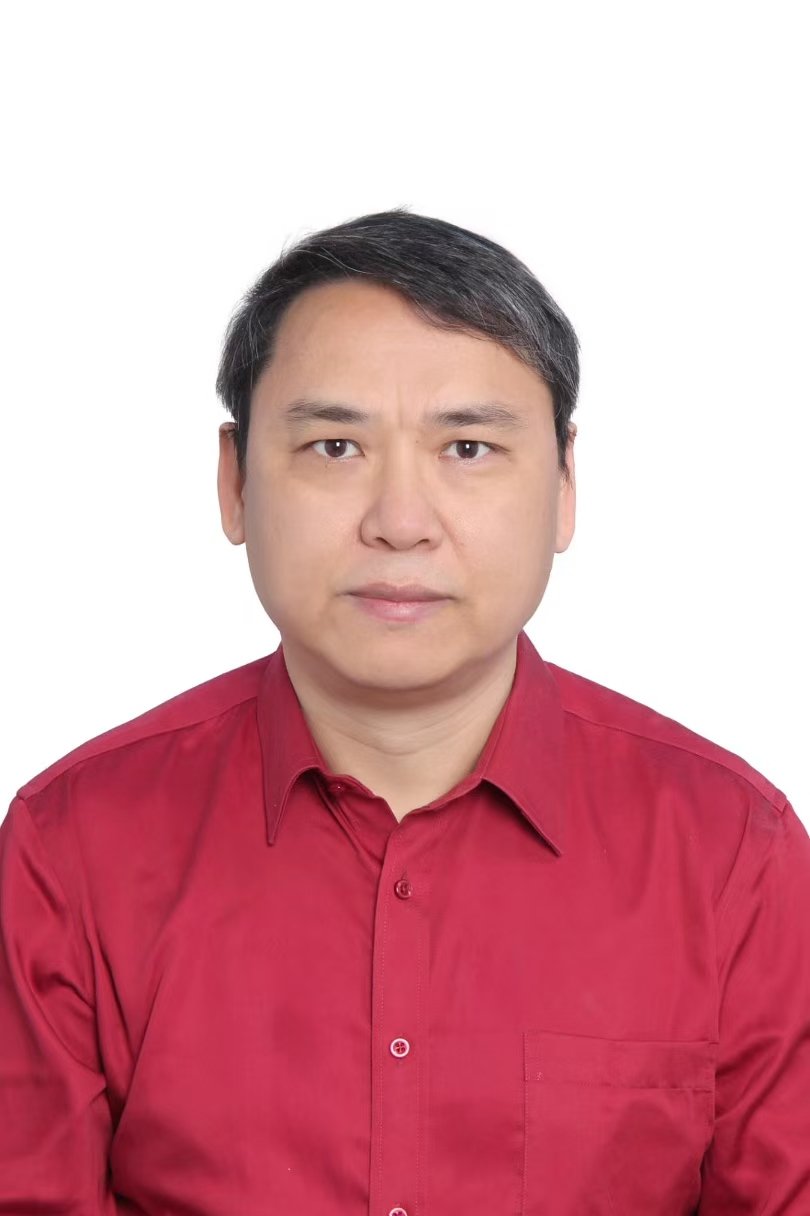
ABOUT THE AUTHOR
SHAN Xiaoming is a Chinese English teacher who writes stories in English in his spare time. His stories have appeared in various literary journals, and one of them has been nominated for the Pushcart Prize. He has also translated works of Chinese literature into English. He earned his MFA, with distinction, from City University of Hong Kong. He is currently working on a collection of childhood memoir stories, eight of which have appeared or are forthcoming in NonBinary Review, Saranac Review, Allium, Bryant Literary Review, MacGuffin, ellipsis...literature & art, and Solstice Literary Magazine.