
Five Mornings Before Dawn
by Marvin Garbeh Davis, Sr.
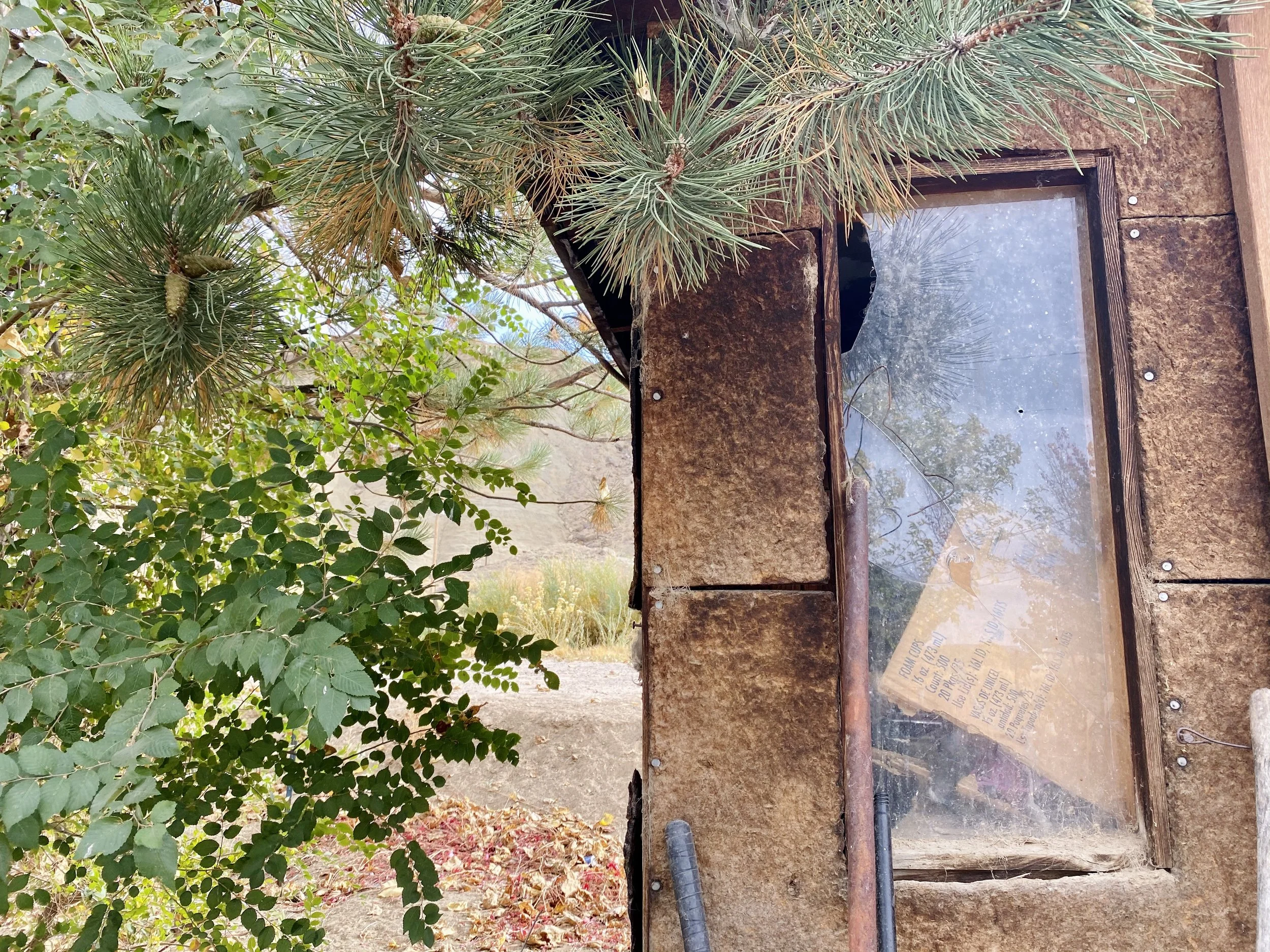
Detail of photograph by Danielle Shandiin Emerson
Morning does not begin with light. It begins with the body waking out of habit, the way an animal rises without asking why. There is no alarm, no announcement—only the quiet understanding that remaining still will not change what waits outside. The room is dark, heavy with the residue of many mornings before it, each stacked upon the other like dishes never washed because they will be used again.
The body wakes first. The mind follows slowly, reluctantly. There is no need to hurry. Nothing improves with speed. The day has already decided itself.
Feet touch the ground carefully. The ground remembers the night and refuses to release it. Cold travels upward, patient and thorough, learning the geography of the legs, the knees, the spine. This is how waking works here—not as renewal, but as return.
Outside, darkness lingers longer than it should. The path to the bush is familiar enough to walk without thinking. Trees line the way like witnesses who have seen too much to bother looking again. They stand tall, unchanged by the years of men passing beneath them.
Before the first cut is made, the body counts.
Six hundred and fifty trees wait on the farm. Not all at once, but they live inside the body as a single number, heavy and unavoidable. Six hundred and fifty cuts. Six hundred and fifty small negotiations between blade and bark. Enough to fill the day. Never enough to change it.
The farms are divided by letters—Farm A, Farm B, Farm C—but the work does not recognize the difference. The trees do not straighten when you cross from one letter to another. The knife does not adjust its angle. The latex does not thicken with promotion. Letters exist for management, not for bodies.
The knife feels heavier before dawn. Not because it weighs more, but because the body has not yet settled into obedience. There is always a moment—brief, unspoken—when the hand hesitates. Not out of mercy. Out of memory.
The blade meets bark at an angle learned over years, passed from one body to another without manuals or certificates. Too deep and the tree bleeds too fast, damaging what must survive another day. Too shallow and the latex refuses to flow, turning effort into waste. This is not skill as pride understands it. It is skill as survival.
The bark opens. Latex appears slowly, almost shy at first, then steadier, tracing thin white paths down the tree’s body. The sound is soft, nearly absent. It takes years to learn to hear it.
Tree after tree. Cut after cut. Step. Cut. Step. The rhythm settles in. The knife becomes an extension of the hand, the hand an extension of need. There is no room for thought here. Thinking wastes time. Feeling wastes energy.
This is rubber.
This is a rubber plantation.
These are rubber trees.
By the time the sky begins to thin, the work is already halfway done.
Collecting comes later, after the trees have had time to give what they were cut to give. Buckets are lifted, one by one. Latex clings stubbornly to the sides, heavy with delay. Each bucket carries more than its contents. It carries expectation, calculation, the quiet hope that this one might somehow matter more than the last.
The weight becomes real when the buckets are full. Latex is heavier than it looks. It pulls on the shoulders, bends the spine, settles into the muscles with intent. The path to the factory stretches longer than it should, or maybe the body is simply learning how far exhaustion can travel.
Men move toward the factory in quiet lines, buckets swinging carefully to avoid loss. Loss is personal here. Spilled latex feels like spilled hours. At the factory, the latex is poured, measured, absorbed into a system that will remember quantity but never the carrier.
Once the latex leaves your hands, it leaves your story.
By afternoon, the sun presses harder. Shoulders burn. Skin darkens, peels, toughens. The body becomes something else—less flesh, more tool. Pain arrives without ceremony and stays without apology.
Returning home does not feel like arrival. It feels like preparation.
Hands are washed quickly. Latex is stubborn even in water. Clothes are changed. Food is eaten without celebration. Rice. Greens. Sometimes fish, if borrowing or luck allows it. Eating exists only to make the next morning possible.
Payday comes, but it does not arrive whole. It arrives already spoken for. The pay is small—steady enough to keep you returning, insufficient enough to keep you borrowing. Envelopes change dates, not outcomes. Debts wait patiently. Shop credit extends just far enough to keep hope alive. Every payment carries the same instruction: not yet.
Borrowing becomes a second job. You borrow against tomorrow, then against next month, then against a future that never arrives clean. Interest grows legs. It follows you home. It sits beside you at night.
Nightfall does not end the day. It only changes its posture.
The same bed waits. The same room. The same arguments with sleep. Bed bugs hide in seams. Mosquitoes sing without apology. Wall geckoes move freely, dropping where they choose. Cockroaches claim corners without shame.
The bed is short. The sheet never covers everything. You pull it one way and your feet protest. You pull it the other and your shoulders feel exposed. It feels like riding a bicycle that never stops moving—balance without rest.
Sleep comes in pieces. The body never fully releases itself. Morning is never far enough away to forget.
Morning two arrives the same way. Morning three follows without announcement. By morning four, the danger appears: the routine feels normal. The body cooperates. The knife no longer feels borrowed. The work no longer feels temporary.
Years collapse into each other. Children grow tall enough to help. Fathers grow quiet enough to be replaced. Shoulders blacken and peel under sun and chemicals. Hands remain careful, almost stubbornly so, as if dignity has chosen them as its final refuge.
Six hundred and fifty trees remain.
Farm A. Farm B. Farm C.
Different letters. Same cuts.
The work does not evolve. Only the body does—and never in ways that benefit it.
When my father died, nothing changed officially. There was no pause long enough to resemble grief. The trees were waiting. The work moved closer to me.
That was how inheritance arrived. Not with words. Not with warning. With routine.
Morning five does not feel different. That is the danger. Repetition hardens into inheritance. Endurance disguises itself as consent. Labor forgets it was ever meant to be temporary.
People talk about labor as if it is something you do. On the plantation, labor is something you become. It enters the body quietly, settles into the joints, and refuses to leave even when the work ends.
Even now, far from the trees, my body wakes early. It counts without meaning to. It braces itself before it knows why. Some systems do not need walls to contain you. They live in sleep. They live in habit.
Dawn arrives, as it always does, after the cost has been paid—lighting the scene without acknowledging what happened in the dark.

Marvin Garbeh Davis, Sr. is a Liberian writer and poet whose fiction and poetry examine the intersection of memory, labor, faith and the human condition. His work draws richly from plantation histories, river communities and Liberia’s shifting landscapes. He lives with his wife Angea in Monrovia, Liberia.