
Vizenor Concordance: On PRESENCE
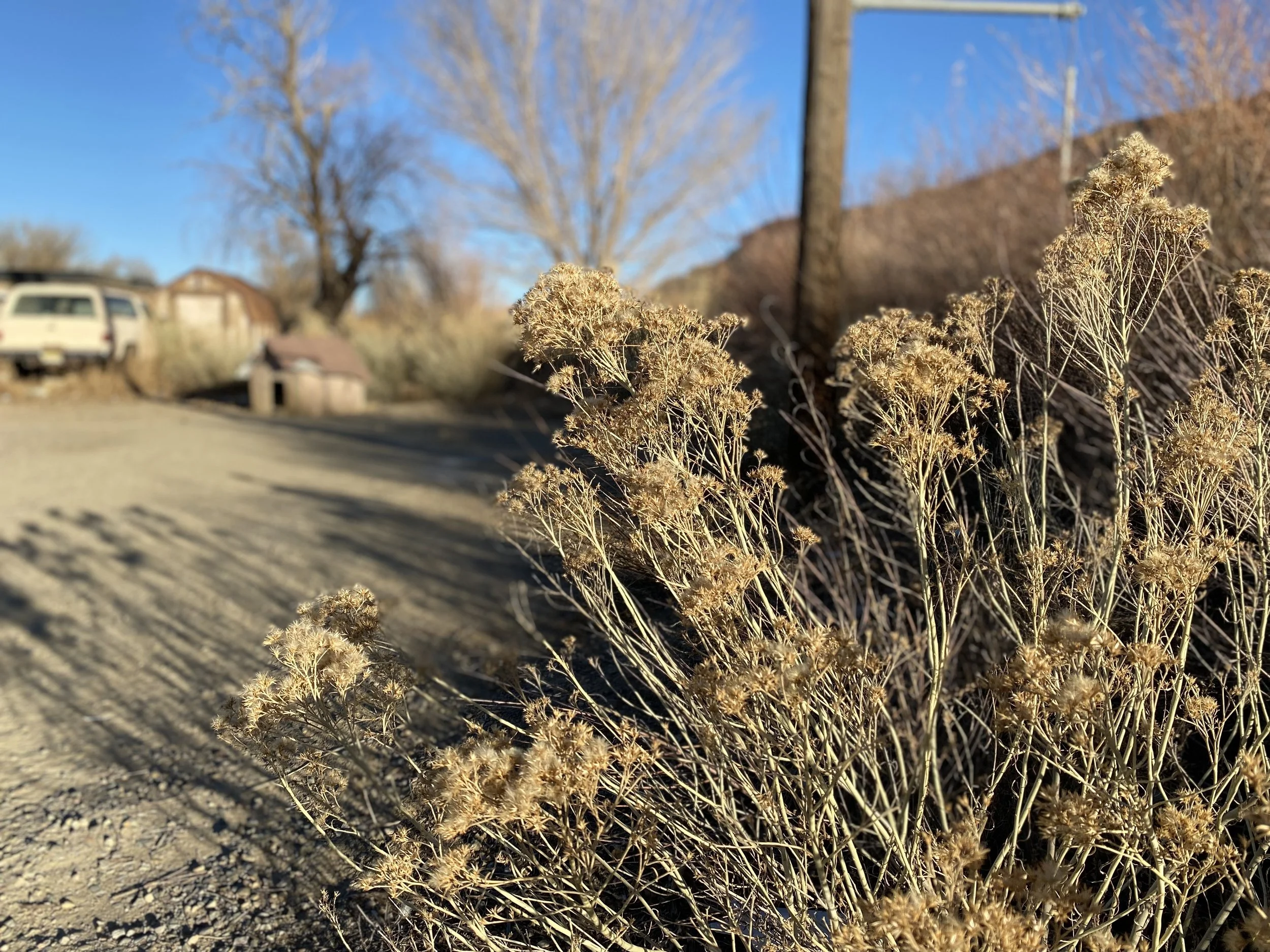
Detail of photograph by Danielle Shandiin Emerson
“I was transferred a year later to a military base near Sendai, Japan, a short distance from Matsushima Bay and Island. Matsuo Basho had walked for more than two years from Edo or Tokyo to Matsushima. I visited the same island more than two hundred and fifty years later and imagined the presence of the poet Basho. I attempted to write haiku at the time, and the first poetic scenes were more descriptive than imagistic, and a few years later my sense of concise imagistic poems matured in a Japanese literature seminar with Professor Edward Copeland at the University of Minnesota. He was an exceptional teacher and with great respect he responded to my haiku images with his own, a secure culture of images. Copeland had served as a translator during the military occupation of Japan.” (1.1)
“My poetry is imagistic and with no punctuation or personal pronouns. Possessive pronouns dominate the chance of creative situations and force a revision of the imagistic sense of presence and natural motion. My most recent poems are five-line imagistic scenes that combine the inspiration of concise haiku poetry and the dream songs of the Ojibwe.” (1.3)
“My characters enact scenes of natural motion, totemic shadows, resistance, and mockery of popular and commercial expectation of indian cultures and literature. The characters in my novels carry out the irony, mockery, and sense of native presence over victimry and the absence in history.” (2.2)
“The creation of native stories in the structure of a written language is never the same as the elusive characters and strategic hesitations and gestures of oral stories, yet it was necessary for me to create a sense of natural motion, tease, totemic temper, and the visual sensations of oral stories. The silent printed words are no comparison to the company of generous and responsive native storiers. Some natives never learned to recognize the subtle hesitations of an oral storier. The characters in my stories create the memories and hesitations of native storiers with elusive gestures, dream songs, and the shamanic presence of hand puppets in obscure parleys. Oral storiers and some creative literary authors have carried out the sensations of natural motion with no structures of time or possessive pronouns, and these conventions were centuries ahead of the existential theatres of the postmodern. The elusive sense of time, natural motion, totemic shadows, mutable characters, and the generous tease of native nicknames and mockery in oral stories is surely evidence enough that natives could have been reviewed as an ironic deconstruction of monotheism and the narratives of mercenary commerce and culture.” (2.3)
“A more humane practice would consider a native presence based on blood relations and families, not on the arithmetic deceptions of federal agencies that would rather reduce the number of natives for any reason, such as the aberrant arithmetic reductions of indian blood to show that natives are closer to civilization. The miscalculations of navigation and simulations of indians with an absurd dose of serviceable blood is the grand puppet parley of shamanic mockery.” (2.4)
“The literary designation of “authentic” native authors should not be determined by the fascist actions of pretendian agents or commercial publishers but instead editors and readers should be more critical of the way authors create characters in natural motionand reveal the presence of animals and birds and critically evaluate the use of pronouns and references to totemic associations that have a distinct presence in the novels of many native authors. Leslie Silko, N. Scott Momaday, and many other authors, for instance, create animals in their stories that have essential associations and a sense of presence. Native mongrels and other animals are teased with nicknames as personal relations in my creative stories. Other critical considerations of native literary empathy would include the distinctive narrative scenes of survivance and critical mockery of treaty separatism and victimry.” (2.4)
“My stories at the time were never decided with possessive pronouns and certainly not the consciousness of singularity in the ruins of civilization. My sense of native presence and recognition in a world of literary envy and trickery was never secure in a dominant monotheistic culture. Treaty reservations and native existential colonies in cities revealed cultural separatism but not a “specific civilization.” The communal pleasure of mockery and irony in trickster creation stories and the elusive native stories of chance, totemic shadows, shamanic mockery and irony are not comparable to “metaphysical preconditions.” Gusdorf declared that “Autobiography becomes possible only under certain metaphysical preconditions. . .humanity must have emerged from the mythic framework of traditional teachings and must have entered into the perilous domain of history. The man who takes the trouble to tell of himself knows that the present differs from the past and that it will not be repeated in the future.”” (2.5)
“Erdupps MacChurbbs reminded me that he was on my shoulder that summer of that notable resistance to possessive pronouns and told me that the autobiographical deceptions of the moment never had a native past and there was nothing more in the future than another chance to tease the moment and create a sense of natural motion and presence in native stories.” (2.5)
“MacChurbbs easily provided a steady course of nicknames in my stories, and every native nickname was a tricky chance in creation stories. He was a miniature puppet and mighty at the same time, with no bloodlines, no terminal divisions of identity, and yet he is an imagined shaman that roams in the memory of an imagistic poet and storier. He told me to “free yourself from the customs of civilized measurements. We are so big, and so little at the same time. You have learned only one way to measure the world. Puppets of imagination vanish in culture of terminal creeds. Mockery and irony never expire, but some people exaggerate their presence and reach for cultural perfection through the exalted structures of possessive pronouns of the past.”” (2.5)
“Native storiers have never been easy to consider in the anonymity of existential colonies in cities or at universities, but a grand theory of totemic sensations of mockery, chance of healers, and elusive totemic shadows created by oral storiers continue in some native nations that are not casino cultures. The native grand theories of mockery and irony easily deconstruct digital images and artificial intelligence as nothing more than evasive agency decoys and analogue simulations of futuristic reservations of victimry. The sense of presence and ironic manner of native storiers is elusive and never a digital memory. Digital depictions and other enactments of artificial intelligence depose the native novels that have not created totemic shadows and the ironic presence of storiers. Benjamin would surely salute the grand theories of mockery and irony as restorations of the last native stories of shamanic hesitations and liberty on the continent.” (3.2)
“The native essays of resistance, and the grand theories of mockery and survivance, are not traditions. The native essay is contention not a meditation, not separatism, not cultural absence, or the mastery of natural motion. The essay is an ironic venture, a tease of creation stories, and the native essay is a tease of Theodor Adorno and his theory of the essay cited in a collection of my essays, Fugitive Poses: Native American Scenes of Absence and Presence, University of Nebraska Press, 1998. The “essay retains, precisely in the autonomy of its presentation, which distinguishes it from scientific and scholarly information, traces of the communicative element such information dispenses with,” observed Adorno in Notes to Literature.” (3.2)
“The coureurs des bois of the mercenary fur trade and the kitschymen of the media, casino cultures, and digital simulations are the merchants of resistance with no natural hesitations or memorable stories. The considerations are casual and repetitious, at best, and the stories are the mere enterprise of resistance. The kitschymen are the simulations of natives with no sense of an actual presence, only the objects of mockery. The kitschymen are noted as a native pretense not a presence, and with no gestures of imagination, no native mockery, or recognition of irony.” (3.4)