
Every Rez Was Once Home to Dinosaurs
Shaniya Smith
Apocalypses happen daily on personal, emotional, communal, or continental scales. But you made it through today, weaving through reality, disbelief, hope, and mourning.
As spring blooms whip in the unseen wind, as we long for water to seep sticky through the clay of our home, and as we gaze skyward, we have this truth tugging on our minds: our world, as we know it, is spiraling and reaching through depths unknown, flipping on an axis dear to our very existence, all the while dubbing us unaware space and time travelers.
-:-:-:-:-
My white doomsday prepping history teacher showed us traumatizing videos of the bombing of Hiroshima, talked about his plans to head to the mountains when “the end” was near and how we were invited to seek refuge with him. I remember little else about him or his lessons, but imprinted on my brain is a moment during a lockdown drill where he said, “If anything ever happens you fight and don’t stop fighting.”
Teaching wasn’t in the cards for me, or so I thought, but the course of my life lead me to teaching 9th-grade English on the Navajo Nation at the very high school I graduated from a decade earlier. As fate would have it my first day as a new educator, my principal led me to the same classroom, which was once my history class years prior.
My classroom was much changed from when I was a student, but I could still remember the corner my history teacher’s desk sat. I wonder if it ever crossed his mind that as he prepared his students for the apocalypse,he was in fact teaching descendants of apocalypse survivors.
An apocalypse, by definition, is the destruction or end of a world.
The end of the Diné world as we once knew it occurred through devastating events like Kit Carson’s burn campaign (which led to the Diné people being forcefully relocated to Bosque Redondo) or the Animal Reduction Act, where herds of animals were slaughtered or driven into man-made pits and burned, screaming alive while their caretakers’ weeping eroded pathways of mourning into their future grandchildren’s DNA.
These events, the fall of a world and a society, occurred decades before I was born, but I can feel these accounts charred somewhere deep in my core. If our first experience with trauma is birth, where we come warring into this world, then it stands to reason that some of us (perhaps all) have generations of trauma archived into our bones, twisted into the fibers of neurons, stored in tissue and fascia alike.
Where else could complex trauma be stored?
-:-:-:-:-
“Ałkʼidą́ą́ʼ” is one of the first Navajo words that stuck like a car in slick clay mud into my young mind as I sat through culture class. In the 80’s, the Navajo Nation leadership mandated that the Diné language and cultural instruction be woven into the curriculum of all schools throughout the nation. It was, and is, a way to preserve and integrate what was left of a culture, language, and philosophy that were almost eradicated during colonization. At a young age, these desperate attempts went over my head, and culture class held the same weight to me as art or P.E. class.
“Ałkʼidą́ą́ʼ,” my teacher said at the beginning of the story of Coyote, the impatient trickster, caused havoc during the genesis stories at the beginning of this Glittering World. I liked how my teacher would emphasize the slash “L” sound, her breath rushing around her tongue like the howl of the winter wind outside the modern hogan where we sat, coloring and listening. The translation of the word is akin to “long ago” or the kind of “once” that introduces a story set in a different time, place, or world.
Ałkʼidą́ą́ʼ, dinosaurs once inhabited what is now called the Navajo Nation. I listened, enraptured as my coworker recounts how their family discovered dinosaur prints around their homestead. It's hard to imagine how this family lived and built a life while being unaware they were surrounded by echoes of the past. There was once a species, a whole ecosystem, a whole world where our feet tread now, and that in itself is a wonder.
What do I miss as I rushed, glazed-eyed and anxious, through my days?
I started a little expedition to learn more about this once world and these once creatures, before their apocalypse birthed our world and us creatures. I wanted to understand what that ending means for the world I inhabit now.
I fell into a spiral to learn more. Any chance I had, I listened to podcasts titled “Dinosaurs Were Weirder Than We Thought,” “The Jurassic Period (As We Understand It),” “The Most Relaxing Dinosaur Facts to Fall Asleep To,” and “What If Dinosaurs Never Went Extinct?”
Just as my coworker happened upon the lingering ghost of the past, my intrigue led me to the theories and mysteries of space and time.
Blaring through a speaker that is perched atop the fridge is the monotoned voice of a physicist who is talking about time dilation and the speed of light. I am partially listening as the preparation of dinner is taking upmost of my attention. I catch a shift in conversation where the speaker mentions what we see when we look out into the stars above. It was nothing I hadn’t heard before, since I have heard my own mother say, “It takes years for the starlight to get to us. You never know, those stars might already be dead.”
If we gaze into the sky at planets and suns far off, we are seeing the past, never the present.
I catch the longing stare of my dog with the amber eyes, my companion of 6 years, my Kai. At a glance he is a German Shepard, upon inspection his back is straight and strong, his tan fur golden, his tail curled up over his haunches.
Every now and again, I hear the voices of other Diné community members, and even my grandma’s, saying, “You are not supposed to keep dogs in the house.” I hear these words now as I pick a morsel of food from a pan on the stove, and offer it to “chąąʼí,” as my dad affectionately calls Kai.
Kai eats it hungrily, which is a good sign, since his kibble from this morning sits untouched. He is not eating or playing the same, and that change worries me.
-:-:-:-:-
Teenagers always seem on the cusp of something, sometimes they are falling deep into or out of love, fascination, boredom, and understanding. Today unfortunately they are deep in the grips of apathy, and I don’t blame them as I am teaching about suffixes. This is a concept the students should know, but according to the latest assessment, it is the one concept they struggled with the most.
“If astronomy is the study of everything in the universe, what is an astronomer?”
Blank endless stares.
I plead and grasp for some kind of a response, “How would this room look if there were no gravity?”
No comment. No effort. No care.
This is a moment when I am tempted to give up, but I see that one shy soft-spoken good student, the one who says, “English is my favorite class.” She is front and center, writing down the notes displayed on the screen up front with fervor. I wrack my brain and begin despite the teacher rambling about the first thing that comes to my mind when I think of the word “astra”.
“Did you know there was one American not on Earth during 9/11?” I ask before talking about an astronaut who witnessed the 9/11 attacks from the International Space Station during Expedition 3. When astronaut Frank Culbertson radioed Mission Control on September 11, 2001, he heard these words while completely ignorant of the terrorist attacks, “We are not having a very good day down here.”
From the vastness of space, among the stars if we were being poetic, Frank saw smoke and despair, and he took photos from his perspective.
My students roused a little, interested in the story of the only American not on planet Earth during that event. I wonder if the dread and helplessness he felt were akin to what I sometimes feel when I teach.
-:-:-:-:-
I drove the three hours from home to the nearest vet. As I drove, I lamented the reality that there are no vets on the Navajo Nation.
We make it to Kai’s appointment with minutes to spare. I half carry, half drag my ridiculously large dog through the threshold because he has never gotten over his fear of the vet.
After a cursory exam, a tall veterinarian with stony green eyes explains, “It looks like a loose tooth; maybe he broke it while chewing on something or while he was playing. This is probably the cause of his change of eating habits.”
The veterinarian says the tooth will be pulled, and Kai will get antibiotics, so I go on my way while Kai is taken in for his procedure. As I wait for the call telling me Kai will be ready to be picked up, I drive through the border town, one of many along the reservation’s border. As I drive, I listen to the hypothesis that if light travels at a certain speed, then someone, anyone, or any being could technically look at our planet now and still see dinosaurs roaming Earth. Do I believe it? Maybe, why not?
But it is still hard for me to imagine how long the past could still be seen in today's present. My phone vibrates violently, and the screen lights up with the name 'Vet.' I answer, fully expecting to hear that my puppy dog is ready to come home.
But in the span of a few minutes, from my eager hello to my quiet thank you for letting me know, I was abruptly introduced to what I now know is anticipatory grief.
Perhaps some part of me always knew that anticipatory grief has amber eyes, eyes that flame like a smoke-polluted desert sunset. I wish to be brave enough to say I embrace the full power, protection, and balance of impending grief; after all, I know the dreadful thrill of running toward the racing storm of loss, yet I fear that terrible ache deep in the marrow of my spirit.
Kai’s wobbly tooth was unsteady because of the cancer rotting his jaw. Squamous cell carcinoma was what the veterinarian suspected, although a biopsy would need to be done; there were a few options. We could try surgery, or if that wasn’t an option, our vet could prescribe pain pills because the spread would be fast and there would be pain.
Regardless, I now knew I’d love Kai until the world as I knew it was no more, because his impending loss was teaching me how to live with an ending I thought would take place years later.
It is unfortunate that human beings are prisoners of the present. We cannot change the past, and our future is veiled from us. But somehow, the impending loss pushed me to understand what it meant to live in both the present and the future.
A few hours later Kai was released to me and we started for home. The night sky stretched out forever outside the cab of my fast-moving pickup on that long drive home. For all my years of sky gazing, the expansion of the open heaven and piercing stars never ceased to awaken emotions of something bigger than myself. Yet bearing witness to the beauty all around me, with my puppy dog by my side, could not chase away the painful awareness of the fleeting nature of life.
We are not having a very good day down here.
-:-:-:-:-
There is a controversial hypothesis about genetic memory and epigenetics that suggests that if you think of a specific ancestor, you can become more like that relative by activating the genetics woven into your lineage-
On June 1, 1868, Diné leaders signed the Treaty of Bosque Redondo, ending a grueling four-year internment at Fort Sumner, NM. Around that time, a Diné relative of mine stole a soldier's horse and raced towards her home.
When I catch a glimpse of the flimsy, cloudy plastic bags clinging to my students' backs, I feel compelled to think of that woman.
Her tale, much like the Diné culture that is stripped of its wholeness, is like a ghost, a shell of something unaltered and whole.
In my mind, I see her riding through the night, the sky alight, moon bright through what is known as New Mexico, the ground a deep purple desert blue, the hint of a memory drifting in and out.
The horse she rides is sometimes tall, sweat-sleek, and fast. Other times, the horse is stout, mustang shaggy, and powerful. Maybe these are the images of all the horses who sacrificed, saved, or were guilt-burdened by my maternal and paternal clans.
Acrid sweat, horse hide, and damp saddle blankets assault my nose and calm my jittery nerves every time I walk pass the metal detectors at the student entrance of the school.
At some point during her journey, a mountain lion stalked and chased my maternal grandmother. Hooves pound in my ears, and the rush of the horse's breath fills the air as it runs for its life. In the end, she escaped the claws of the lion.
If it were not for her bravery or the strength of that horse, this version of me would not be here today.
I wonder if that horse was loved, or was it just another soldier’s mode of transport, a means to travel, a beast of burden, burdened for being born or manufactured to live with the load.
At some point during that race, I hope that horse felt powerful, free even, and not craze-driven, scared, but that is only the hope born of wild, anxious sleep, humming like the swell of a crowded waiting room, a wall painted olive or Kermit green.
If I focused on my ancestor, the racing horsewoman, what traits would become more pronounced in me? What does it take to steal, ride, survive, and eventually make it home?
-:-:-:-:-
It was up to me, all up to me, how Kai’s life would go forward. Surgery was so much, and the words, thick with my home accent, rang in my mind: 'he is just a dog.'
Two conflicting Navajo teachings wage war in my mind. One guards against loving an animal too deeply, or else you will go crazy, while the other says that loving and respecting an animal leads to great personal protection and healing. I haven’t found anyone who can trace back the roots of these teachings. Perhaps they are both true. But one thing I knew for sure was that love always weaves pathways in our minds, carving neural pathways and hollowing caverns in cardio-tissue.
I didn’t want Kai to suffer, but gazing into those amber eyes, I could see it wasn’t his time.
Shortly after the biopsy came back that Kai had cancer, word spread among my family and I feared they might think me too invested in the life of this creature. But my aunt came across my maternal grandmother weeping as she fed her own farm dogs. My aunt asked my grandmother what was wrong, and my grandmother said, “Pubbie is sick.”
Pubbie. Among the many farm dogs who have protected my grandparents' home and sheep, there have been many “pubbys,” but she only called Kai “Pubbie.” If anyone is cognizant of how the loss of the force-of-our-love leaves neurons scrambling and embedded memory tissue to ache in cardio throb, it is this woman. Her sadness gave me permission to be sad as I struggled to understand and respect the tradition I knew so little about.
All the days of culture class couldn’t seem to restore what was lost or forgotten. My seeking of understanding always seemed to lead to contradictions and more questions. But most of all, there was the guilt.
It is a fact that our solar system is spiraling through space, racing outward in a way that I cannot comprehend. As we race and swirl, dancing through the fabric of time, the world rumbles with war and violence. To weep for a sick dog seemed trivial when so much agony sunk-thick throughout the earth below our feet.
I wonder what our world looks like from space now, as apocalypses occurred across continents while this Diné teacher contemplates the past, space, and love.
-:-:-:-:-
Serendipity is the only word to describe my month. The moment I decided that Kai could have surgery, I found a vet 6 hours away that specialized in the kind of surgery Kai needs. To my dismay they did not have an opening till a month out. A month too far away, too late, said the nagging in my gut.
I hid behind my computer, my students typing on their laptops, their clear bags cluttered in the back of the room. Our school had just adopted the clear bag policy after our school experienced a scare, a “real” threat that was caught just in the nick of time.
“It isn’t a matter of if, but a matter of when.” My boss said during the staff meeting that brought the announcement that our students would strap clear bags to their backs in an effort to deter harm, violence, and grief. That’s a lot of pressure to place on such flimsy material.
Today my students were writing a timed persuasive essay. The prompt: Argue for or against the effectiveness of the clear bag policy.
This is the most engaged my frustrated students have ever been. But I am too tired with it all, and there are only 30 minutes left in a long day, so I grade, my hands hovering catclaw over my keyboard. Then an email alert chimes, and I sneak a glance to see a message from the veterinary clinic.
In short, the message reads that someone has canceled; there is an opening tomorrow. The school bell rings, and I accept the opening. I rush to pick up Kai, and find myself, yet again, driving through the night, not sure what the next day will bring.
Early the next morning, I am checking Kai into his appointment, and the receptionist is Diné.
“Small world.” She says.
“Small world.” I agree after learning that her family lives just 15 minutes away from me. She understands how long a journey I have come.
Sitting in the exam room, Kai listens intently to the veterinarian. I am in awe of the woman in front of me, who is tall and intelligent. She speaks to Kai, explaining to him where his tumor is and what she is going to do to remove it. She even shows him a canine skull as a reference. I am amused and baffled, yet oddly grateful. The whole time she spoke, Kai sat at attention, only once turning to me with a look that comically seemed to say, “Oh my gosh. Did you hear that?”
Then, they took him. During his surgery, I received a call that they were going to have to take the front half of his bottom jaw because of how much the cancer had corroded his bone. I asked questions about quality of life, to which that remarkable woman who speaks to animals assured me of dogs' resilience and adaptability.
“This is a life-saving surgery.” She says.
I give my consent.
That evening, to my astonishment, Kai was released to me, his bottom jaw forever changed. Due to the extreme nature of his surgery, I would take Kai out on a leash every time he needed to go outside. Every night before bed, I would take him out, and I would gaze at the stars. This was the first time, perhaps ever, that I went out every night and saw the sky and noticed how the moon shifted through faces and drifted through the expanse.Six months post-surgery, Kai eats, plays, runs, and lives as if the surgery never occurred. But our time on this planet together will always be brief, but the same could be said for every single relationship that is forged.
Even still, while many won’t, we can still be in awe of the fact that we made it through the cascade of another hour, many colliding seconds, the sweeping of another unpromised day. Because anticipatory grief has amber eyes, carries a clear bag, and takes on every form imaginable. As I teeter through the present while catching glimpses of a future-without, I find some solace that, perhaps millions of years from now, life from above shall look out and glimpse this past world where my puppy dog walks with me and where my students align with the stars above as they journey this Glittering World.
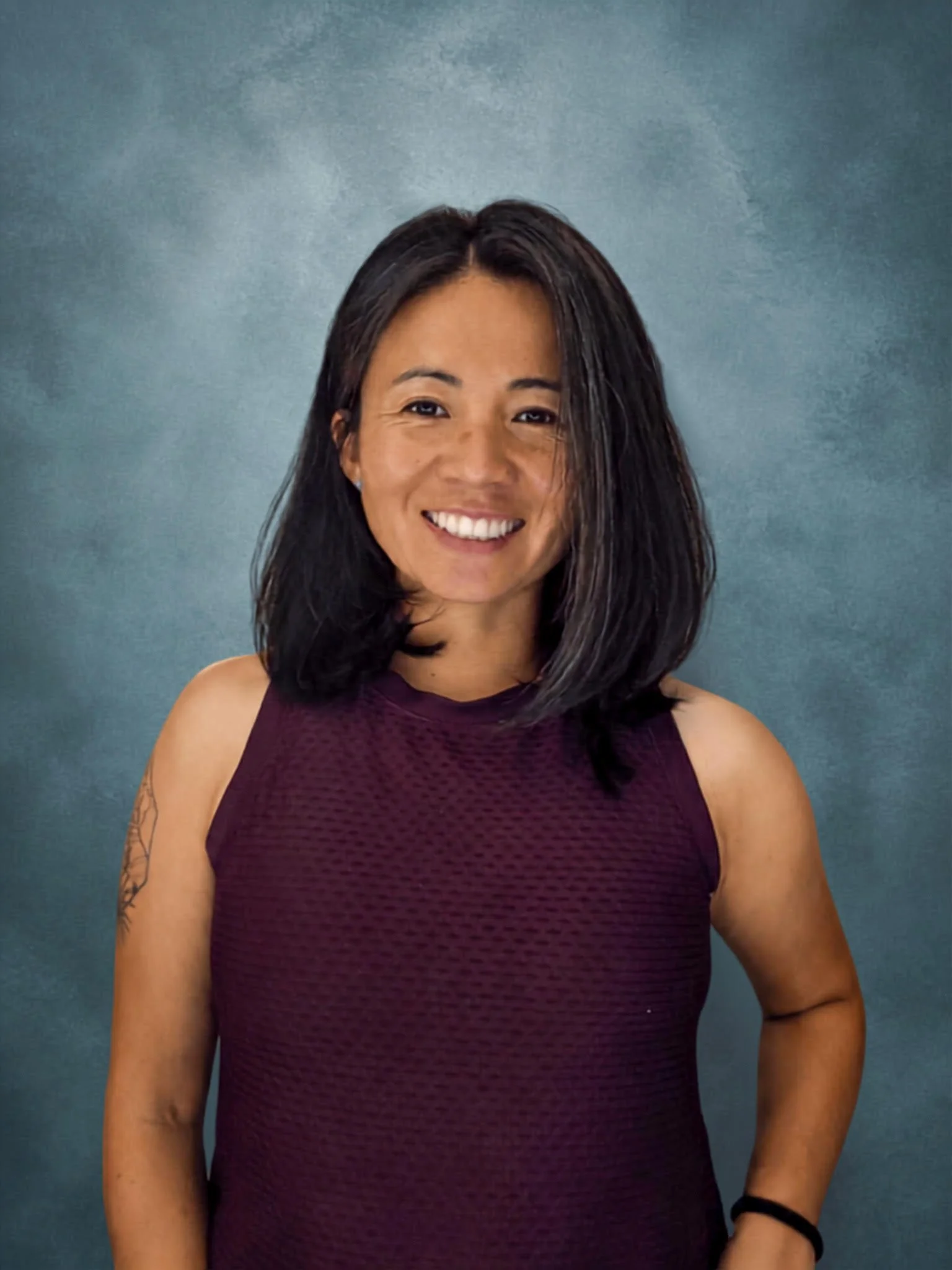
ABOUT THE AUTHOR
Shaniya Smith is Diné, she was born and raised in Chinle, AZ. She is Tódich'ii'nii born for Dziłt'aadí. After receiving her MFA at NAU, she returned home to teach high school 9th grade English and coach both cross country and track. She is a 2026 Saad Poetry Prize Finalist who finds great inspiration from her students, home land, family, community, and of course from all the rez-dogs who make the world go round.