
Danielle Shandiin Emerson
Capturing Emotion Through Collage
We are thrilled to feature several collages and photographs by artist and writer Danielle Shandiin Emerson in this issue. Her photographs grace the banners of most pages, they bring light and texture to evoke place and a sense of slowness. Her colorful collages tell stories of family and togetherness. Humans, land, language, and fragments combine in her work to create an interweaving that is both tender and playful.
Much gratitude to Danielle for her work, and for curating a reading portfolio from past issues!
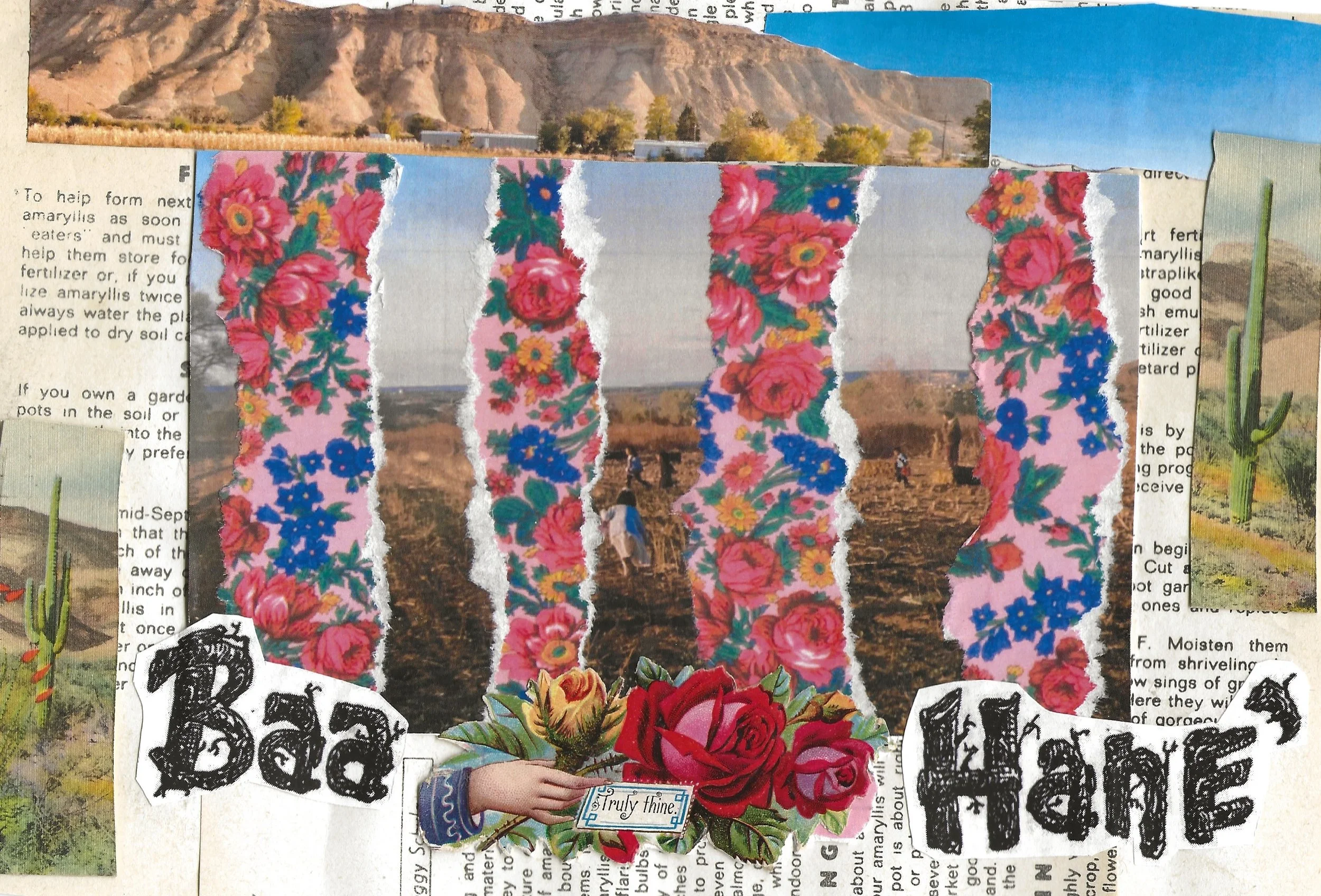
Baa Hane’ / Story
CHJ: Collage is so exciting and open to play. Can you tell us how you got started?
DSE: Of course! I’ve always been someone who initially enjoyed photography—I took photos in high school as a yearbook club member (there’s a photographer everyone knows back home called Turkeyboy and we crossed paths a couple of times while out on the fields) and then again in undergrad as a photographer for the campus newspaper. So, I’ve always been drawn to visuals and capturing emotions and quick moments, but eventually my dive into writing took me away from that world. Photos have always captivated me as snippets, as memories, as vessels that sort of exist in this larger temporal space. But I didn’t come to collaging till after undergrad. I remember hanging up family photos in my space, little memorabilia to remind me of home and loved ones, and while doing that I realized just how much I missed working with visuals. I then made copies of those photos, grabbed some scissors, found an old glue stick in my desk, and started cutting. From there something like childlike wonder erupted from the tactile experience of cutting, ripping, pasting, gluing, folding, and adding layers of meaning to my own personal archive.
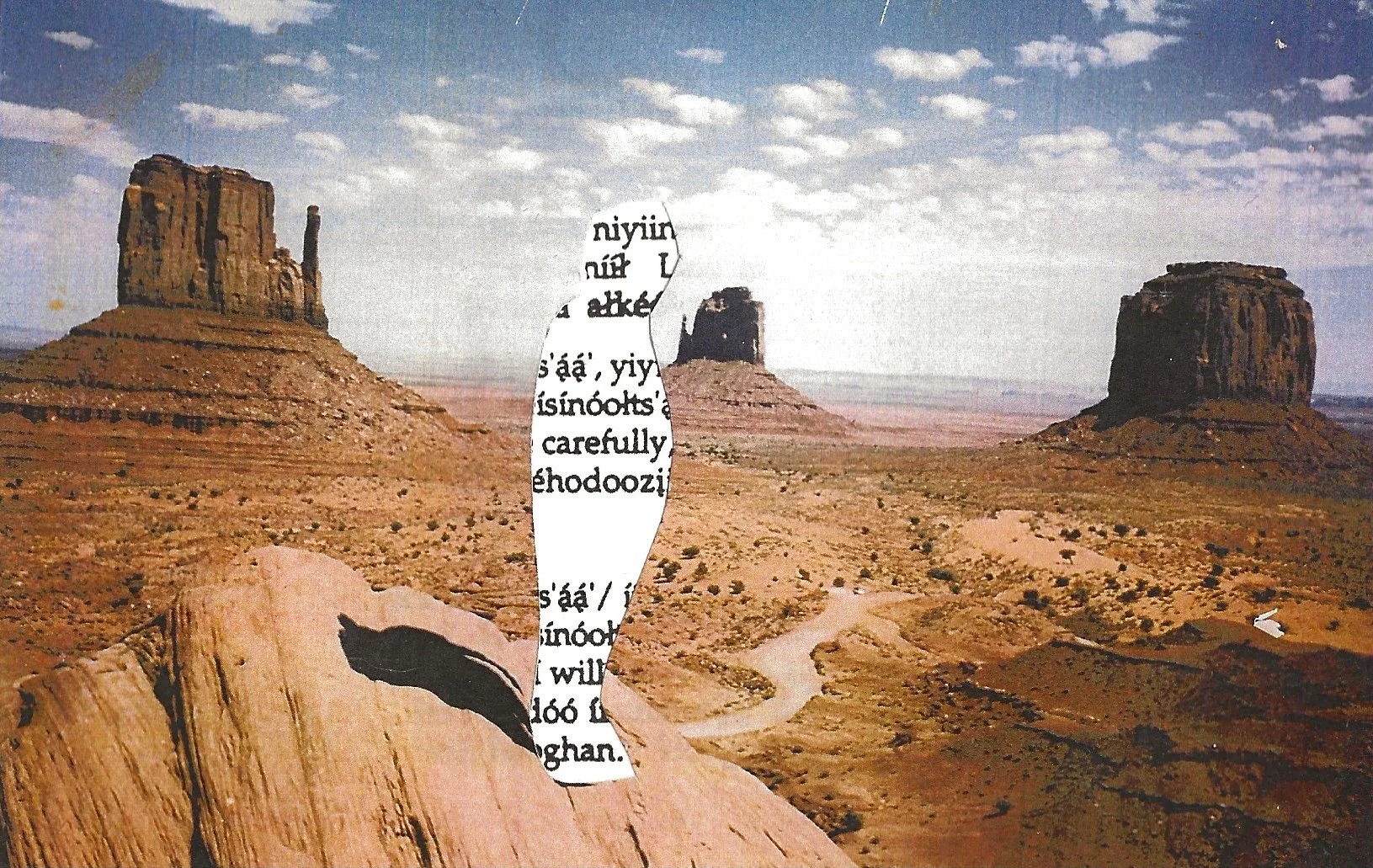
Nalí Asdzaan / Paternal Grandmother Betty
CHJ: Describe the origin story (what inspired you, what story did you want to tell, how the piece came together, etc.) for any one or two collages.
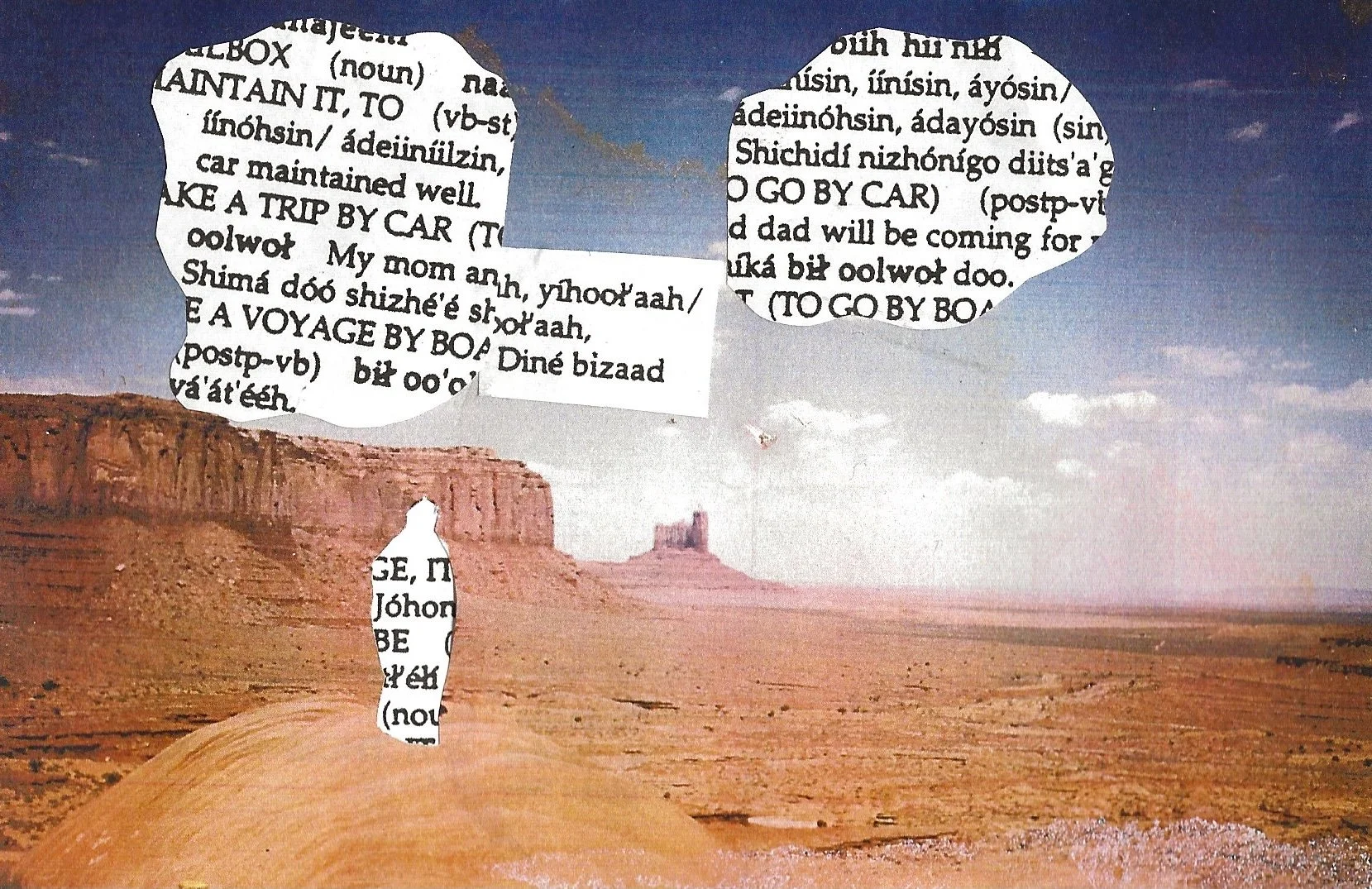
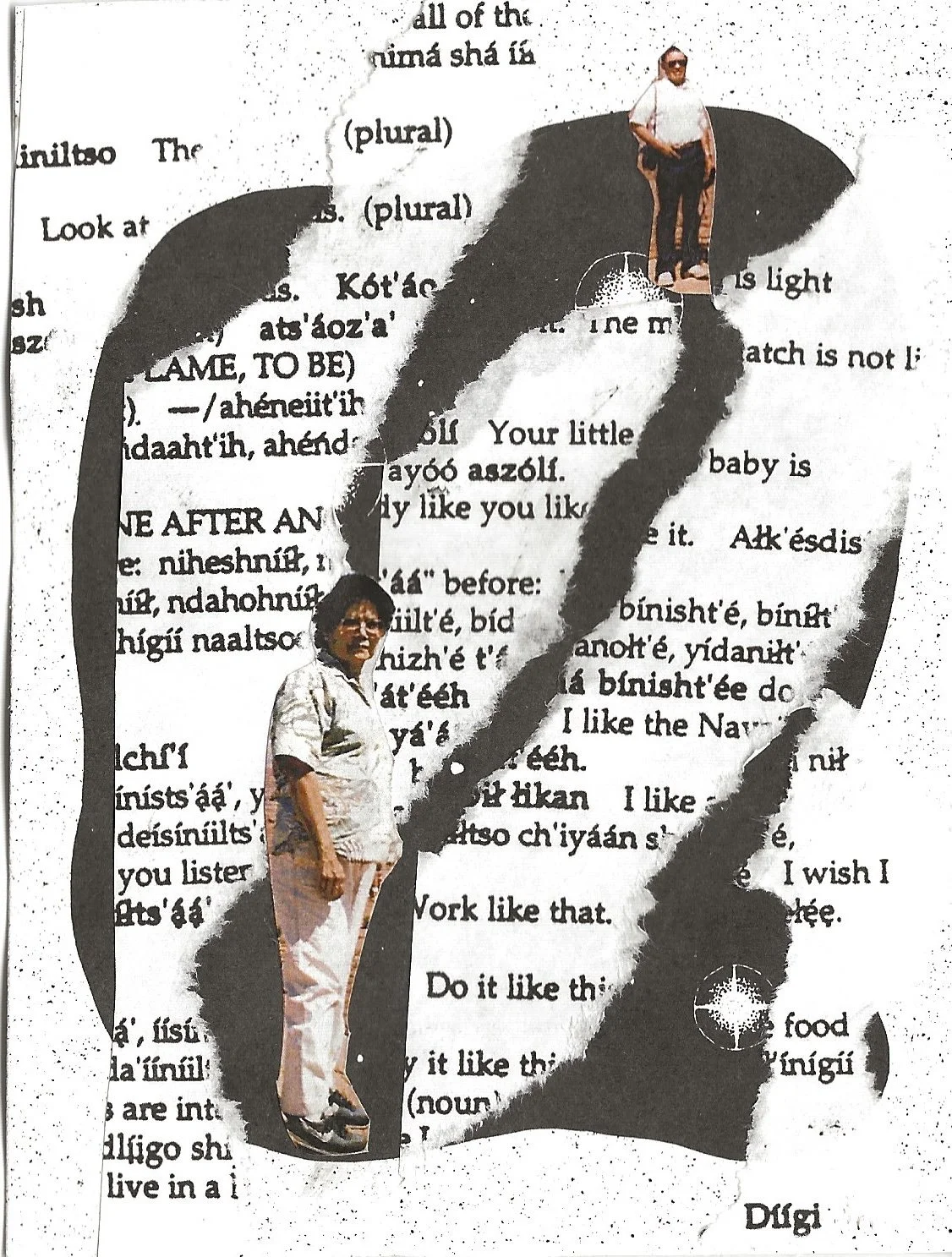
DSE: One trio of collages that instantly came to mind are Nalí Asdzaan / Paternal Grandmother Betty, Nalí’s, and Small Nalí. I wanted to explore visually how language, landscape, and family lineages are embodied, how language is passed on, how place carries memory, and the vastness of family generations, of elders and their grandparents. In the collages, I have ripped sections of the Navajo-English Dictionary, and this sort of reflects how our relationship to language, specifically English and Diné Bizaad, is lived, living, and growing constantly. Talking specifically to the collage titled Nalí’s, there are a bunch of rips and bits of muddled language in the background. But against this blending, this fractured smattering, the outline of my paternal grandparents are clear cut. This is because I see their presence in my life and community as a sort of guiding constellation, a strength that I turn to a lot, especially as I undergo my own language learning journey so far from home.
Small Nali
Nalí’s
CHJ: We know you are also an incredible writer - how does your visual and writing practice overlap? How does play feature in your writing?
DSE: It’s very freeing, sometimes I come into a collage not really knowing where it’s going, but because it’s so tactile and textured, I find myself really leaning into the play aspect. There are times that writing becomes very goal oriented. I think collaging helps me physically see—and not fear—the fragments, the fissures, and empty space on a page. It really allows me to sit with memory and consider space, without feeling like I need to have a specific product once I reach the end. I’m able to explore my curiosities through play and craft and collage. And sometimes there are relationships or experiences that I can’t really voice in writing, or don’t really feel reachable in writing solely, but can be gestured to in collage. I’m thinking of the collage of me and my younger brother, Shí dóó Shítsilí / Me and my younger brother. As adults now, we’re in the process of mending things, of reaching a place of healing, and this collage helps me reach something like understanding, of forgiving a younger version of ourselves.
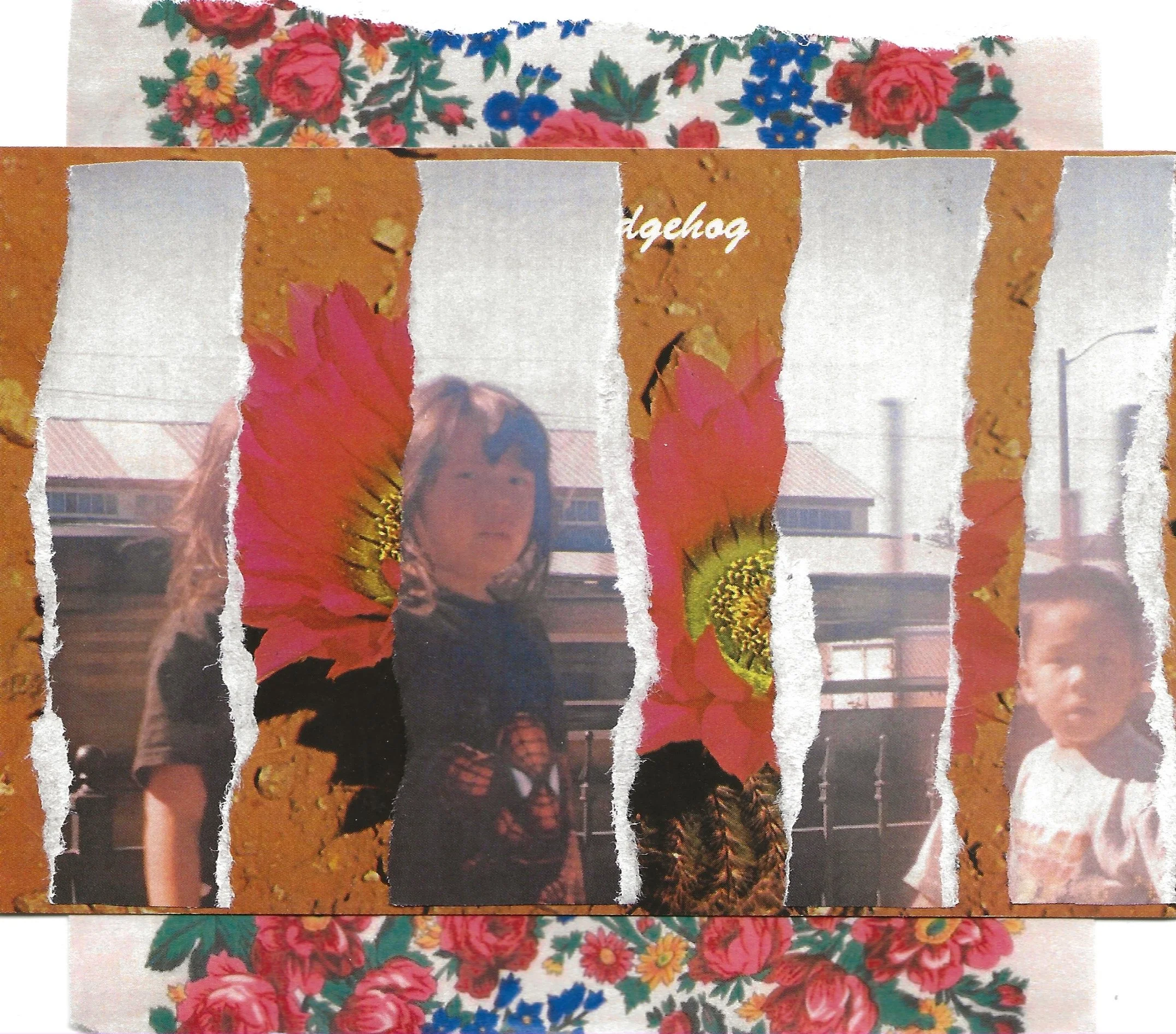
Shí dóó Shítsilí / Me and my younger brother
CHJ: What creative project are you working on right now? (does not have to be art related!)
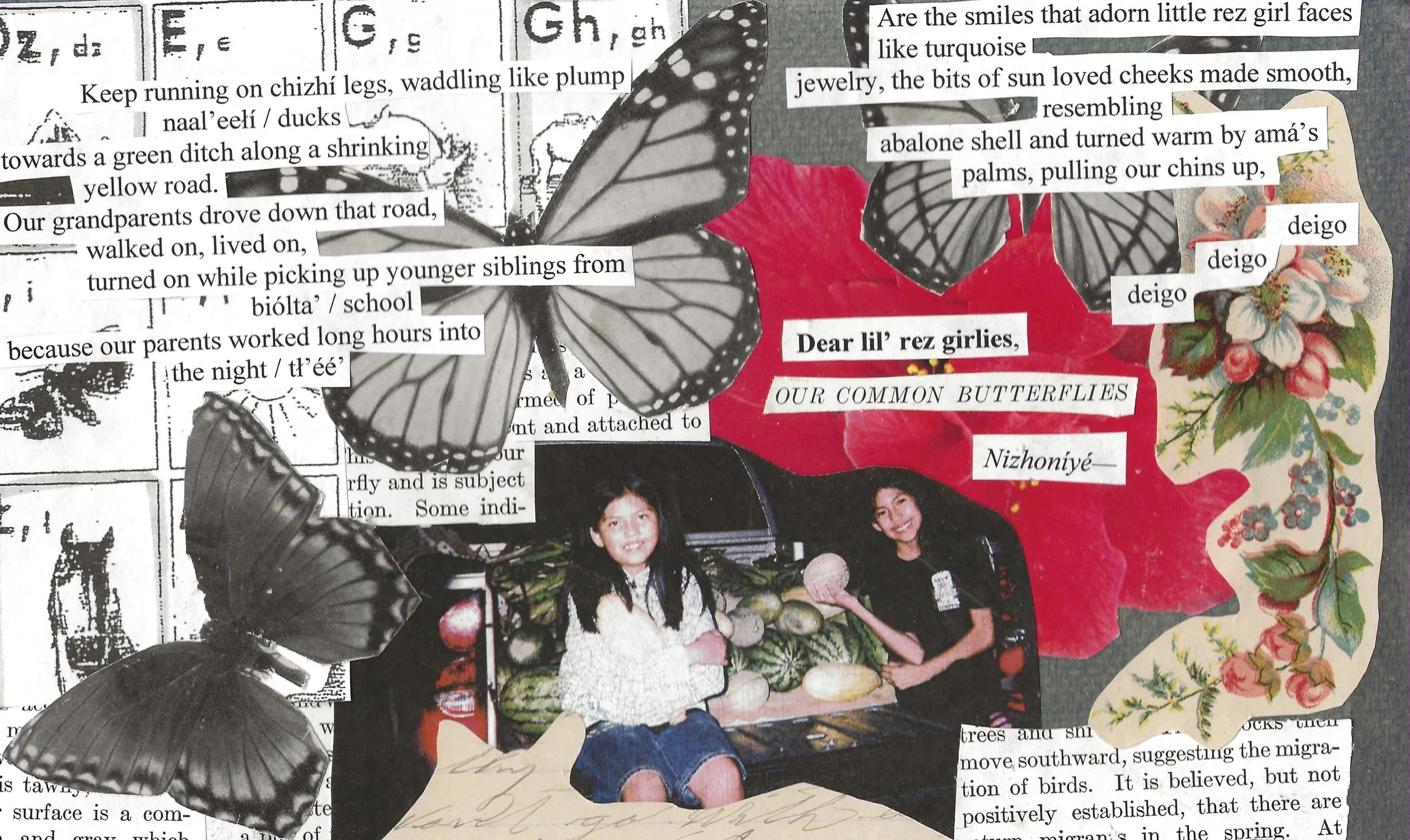
DSE: I’m working on too many things. I have a poetry manuscript and a YA novel-in-progress sort of shelved right now as I make my way through graduate school. In the back of my head, I’ve been planning a poetic memoir sequence featuring my father’s old artwork. He used to sell at different Native American art markets alongside his mother (my nalí) and uncle. And to sell at those markets you had to apply with a portfolio. I have no idea how the application works now, but back then you had to send in physical photos taken on a film camera and get them developed. So, I have a bunch of these photos of my father’s artwork, and I feel like there’s a story there, especially as I come to terms with certain aspects of our relationship and childhood. I’ve also been writing short stories for a collection, and these stories have been my focus so far as I near the end of my first year in grad school!
Cuzzins
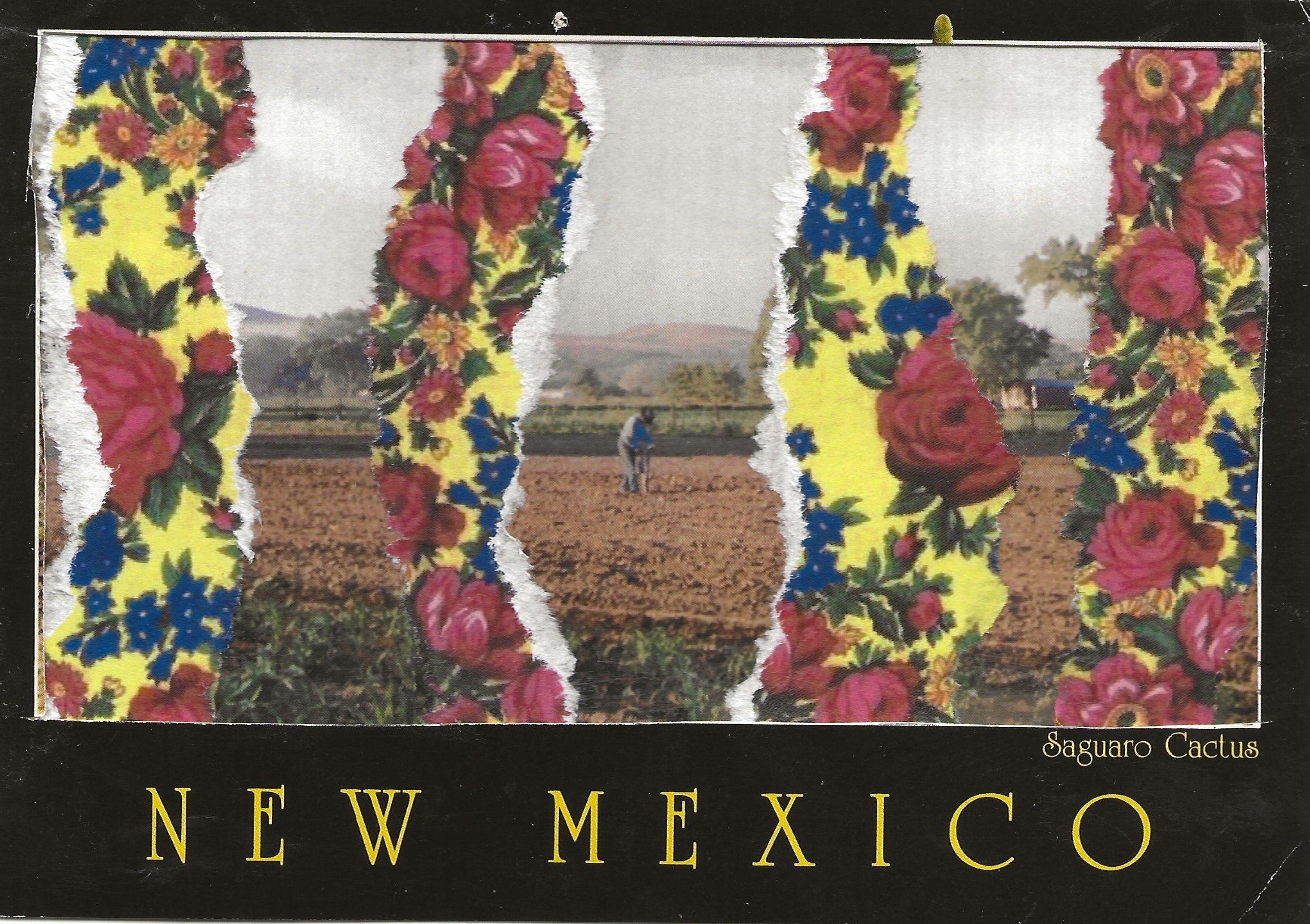
NM Cheii / Maternal Grandfather
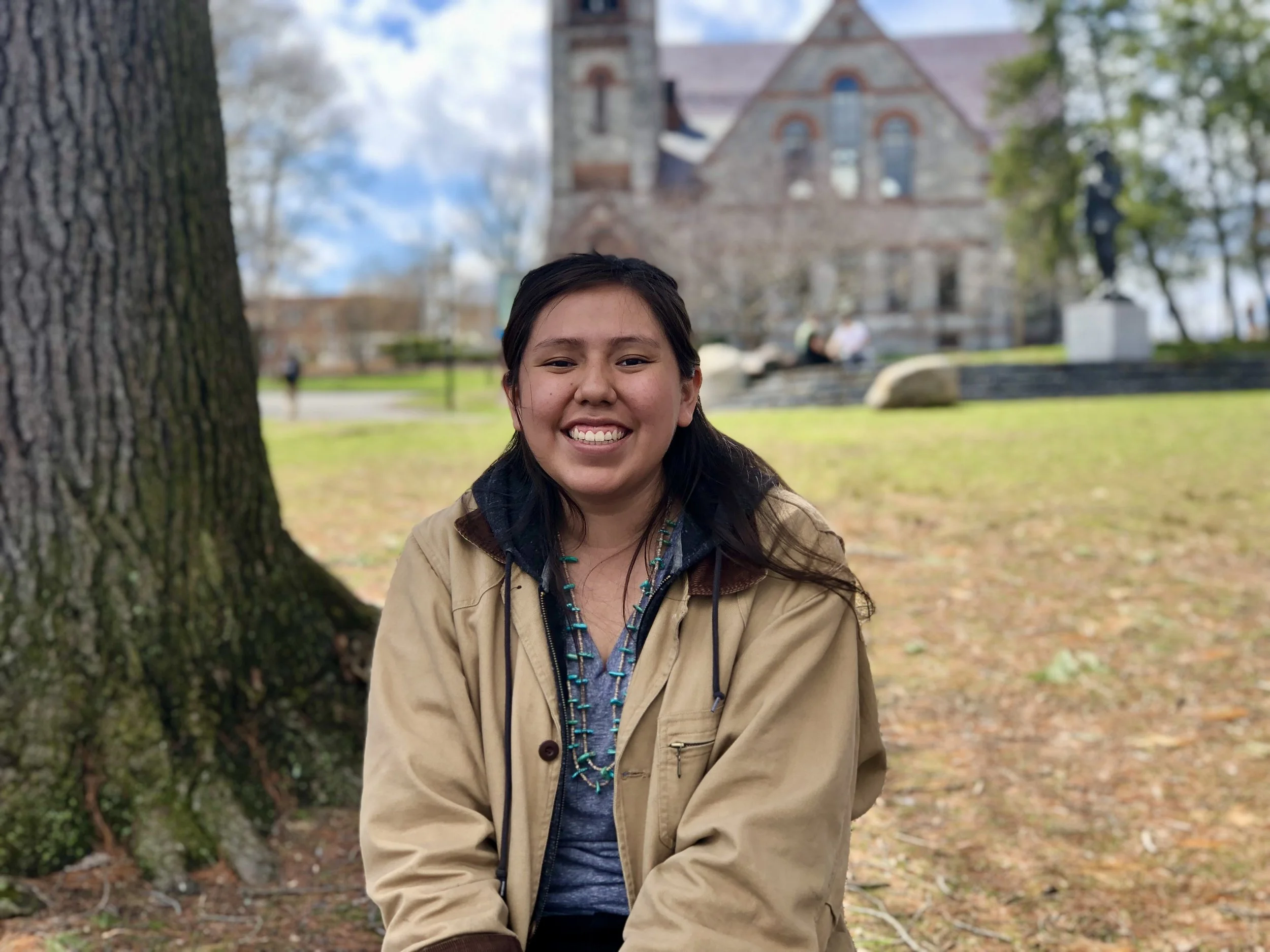
Danielle Shandiin Emerson is a Diné writer from Shiprock, New Mexico on the Navajo Nation. Her clans are Tłaashchi’i (Red Cheek People Clan), born for Ta’neezaahníí (Tangled People Clan). Her maternal grandfather is Ashííhí (Salt People Clan) and her paternal grandfather is Táchii’nii (Red Running into the Water People Clan). She has a B.A. in Education Studies and a B.A. in Literary Arts from Brown University. She has received fellowships from GrubStreet, Lambda Literary, The Diné Artisan + Author Capacity Building Institute, Ucross Foundation, Vermont Studio Center, Tin House, The Highlight Foundation, and Monson Arts. She has work published from swamp pink, Academy of American Poets, Yellow Medicine Review, Poetry Magazine, Thin Air Magazine, The Chapter House Journal, Poetry Northwest, and others. Her writing centers healing, kinship, language-learning, and Diné narratives. She is a MFA Fiction graduate student at Vanderbilt University.