Interview with Elizabeth Stordeur Pryor, Author of “Something We Said: Richard Pryor, a Notorious Word, and Me”
by Rey M. Rodríguez
Elizabeth Stordeur Pryor is a professor of history at Smith College. Pryor is the author of Colored Travelers: Mobility and the Fight for Citizenship before the Civil War (2016), a history of travel by African-Americans before the American Civil War, and Something We Said: Richard Pryor, a Notorious Word, and Me (2026), a mix of memoir and historical reflection on the use of a racial slur — the "N-word."
Pryor knows the power of a single word: if used with hate, it can destroy and damage a person’s heart and, if reclaimed, it can begin to restore a people’s place in history. This conversation, among many other things, explores the personal story of a daughter and her father and the universal journey of how we can employ writing, humor, and art to transcend grief.
Elizabeth, welcome to Storyteller's Corner of Chapter House, the literary journal of the Institute of American Indian Arts. We're grateful to have you with us. How did you become a writer? What was your journey?
I think, for me, I became and unbecame and re-became a writer.
When I was little, my mother had this IBM typewriter. There's actually a photograph of me just staring at it in complete wonder. I couldn't wait until I was old enough to use it. I thought the typewriter itself was magical. From the time I was very young, I was writing stories and poems.
I found some of those poems recently. One of them went something like, "What could be worse than divorce? Singing a song with a horse." I must have been around ten years old. Looking back, they're funny, but they were also my way of making sense of the world. Then I went to college, and something changed.
I think I began to fear judgment.
I wrote an editorial for the student newspaper at Tufts about Robert Bork's nomination to the Supreme Court. Rather than writing a straightforward opinion piece, I imagined what the country might look like if certain constitutional protections had disappeared. It was almost speculative fiction.
Someone on the newspaper staff looked at it and dismissed it. I remember thinking, People aren't going to like my writing.
But that wasn't the first time criticism had stayed with me.
When I was in eighth grade, I wrote a sentence I absolutely loved. My teacher circled it and wrote one word beside it:
"Cliché."
It's remarkable how a single word can stay with you for decades.
Looking back now, I think I slowly began to shrink beneath criticism. That was probably my own immaturity, but it's what happened.
I didn't stop writing.
Instead, I became a historian. Historians write all the time, but it's a different kind of writing. I was putting history onto the page, but I never really felt like a writer. I felt like someone assembling evidence and making arguments.
This book changed that. It allowed me to stretch back toward where I had started—as someone who wanted to tell stories. When I first began working on the memoir, I met regularly over Zoom with another writer who was also biracial and writing a memoir. She kept talking about scenes. I remember thinking, What do you mean by scenes?
I didn't even know the vocabulary of creative writing. She would say, "This needs another scene," and I would think, Why would anyone write in scenes? That's how unfamiliar I was with that world. It became a learning process, but it also felt like a homecoming. It wasn't simply that I was learning something new.
I was returning to something I'd loved before fear interrupted it. Even now, while this book is coming out, I keep thinking I should still be writing. If I want to keep that creative part of myself alive, I have to continue practicing it.
That's such a helpful answer for people who are always questioning whether they're really writers. Reading your book, I was struck before the memoir even began. Your author's note felt like poetry. In fact, I found myself thinking it was almost prose poetry. Every word carries weight. Every sentence feels carefully considered. By the end of it, I felt invited—not instructed—but invited to walk beside you through the journey.
Why was it important to begin the book that way?
Honestly, the author's note began with a practical problem. I was asking readers to enter a book about a word that never actually appears on the page.
That felt important enough to explain. I've read books where writers simply chose not to print the word, and there's nothing wrong with that. But I felt readers needed to understand that this wasn't a casual decision.
I had thought about it very carefully. I didn't want people to assume they already knew who I was or what kind of book they were about to read. I wanted them to understand that this decision came from somewhere. The memoir moves across different places and different moments in time. It also has an unusual narrative structure. So the author's note became a way of orienting readers before asking them to enter that landscape.
It was a way of saying, Here's how we're going to travel together.
What struck me was that it never felt like an apology. It felt like an invitation—almost an act of trust.
That's exactly what I hoped. The note isn't there to defend the book. It's there to establish a relationship with the reader. Because once we begin, we're entering very difficult territory together. If readers understood why I had made certain decisions, then perhaps they would trust me enough to stay with the story, even when it became uncomfortable.
One of the things that stayed with me while reading Something We Said was the sense that this could not have been an easy book to write. I'm not talking about the mechanics of writing. I'm talking about the emotional work. There's grief throughout the book. Pain. Family history. Memory. There are moments that ask you to revisit experiences most people spend a lifetime trying to avoid.
How did you protect yourself while writing?
That's such an interesting question because I don't know that I ever thought about it exactly that way. I've been in recovery for about thirty-five years. About sixteen years ago, I deepened that commitment even further.
Part of recovery, for me, has been creating rituals. A friend once said to me, "You really have your rituals." And she's right.
I wake up every morning and pray. I meditate for half an hour. I eat breakfast at the same time. I call close friends. My days have a rhythm. Looking back, I think those routines became my protection. Because writing this book brought up so much. It wasn't only the memories from childhood.It was also the experience of people not believing parts of the story.
There were draft after draft after draft.
Eventually my editor at Simon & Schuster understood what I was trying to do, but even then I wasn't always sure she liked the book. I'd never had an editor before. She was already thinking about marketing, about covers, about publication. Meanwhile, I kept wondering, Do you actually believe in this book? So I protected myself the same way I try to live every day.
I took care of my body.
I took care of my heart.
I stayed close to the people I love.
And I kept reminding myself that the book—even though it mattered enormously—wasn't more important than my family, my friendships, or my spiritual life. Perspective mattered. There were mornings when I cried during meditation. There were mornings when I found myself singing. That's not normally who I am. But something about writing this book opened emotions I hadn't expected. And honestly...I don't think I've finished processing all of it.
The reason I ask about protecting yourself is that, at the Institute of American Indian Arts, I've had the privilege of listening to the stories of many Indigenous writers. One thing I've learned is that there are wounds people carry not only as individuals but as nations, as families, as communities. Sometimes the pain is so deep that the stories themselves become taboo.
And yet those are often the stories that most need to be told.
Reading your memoir, I found myself wondering whether Black writers carry a similar burden. So many stories have remained untold because they are simply too painful to revisit.
Yet if they remain untold, we lose something essential.
I think that's right. Recently Jesmyn Ward came to speak at Smith College where I teach, and listening to her was extraordinary. There's enormous grief in her work. She drills down into it. She doesn't avoid it. She doesn't soften it. But what amazed me was that, as heavy as her stories are, I don't think I've ever left any other talk feeling more inspired.
That surprised me.
You would think a story filled with grief would leave you feeling weighed down. Instead, I left feeling lifted. I think it has everything to do with how she tells those stories. How she processes grief. How she allows readers to enter it without becoming trapped inside it. That's a remarkable gift. Most of us aren't going to write like Jesmyn Ward. She's a singular writer.
But I do think she's showing us something important. We're not telling painful stories in order to burden other people. We're telling them because some stories have lived in silence for too long. One of the stories people ask me about most often is the moment when my mother—a white woman—called me the N-word. Every single time someone asks about it, I still feel this tremendous sense of betrayal. Not because they're asking. Because I'm revealing my mother at what may have been the worst moment of her life.
There's a part of me that still thinks, "Am I supposed to protect her?"
People are seeing her at her lowest. They're seeing one moment. And then there's another layer. People sometimes judge me for continuing to love my mother after what happened. They think love and accountability cannot exist together. But life is rarely that simple. That moment is part of my story. I can't tell my story honestly without telling it. At the same time, I don't know that it's my responsibility to reduce my mother to the worst thing she ever said. Those two truths exist together.
That's one of the remarkable things about the memoir. It would have been easy to create heroes and villains. Instead, everyone remains deeply human. Your parents are complicated. Sometimes generous. Sometimes deeply flawed. Sometimes both in the same chapter.
Exactly. There were stories about both of my parents that never made the book. Not because they weren't true. Simply because they weren't part of the story I was trying to tell. There are moments readers could easily identify as abuse. I understand that. But my parents were also people who had themselves been wounded. They carried histories I inherited long before I understood them. None of that excuses what happened. But it does complicate it. And I think memoir has to make room for complication.
Does something change for a community or yourself when you tell these stories.
I think it does. But I also think every community has its own relationship to silence. There are stories we inherit. There are stories we're told never to repeat. There are stories we don't even realize we're carrying until we begin writing. Memoir has a way of uncovering those things. Sometimes you think you're writing one book. Halfway through you realize you're writing a completely different one.
One of the things I've been writing about recently is Latino joy. People often misunderstand that phrase. They think joy means happiness. Or optimism. Or celebration. That's not what I mean. I'm thinking more about Ross Gay. His understanding of joy begins with acknowledging one another's pain or suffering. Once we're willing to witness another person's grief—really witness it—community becomes possible.
And from community comes joy. Not because the pain disappears. Because we no longer carry it alone. Reading your memoir, I felt that movement. Your book doesn't deny grief. It travels through grief toward something larger.
That's beautiful. I really appreciate hearing that. Because I do think writing can create exactly that kind of connection. If someone finishes the book feeling less alone—then something meaningful has happened. That's really all I could hope for.
One thing I noticed throughout the memoir is the extraordinary generosity you extend toward your parents. Was forgiveness something you already possessed before writing the book? Or did writing create it?
That's a wonderful question. The truth is...This book began as a much angrier book. Not intentionally. I never sat down thinking, "I'm going to write a bitter memoir." But every early draft carried bitterness I didn't know was there. Something interesting happened as I kept rewriting. The narrator grew up. Every draft became older than the one before it. For years I'd remembered certain events exactly as the child who experienced them. When I thought about my mother calling me the N-word, I wasn't remembering it as an adult.
I was remembering it as a twelve-year-old girl.
Roller skates.
Dolphin shorts.
That's who was remembering. That child never changed. But during the writing process, something shifted. Suddenly I wasn't remembering solely as the child. I was remembering as a mother. As a scholar of Black Studies. As a wife. As someone who had experienced disappointment herself. All of those identities entered the memory. They didn't erase the pain. But they changed its shape. I think that's where forgiveness began.
Not because the past changed.
Because I had changed.
One of the things that moved me most about Something We Said is that forgiveness never feels sentimental. It isn't something that simply arrives at the end of the story. It seems to emerge from understanding. The more deeply you understand your parents, the more complicated they become.
Was that one of the surprises of writing the memoir?
Absolutely. When I began writing, I thought I understood my own life. But writing asks you to look again. Every time I returned to a memory, I saw something different. Sometimes I saw the child I had been. Sometimes I saw my parents as young adults instead of simply as parents. Sometimes I saw how history had entered our family before I was even born. That doesn't erase responsibility.
People are still responsible for the choices they make. But understanding and blame are not the same thing.
Writing gave me more understanding.
It's striking because readers often expect memoir to settle scores. Instead, yours seems interested in asking better questions.
That's exactly what I wanted. If I had written the book twenty years earlier, it probably would have been about proving something. This book became something else. It became an attempt to understand. I don't think readers need another book that tells them who was entirely right and who was entirely wrong. Life doesn't usually work that way. Families certainly don't.
Your father is one of the most influential comedians in American history. For many readers, Richard Pryor is already a cultural icon before they open your book. But your memoir asks us to meet him as a father.
How difficult was it to write about someone the world already thinks it knows?
That's probably one of the hardest parts of writing the book. Everyone has their own idea of Richard Pryor. People know his routines. They know the public stories. They know the legend. But I knew someone else. I knew my father. Those aren't always the same person. One of the challenges was figuring out how to honor both realities. I wasn't trying to dismantle the public image. Nor was I trying to protect it. I wanted to write honestly about the man I knew.
Sometimes that man was incredibly funny.
Sometimes he was generous beyond belief.
Sometimes he was wounded.
Sometimes he caused tremendous pain.
All of those things are true.
One of the things I kept thinking while reading the memoir is that comedy became one of your father's ways of surviving. Not simply entertaining. Surviving.
I think that's exactly right. Humor wasn't separate from pain. It came out of pain. My father transformed experiences that might have destroyed someone into stories people could hear. That doesn't mean the pain disappeared. It means he found a way to carry it. Comedy became part of that process.
As someone who studies literature, I often think about testimony. Some people testify through memoir. Some through poetry. Some through novels. Richard Pryor testified through comedy. He told truths that many Americans weren't ready to hear unless they arrived wrapped in laughter.
Yes. And that's harder than people realize. People sometimes assume comedy is easier because people laugh. But making people laugh while also asking them to confront racism...that's incredibly difficult. He wasn't simply telling jokes. He was asking audiences to recognize themselves. Sometimes audiences laughed before realizing exactly what they were laughing at. And then something shifted.
That's powerful.
It reminded me that laughter can become a form of resistance. A way of surviving systems that were designed to diminish your humanity.
Absolutely. Humor allows people to speak truths that might otherwise be impossible to hear. But it isn't only resistance. Sometimes it's love. Sometimes it's vulnerability. Sometimes it's grief wearing another face.
As I read your book, I kept thinking about students. Many young writers believe memoir means recounting everything that happened. Your book suggests something different. Memoir isn't about remembering everything. It's about discovering meaning.
I think that's exactly right. Memory isn't a recording device. It's alive. It changes as we change. The events themselves don't necessarily change. But our relationship to them does. That's one of the reasons revision became so important for me. Every time I revised, I understood the story a little differently. Not because I was changing facts.
Because I was changing.
That reminds me of something many Indigenous poets and writers have shared with me—that stories are living things. Every generation hears them differently because every generation needs something different from them.
I love that. Yes. Stories continue to speak because readers continue changing. That's one of the beautiful things about literature.
A reader encounters the same book at twenty and again at fifty. It's almost never the same experience.
The book hasn't changed.
The reader has.
Was there ever a point when you thought, "I can't publish this."
Many times. There were moments when I thought, "Maybe this should stay in the drawer." Not because I didn't believe in the book. Because I understood the consequences. Publishing memoir means saying, "Here is my family." That's frightening.
You worry about people you love. You worry about people misunderstanding what you've written. You worry about reducing complicated lives into a single narrative.
Those worries never completely disappear.
At some point you simply decide that the conversation the book makes possible is worth the risk.
One of the boldest artistic decisions in Something We Said is that the racial slur at the center of the book never appears on the page. As I read, I realized something unexpected. Its absence somehow made it more present. Readers supply the word themselves. They confront it internally rather than simply seeing it in print. Did readers respond to the omission the way you hoped they would?
They've responded in ways that have surprised me. Many people tell me they didn't even realize the word never appears until they finished the book. Others say the omission made them think more carefully about language than they ever had before. That was never about avoiding history.
History doesn't disappear because we stop printing a word. The history remains. The pain remains.
But I wanted readers to experience that history without repeatedly reinscribing the violence of the word itself. For me, there was a meaningful difference between discussing the word and reproducing it.
It strikes me that the omission asks something of the reader. They're no longer passive. They have to participate.
Exactly. Reading becomes an ethical act. Readers have to decide how they're going to move through the story. That interested me much more than simply placing the word on the page.
Every writer releases a book hoping readers will discover something. Sometimes readers discover something entirely different. Has anything surprised you about the conversations people have wanted to have after reading Something We Said?
Very much so. Some readers want to talk about race. Others want to talk about addiction. Others want to talk about family. Some people focus on my father. Others hardly mention him at all.
That has been fascinating.
Once a book leaves you, readers begin creating their own relationship with it.
You realize the book isn't yours anymore in quite the same way.
People bring their own histories, their own losses, their own questions. That's one of the gifts of literature.
One of the reasons I wanted to have this conversation is because so many of our students are asking themselves whether their stories matter. Some are writing about family. Some about migration. Some about tribal history. Some about grief. Some wonder whether anyone needs another difficult story. What would you say to them?
I'd tell them that only they can tell their story. No one else has lived their life. No one else has exactly their perspective. That doesn't mean every story has to become a published book.
But it does mean their voice matters. Writing isn't only about publication.
It's a way of understanding ourselves. Sometimes we begin writing because we think we're telling one story. Then we discover we're really asking another question entirely. Be willing to be surprised.
Be willing to follow where the writing leads. And don't be afraid to revise. Revision isn't failure. Revision is thinking. Revision is listening more carefully.
That's where so much of the real writing happens.
Reading Something We Said, I never felt that you were asking readers to judge anyone. I felt invited to witness. There's a difference. Witnessing requires compassion.
Judgment often requires certainty. Your memoir seems deeply suspicious of certainty.
I think that's one of the nicest things anyone has said about the book. Because certainty can close conversations. Curiosity keeps them open. I wanted readers to remain curious.
About my family.
About language.
About history.
About themselves.
If the book encourages people to ask better questions instead of reaching faster conclusions, then I think it has done its work.
Rey M. Rodríguez has an MFA in fiction from the Institute of American Indian Arts. He recently released his debut book of poetry, Todos Somos Sagrados / All Are Sacred (El Martillo Press 2026), and he is working on a novel set in Mexico City.
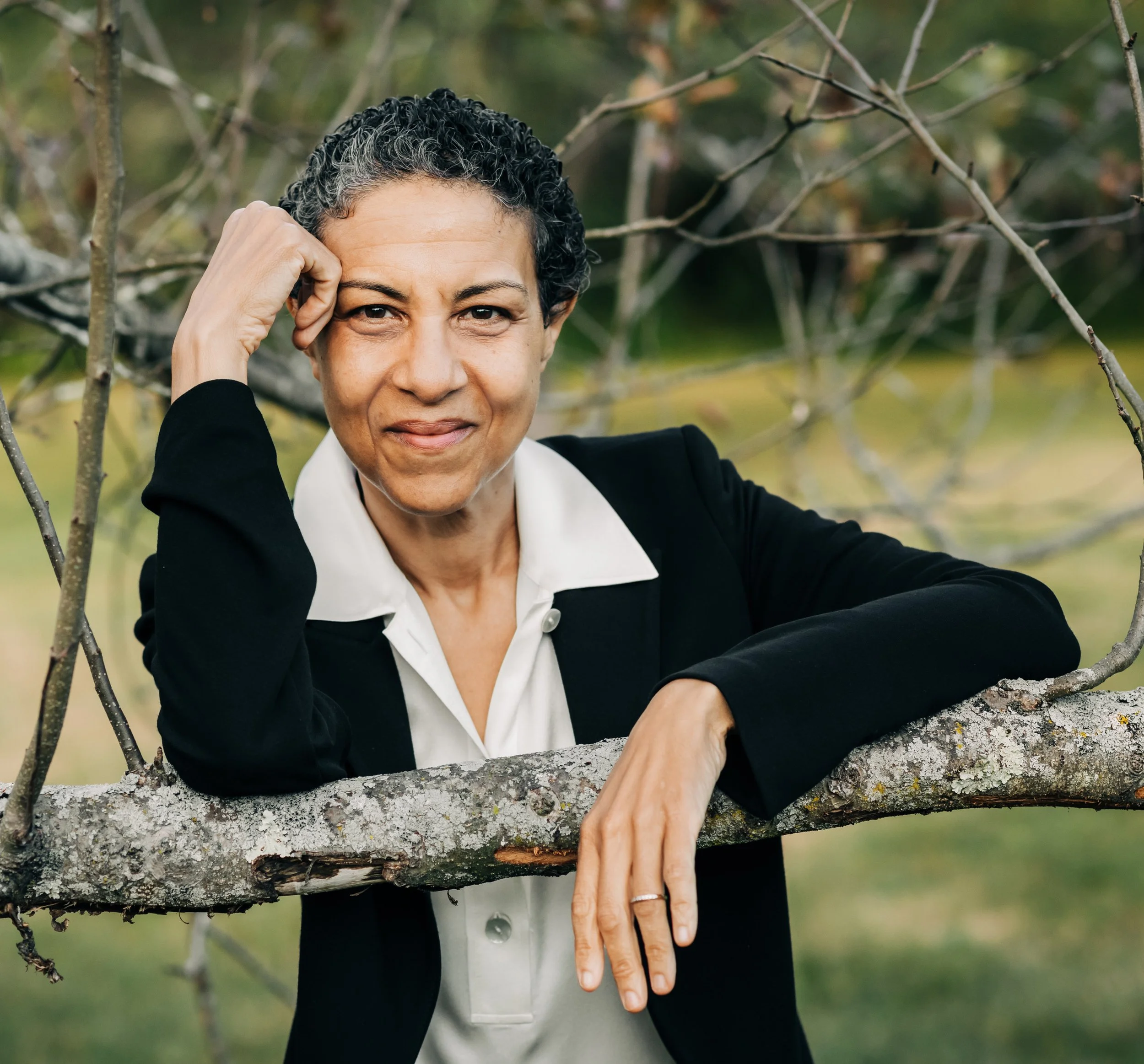
Photo taken by Isabella Dellolio