Interview with Richard Blanco, fifth Presidential inaugural poet
by Rey M. Rodríguez
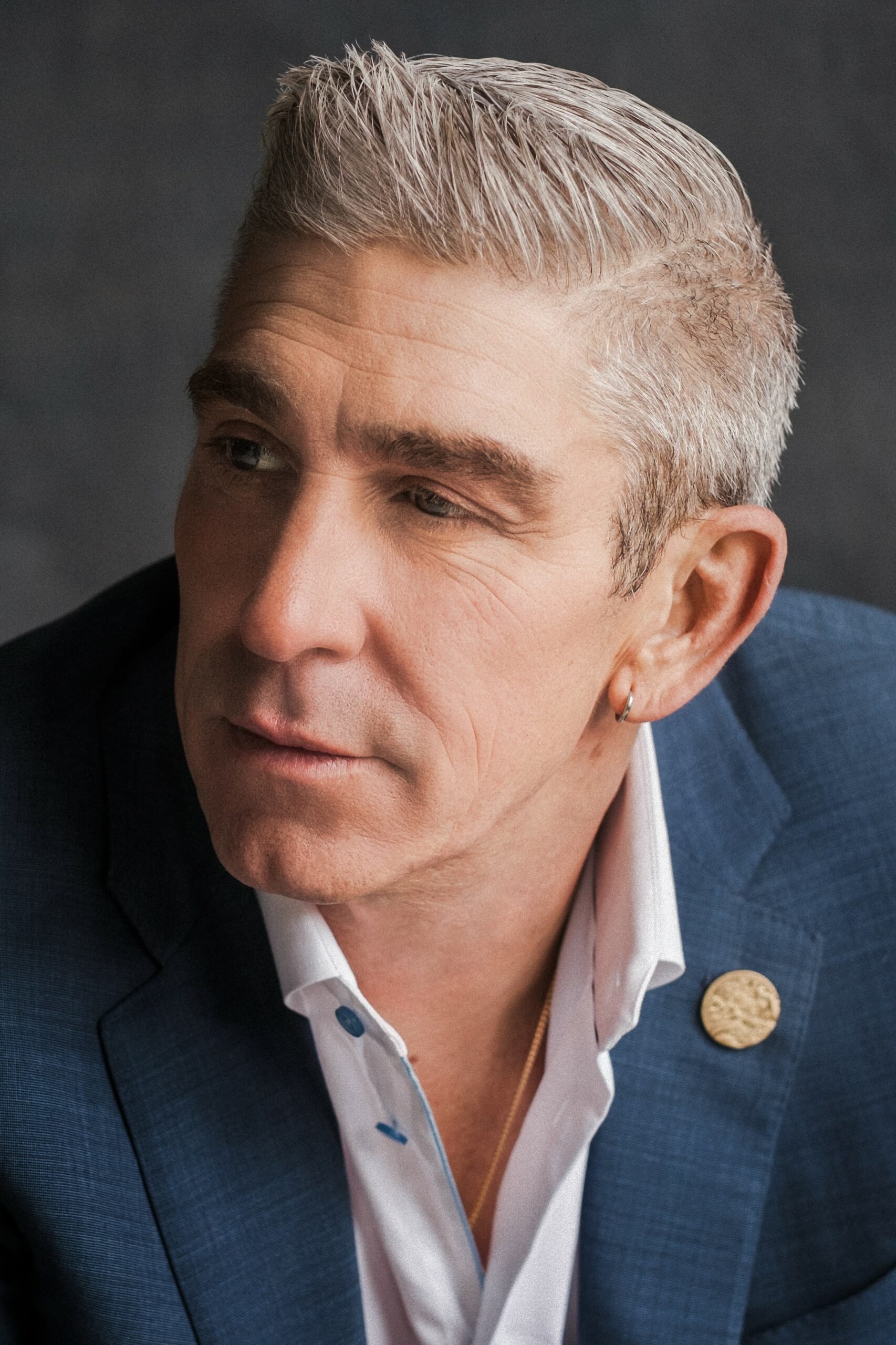
Richard Blanco’s life reads like a map whose borders refuse to stay still. Born in Madrid to Cuban exile parents, raised in the working-class neighborhoods of Miami, and called upon to speak at a national event as the fifth Presidential Inaugural Poet in U.S. history, Blanco embodies the beautifully complex journeys of belonging that animate his writing. He was the youngest person and the first Latine, immigrant, and openly gay poet to deliver an inaugural poem, summoned by President Barack Obama to help the nation imagine itself anew. A decade later, President Joe Biden awarded him the National Humanities Medal, recognizing a body of work that continues to expand our understanding of identity, home, and the American story.
Across numerous poetry collections, including his most recent, Homeland of My Body, Blanco invites us to rethink “home” not simply as a place outside us made of walls and streets, but as a spirit we carry, build, and rebuild within ourselves. His essays and memoirs—For All of Us, One Today: An Inaugural Poet’s Journey and The Prince of Los Cocuyos: A Miami Childhood—trace how family, migration, community, and love shaped a voice that speaks both intimately and universally. Over the years, his work has garnered prestigious honors: the Agnes Starrett Poetry Prize, the PEN American Beyond Margins Award, the Patterson Prize, a Lambda Literary Award, and many more. A former Woodrow Wilson Fellow with multiple honorary degrees, he continues to serve the literary world not only through his own art but also as Education Ambassador for The Academy of American Poets and as Associate Professor at Florida International University. In 2022, he also became Miami-Dade County’s first-ever Poet Laureate.
We sat down with Richard Blanco—a poet who has stood at the podium of history and still writes with the heart of a son, a neighbor, and a seeker—to explore the stories behind his work, the evolving idea of home, and the role of poetry in defining who “we” are.
Richard Blanco, thank you so much for agreeing to be interviewed by the Storyteller’s Corner of Chapter House, the literary journal for the American Institute of the Institute of American Indian Arts.
Blessed, my pleasure.
How did you get into writing, and why do you write?
I grew up as a lower-working-class, immigrant, gay kid. There were many roadblocks to a life in the arts and humanities. As a working-class family, we weren't talking about Picasso around the dinner table. That's for sure. The business of the day was survival.
There was also a cultural barrier. My parents were Cuban, so they didn't know who the hell Robert Frost was or even who the Rolling Stones were. My grandmother, who was my primary caretaker and who lived with us, was homophobic. As a result, my career choices were limited. One time, I wanted to study architecture, and she thought that was too gay. I say this with the kindness of my heart, because it wasn't as if they were purposely trying to limit my choices.
It's just what they knew, right? And they didn't necessarily hold me back. But it's what they knew, and I only learned what they knew. I was lucky enough to be right-brained, left-brained. I was great at math. Indeed, I've loved every subject. I still do, and I went on to study civil engineering.
I was a practicing civil engineer most of my adult life, as well as being a poet. But it was in engineering where I discovered writing, which is something I wasn’t prepared for. As an engineer, it is necessary to write reports, studies, and letters. Most importantly, I had to write proposals for big jobs. Doing so is essentially writing a narrative of your vision for the project, and I enjoyed getting into the language.
After winning proposals and getting awarded jobs, I realized that language was key to my career. That's the person who gets the promotion. I always wanted to do something creative to add to my resume, but not necessarily switch my entire livelihood. Even if I had wanted to, given my circumstances, I had to make some practical choices.
Something else that was essential was that I never remember not knowing two languages.
When I was four or five, I was translating for my parents. Small words or phrases at that age, but it was imprinted on me that language should not be taken for granted. Language was not just a form of communication, but a way of thinking, of breathing, of living, and that language is power.
In some ways, while translating for my parents at that age, I decided to start writing poetry out of the blue. In essence, I was naturally attracted to it, but this act was not a conscious decision.
I was writing poems about daffodils in Miami and imitating all the white British dead poets, which is all I knew from high school. I eventually took a creative writing course at a community college, and another, then eventually got into a master's program at my alma mater, where I got my engineering degree.
But I never quit my engineering job. I couldn't, so I managed both for most of my adult life.
Tell me about going back and forth between Spanish and English. When I was growing up, there was this idea that you must assimilate. You must speak one language. You should give up your language, and I'm wondering how things transpired for you in terms of the power of being able to speak and write in both languages and the difference in your poetry when you do both, or include both in your poems.
I grew up in very special circumstances, called Miami. If you don't know Spanish, you're screwed.
My mother has yet to speak a sentence to me in English. We spoke Spanish at home, and ninety-eight percent of my schoolmates had the same experience. So we would code-switch back and forth. But I have read articles about how the bilingual mind is a great problem solver, because they always see at least two ways of looking at something. I was looking at language itself and understanding the nuances of it, because I knew two languages. Even when I text my mom in Spanish, I realize how cool it is to express myself in this whole other way.
But, of course, I wasn't educated in Spanish, so I can't speak about post-colonial literature in Spanish. And over the years, I've lost a bit of it, and that hurts. But if I go to a Spanish-speaking country after a few days, I'll just jump right into it, but it is rare to be truly bilingual. Most of my life is now in English. I don't write in Spanish per se, because, first of all, my story is a very American story, right? It’s something that happens here in the United States. I don't know if my parents had moved to Japan that I'd be considered a Japanese Cuban poet.
I'm writing in English, and there are also very different concerns and very different traditions than Latin American poetry per se.
Of course, I love the language. I love the way it makes it into my writing in a couple of ways. One is, I've been told that my work is lush and descriptive, textured, and I think that comes from my sensibility of the Spanish language, but also that's a reflection of the lived experience of that language. The culture itself, which is much more expressive and much more flourished, much more baroque.
Yes. Very much.
And I've almost run operatic. In English, I think it's my strength, but it's also my weakness, because I can overdo it. It can become overly overwrought. So that's one way that I've noticed. The other way is when I travel to a Spanish-speaking country, especially Cuba. Of course, I start thinking in Spanish and not translating in my head, and so I'll start poems in Spanish. But what I like to do is start the poem, write two or three lines, and translate them into English. Rework it in English and reverse translate it into Spanish. Rework it in Spanish, translate it again into English a second time. And so I kind of co-create the poem so that I'm trying to find how to say what I want to say in the best way possible in both languages at the same time.
I usually present it as one text, like intermingled, not like a poem in its translation, and it looks like a literal translation on the page. But it actually was created simultaneously. And that's a great experience and exercise. It's where you wish Spanish had possessives like in English. But then you also understand the beauty and musicality in Spanish, which is so much harder to get in English. It can be so much choppier and whatnot.
But I won't translate my own work. I have had translators do a translation, which is another fascinating thing. My translator once said, I'm not translating your work. What do you mean? I'm actually putting it back in the language in which it happened. And so that's especially true for most of the childhood memory poems, or even poems about my mother or my father. All those interactions were in Spanish, and so the poem is already a translation of a world lived in another language. I had never thought of that. And that was fascinating.
Wonderfully powerful.
Yes, so when I use Spanish in my English poems, he would ask me, Is that really what they said? And so he has the issue of finding out what they truly said in Spanish.
Diane Billyak interviewed you, and during the interview, you said something about poetry that was just so beautiful. You said “that poetry is smarter than we are” or that “the poem is smarter than the author.”
With poetry, there is an analogy to the way that music happens in us, and how music is received. Every time I write a poem, I feel like I've discovered something that I didn't know before.
The process is very different than perhaps writing fiction. Or maybe it is that you're invested in the characters differently. Where you are your main character in a poem, and even in a memoir. So the idea is that the poem is speaking in a language that the reader is not walking around every day.
Yes.
Language to that level makes me think, and thinking makes me write, and writing makes me think, and thinking makes me write, and then they keep on teaching me for years. There are things that someone will say about a poem, and I was like, Wow, I never realized that. Or another thing that just happened in this latest book, Homeland of My Body. For reasons, I'm not going to get into too much, I had to come up with a handful of new poems, and it was getting close to the deadline. I went back to some poems that I never published from graduate school because they never belonged in the first book, and I realized that my subconscious was already concerned with the same issues that I'm writing about at age 56.
They're smarter than I am. So that's part of what all that means to me. They teach me when I write them. I don't consider it a poem until I've learned something new about myself, about the world, about people in my life, about a memory. And then they also keep on teaching me as they live in the world, as they start living in other people, and are shared with other people.
Once you release a poem into the world, you must be amazed at what happens to it. You may find it in different places that you didn't expected it to land.
Yes. And sometimes, we're our worst critics, and also the biggest champions of our poems. Sometimes we don't have the clarity of mind to understand what poems are working, which ones are not working as well, until you share them with people. And again, this is how it's so much more like music and like drama when it's shared, because it's in the DNA of poetry, which is an oral tradition. It's music, prayer, chant, and drama.
People will share stories with you, and that is when you realize the impact a poem can have on people’s lives. You might think that it's an okay poem. Or I'm going to read it because it fits the theme of the evening. But I don't expect much out of it. And then the poems that sometimes you think are really there, you read them, and nobody has a reaction to them.
There's a poem in particular, called “Looking for the Gulf Motel,” which is also the title of the collection.
And there's something about that poem that I couldn't have premeditated, but it touched people at some universal level, even though it's a poem about a specific place. It describes a Cuban family and a vacation spot. After hearing it or reading it, people tell me all sorts of stories about their family, where they were, whether they came over on the Mayflower, or whether they're Asian, American, or whatever. Everybody has some place like this in their life. They connect to the poem.
And I didn't think much of the poem, and it ended up becoming the first poem in that book, and also the title poem of that collection. So you never know.
I read that poem, and I had that same reaction, because I think everybody has been to that motel.
Months out, it is like a memory.
. . .That is almost seared in your memory.
That you'll never really forget.
Did you have any idea where you would end up with your poetry? Was it something that you had to do, or did you have a vision of where it would land?
I guess it is a deep-rooted fascination with language or a deep curiosity about language. There was one particular moment when I started writing. But I was still circling the mountains, so to speak, and I was rereading some of the poems I had read in high school. One was the famous poem by William Carlos Williams, “The Red Wheelbarrow.” I'm reading this poem in the family room, which opens up to the kitchen. I'm watching my mother cook dinner, as she's done all my life, with the same apron and the same dull knives.
The William Carlos Williams poem reads as follows: so much depends / upon a red wheelbarrow / glazed with rain water / beside the white chickens. And it's the most famous little poem in the world, right? And I thought, looking at my mother, so much depends upon my mother dicing onions in her tomato-stained apron.
And I am sitting there realizing that it has become a personal definition of what poetry is for me, which is finding the extraordinary in the seemingly ordinary moments of our lives. And that's when I got hooked because I found a personal definition for how poetry mattered in my life. With poetry, I could go back through my life and think about all these things, and how they've had meaning. And that's what the artist does. Most people don't do that, at least not in the same way. Anais Nin said something very similar, which is, writers taste life twice, right?
There's no doubt.
That was how it happened. Or at least that was one of the inflection points. But no, I've never really had a long-term plan or strategic plan. There are periodic moments along the way, like any career, any endeavor, where you reevaluate things? At the beginning, I was an engineer, so I was just doing that work.
I was doing it with commitment and serious pursuit of the art. But I didn't do it with the ego. It was just following my pure, creative, and intellectual curiosities. For that, I was all the better for it because I didn't have, or at least I didn't feel like I had that much at stake.
That approach lets you be more creative and take more chances. And I think that's partly why my MFA thesis got published as my first book. But then again, I've been through the dark night of the soul. The second book was absolute hell, right? Because now I was a poet with a book.
Oh, I see!
And I had taken a teaching job. I know poetry. I'm teaching it, and then the ego set in, and it was like the second book had to be the Pulitzer Prize winner, and Yada Yada Yada. And then that was an inflection point where I had to reevaluate and get back to doing it with as much purity as possible, though I couldn’t go back in time and be that innocent twenty-something-year-old kid writing poems.
And then came another inflection point.
There was a moment when I quit all my engineering work, in part because I was working remotely. I had moved to Maine, and also the company I was working for since I was about 19 years old got sold to a multinational company. I didn't feel like I wanted to work in a place like that anymore.
And so I paused and said, Well, I’ll recommit myself to thinking about pursuing the career of poetry a little more actively, and thinking about maybe I can get more readings. Have a bit of a part-time income to help out in the household.
And it wasn't a big deal, but it was a slight tweak in what I was doing and opening up to new possibilities. And then, a few months after that, the White House called to ask that I serve as the Presidential Inaugural Poet, and of course, that was an inflection point for my career.
We grow up with this American sensibility of making a plan. This capitalist idea of make a plan, stick to it, and everything's going to work out exactly as you plan it.
I don't think that's true, especially not in the arts, but I don't think it's true for anything. You reevaluate. Step away, but you do your time. You show up, you take inventory, you try, improve, and build upon what you've already had, and try to be as ego-less about it as possible.
The ego stops you. It's harder for me to get into a creative space. Now, after all this attention, which I'm glad to receive. I'm not dismissing it or saying that's a bad thing, but it's harder, because my mind is so filled with other stuff than poetry. It's twenty-four hours a day. And so, getting back into that sort of bubble of creativity, of sheer creativity, has become harder. And you would think from the outside looking in, oh, this guy, he's had this great success. It should be easy for him. He's living the dream right, and I am in some ways. But, in many ways, it also gets a little harder for the Richard that sits down to write. No award, no accolade, no, anything will keep you writing right. One has to forget all of that, to open oneself up and keep on challenging oneself.
Well, thank you for that honesty. I appreciate that. Let's get into your book. Homeland of My Body. I'm calling in from Pasadena, California, where this past weekend has really been painful, a kind of extraordinary moment.
The ICE raids invading Los Angeles are tearing apart the idea of the United States that I grew up with. Reading your book at the same time as living through this horrific moment was both helpful and a reminder of this push and pull between loving this country and then wanting it to be so much better.
So you wrote this poem, “America.” In the fourth stanza, you're talking about Thanksgiving, and in the poem, you explain to your Abuelita about the “Indians” and the Mayflower, how Lincoln set the slaves free, the purple mountains majesty, and One if by land. Two, if by sea. Almost everything in that stanza we know now to be largely a myth. How have you been working with the idea of the myth of the United States?
I always like to say every poet is writing one poem all their life.
In some ways, and for me, that has always been the question of home belonging identity in many, many dimensions or aspects. That poem that you just quoted. That was the very first poem of the very first book. It's from the child's point of view, right? When you believe all these wonderful myths. And, myths are still giving something to cling to, even if they are incorrect.
So a lot of the trajectory of my work has been negotiating both the Cuban American and the Cuban myth. What is an exile? I am questioning all those things that come back to that big word of home. And there have been different iterations. That first book, I like to think of it as a cultural coming of age story, where people sometimes misunderstand that children of immigrants grow up loving their given culture, and well, we don't.
Because it's our parents and grandparents, and nobody wants to be like their parents and grandparents. But I started writing that book, right about 20-something, which is a big time when you ask, where am I from? What is this culture, this history, and this heritage that I inherited? And so the book is tracing the boy, and eventually a teenager and a young adult, and telling a cultural coming-of-age story. Realizing this is very much what he's about, and that while America is also part of that myth, there's something that he hasn't been taught about as well, or it hasn't believed in as much. And then the second part of that book, I go to Cuba to see the homeland.
The second book became that same question. But I started traveling more. I lived in Guatemala for a while, Brazil, and a couple of other cities. And so the question of home became broader and more cosmopolitan in a way.
What is home to people in Rome, and maybe that's my home. Maybe it's not Cuba or America.
Okay.
And then the third book opened up another dimension of home, which was sexuality, which I had never really thought about. I thought those were two separate issues, and then I realized that home is a safe space when you come out, when you're a kid, even, and the idea of creating community and a support system around your new identity. That's home, right?
And then in, How to Love a Country, I dive into thinking about those myths right after serving as the Presidential Inaugural poet. Well, the question of home was not even just autobiographical. But home was what is.
What does home mean to all of us? What does this country mean to all of us? And, as the title says, How to Love a Country.
You can almost put a question mark behind that, right? How do you? What is a country? How do you love one? How can you take a country like ours with so much dark history, and still believe in it, right?
And so part of what that book was about was that question on that journey. At the end of the day, I still maintain a certain amount of optimism. That's partly ironic because of my immigrant background. I like to say that my parents are more American than I could ever be, for their belief in these values, which we are seeing fall apart. When I think about what my parents sacrificed, especially my mother, who left her entire family behind in Cuba, and to see this all fall apart, because I have that inherited trauma, even though I'm an immigrant by 45 days, I got here when I was 45 days old.
It counts, but I inherited it almost genetically, epigenetically.
Yes.
And I've had talks with my mom, who sees what happened in Cuba without a dictatorship and all that stuff, and the thought of me having to do what my parents did is beyond my imagination.
It's heart-wrenching in ways that are paralyzing. Now I've been paralyzed. I've not been writing for a while, which is not unusual after I finish a book. But how do I land on what's going on right now? And how do I think about it? As I said, every time I write a poem, I process something, and it leaves me, at times, more at ease. Sometimes it makes you think even more. So, in Homeland of My Body, the new poems in it, we're letting go of home in the sense of a fixed geographical space.
Home is a state of mind, and that home I've never lost. It's everything that I've taken with me, all my memories that live in me, and that's of my body. It is my ultimate home. But also in the new poems, there are a lot of conversations with other artists, with other writers, poets, photographers, painters, and thinking that art itself is a kind of home, a place that I can exist on the page itself.
Of course.
Letting go of the ego, I have to find paradise. If you save enough money and buy a house in Brazil, then I'll be happy for the rest of my life. But now and again, I don't know what the next iteration of home will be, but definitely, it's something that one can’t ignore the present moment, which is the big home, right? The big capital “H” is our country. That's a big, big deal that affects everyone in so many critical ways.
It's interesting in How to Love a Country where you write about Ireland. I love that it's an island, and Cuba's an island, and how you were able to make these connections between these two different worlds.
We often say, we're all Irish, but you take it to a different level.
I thought you made beautiful connections.
Ireland was one of the most amazing places. I was there for three weeks. The European Union awards every year what it calls a “city of culture,” and it gives all kinds of money to a particular city that gets elected to do arts programming, from music to writing. And I was asked to be a poet-in-residence in Limerick, Ireland, which is not Dublin, but it was even more special because I was living with the Irish. I mean real Irish people, not just a throng of tourists. I was eating in their homes, going to their pubs. I've never felt a connection with another people like that. There must be a league of traumatized islands, because their sensibility is, I swear to God, the same as that of Cuba. Also, they love their poets and poetry.
Yes.
Statues of poets are everywhere. They know everything about poetry, and there's a certain melancholy or bittersweetness to their lives that parallels my experience as a Cuban American, and what I know about what I have felt about my parents, grandparents, and my community at large. There's a diaspora. There's Miami, and there's Cuba. There are these two places in the same way the Irish have such a presence in the Northeast of the U.S., especially in Boston. There are these two Irelands, so to speak, and that's an interesting conversation.
Also, I try to pay tribute in that book to other immigration stories that I can highlight or have perhaps some emotional authority to highlight, because I connect with them. And it's not just Cuban, but that there's a larger story about what country means and what we're not.
I'm not the only one who's gone through this or has questioned this. We all have in some way.
Yes, I thought that was beautiful. The other one that hit me was when you talked about leaving everything behind.
It's a poem where you're imagining you have to give everything up.
Oh, yes.
I'm feeling that moment now because we're hearing all these stories of ICE coming in and removing parents. Children are coming home, and no one's home. This agony and cruelty are happening now. You're able to get into this idea of what it would be like if this were my last day here? People are self-deporting. So, how did that poem come about?
The poem is called “Imaginary Exile.” It's always been in my mind, especially again, with respect to my mother, who left everybody behind—her eight brothers and sisters, her parents, every aunt and uncle, every niece and nephew.
That day has always been in my mind. How do you do that? What does that last day look like? How could you possibly have the strength to do that, right? How do you?
My parents left in 1967, almost a full 10 years after the Cuban Revolution.
It was a self-exile, because it was a harder decision to make than those who had to leave because their lives were in danger. They chose to leave. How do you make that choice? How does that even come to be?
It's mind-boggling. Now, we travel with cell phones, ATM cards, and whatever we need. My mother is seven months pregnant with me, my brother, 6 and a half years old, with 50 cents in their pocket. It’s November. They land in Madrid. My parents have never been outside of Cuba in November. Madrid is raining and freezing.
My God.
How do you do that? And so that sense of courage, also, and that leap of faith, that I come back to write about again.
How my parents believe in this country makes them more of a patriot than I could ever be. I wrote that poem out of that space. But now I'm living in it in a different way, as you're saying. This is more of a reality than an exercise. I thought that would never happen to us in this country. That it wasn't even close to what is happening politically in our country. And here we are. And in some ways, of course, it's worse, because there isn't even any sense of predictability or the ability to make those choices.
It's inhumane. That is what it is at the end of the day.
Instead of trying to devise a humane immigration policy where the country would at least give people a path to citizenship, they bring in 700 Marines and 4,000 National Guardmen. How do you tell yourself a story that this is acceptable? And that you could do this to people, but I'm curious about this poem that you wrote, “American Wondersong.”
How do you construct a poem like that one? I was just in awe at how you crafted it.
It was a challenge that I gave myself to write a long poem, which I had never done. It started as a much shorter poem, and it felt too compressed for everything that I was trying to put in there. A couple of my readers and my editor at Beacon finally said, Either you have to slice this into one thing, or keep on going with it. Keep on exploring. Dive into it. And so to me it's, of course, that same question of home, right? I am trying to detail inflections, moments, and phases in my life, where all that happened. To me, it's a sort of “Leaves of Grass.”
Yes. And the Jose Martí part that you quote. I love.
And of course, he lived in exile most of his life.
And in New York, which is this great irony? I take those two icons: one from my American side, and then one from my Cuban side. And I am thinking what is my wonder song about, place, home, belonging, and very specifically, to country?
My thinking about home has shifted and changed and redirected itself. And all of that, of course, is reflected in the poems as in the collections as they happen.
But do you work from an outline? Do you know where you're heading? Or do you start writing? And then it leads you somewhere? How do you work with form?
So no, I never have an outline. I usually begin a poem by writing a bunch of crap. I throw words on a page. And whatever comes to me and conjures images, some phrase that I like. Maybe it's something that feels like a refrain or whatnot. It's a real messy process. Eventually, writing is a process of exercising all the garbage language you bring to the page, and then reaching a deeper sense of language. It is also exercising your expected reaction to something. We sometimes come to the page already convinced about what we feel, and I've learned that's a big mistake, because sometimes you feel something much more complex than what you think you're feeling.
Eventually, there's a line or an image that I realize: that's poetry. That's Richard the poet, not Richard, “the guy who has changed to cat litter and the guy who's like giving people the birdie on I-95.” Your artistic persona serves to make you an artist, right? I go back to the analogy of music. I feel like I'm trying to tune a guitar or piano until I hear that right note.
It's not that the poem is written. I am just able to trust the poem and the direction. But of course it's not linear, because then you get inspired. You're on a roll. And then you hit another little roadblock where you have to go back to that generative space and get back to scribbling and whatnot, and then back and forth and back and forth.
So that's the way a poem usually happens for me.
In the most extreme case, I have to keep everything in one file. So there's one particular poem in How to Love a Country, which is called “Easy Lynching on Herndon Avenue.” And that file is 40 pages long.
That's copying and pasting, reworking, and going back to notes to myself. I think I got it, and it slips away. I put it into a prose paragraph to see what happens, and put it back into lines.
That's an extreme case, and that's not to count the pages that I print, and then scribble on by hand.
Do you start with the form? Or does that come later?
No, I don't typically write in traditional forms, but I am looking for a structure in that process that I explained. Is this in couplets, or is this in like one long stanza, or does this have a refrain, or some repetition that varies throughout the poem that builds a framework for it?
Not a fixed form, but a framework. And so I'm looking for those things. Each poem has its own way of wanting to speak. So maybe it's four-line stanzas. Okay, let me try working this in four-line stanzas and see how that parcels the poem, right?
That's wrong. And it wants to be 5, 8-line stanzas. And so I'm trying to find an organic structure or framework for that poem to work best. Sometimes. I've written in traditional forms, sonnets, estinas, villanelles, etc. That's just in my back pocket. And so sometimes I'm thinking this might be a really good candidate for a specific form.
Hmm.
When I teach, I always try to impress upon students that it's about trying to find the right form with the right content. So if you're going to write a long narrative, a sonnet isn't your best choice, because you've got 14 lines. But maybe a sistina might be an interesting thing to give that long narrative some interest and energy by paying tribute to that form in some ways.
In the same way, there's a poem called “Love Poem According to Quantum Physics,” which is a villanelle. Obviously, it's about my beloved, and thinking about who I would be without that person in another universe. And so, since the sonnet and the villanelle repeat, I thought that might be interesting. But also, it's very mathematical, right?
The form fits the poem.
I look for opportunities sometimes. Can I write this for a small lyric? Maybe I should just try thinking about it as a quasi-contemporary sonnet. And can I do it in 14, 15, 16 lines as a way of exercising compression and not being overly wrought, and overly descriptive as a way of compressing? So I just try to look for those opportunities as they come.
That was really helpful. So in that poem, you call yourself my name is, and isn't Ricardo de Jesus Blanco Valdez? And then you say my name isn't Richard a translation? I began to call myself how different is the Ricardo de Jesus, Blanco Valdez from the Richard Blood.
Yeah,
So I always like to say that I think in English, but in Spanish I make love.
That's very nice.
Oh, different things express themselves in that way we call language. But its language is a reflection of a whole different experience. So there are things that I just see through that lens.
Obviously, “Richard” is a lot more the engineer. He is a lot more methodical. He is a lot more structured, a lot more disciplined, a lot more, etc. “Ricardo” is much more the poet, the creative child. The one who is open to a lot more. I think that seems fairly obvious, because our cultures tend to be like that. But, I think that it's more interesting when deciding when to turn one off and when to turn one on. So when I begin to write a poem, since we're on the subject matter, I have to stop being the engineer. I can't find that form right away. I can't find that structure.
I have, to begin with, the explanation, and by just being, soothing, receiving, and exploring. And then at some point, when I start finding the poem, then I become much more the Richard poet, where I'm looking at line breaks closely. I'm thinking about line links. Where I'm thinking about the sizes of stanzas, the balance in the poem, the economy of language. What can I trim out? And what can I compress?
Interestingly, I married someone who does not speak Spanish and has somewhat of an immigrant experience, a third-generation Polish and French Canadian, but not a word of Spanish. It feels a lot like the I Love Lucy Show here sometimes, where I just get pissed off and start screaming in Spanish. He doesn't understand anything. I get it off my chest. Nobody gets hurt, and we're good.
It is interesting, because even the sound of the words I don't relate to. So my real name obviously is Ricardo, but I just could never stand people calling me Ricardo.
Yes. That's too painful when they slaughter your name.
And then my middle name is problematic, because for some reason, I don't know why white, Catholic, and Protestant people never name their children Jesus. My name has always been problematic in some interesting ways. Of course, naming and renaming yourself are really significant things in your life, right? It's a matter of self-identity. And I always thought I should have used my known name on my diploma; it should have been “Dick Jesus White.”
That's great.
I started calling myself Richard, but of course, I didn't know that the nickname for Richard was Dick.
I see.
What did I know?
What advice do you have for emerging writers?
When we first start to write, there's a lot we can easily get into a lot of angst about. What am I going to do? Am I going to make it? I'm going to get a poem published to try to hold on to that pure essence of creativity, and always remember to come back to that space and trust that if you're paying attention to your work in that purest of ways, then that work will get out there and will be published and will have its moments. Try to preserve that and not get too caught up in the careerism of writing.
The other very important thing is that writing can be a very solitary endeavor, and we can get in our own vacuums and cocoons. We must remember that, especially with poetry, poetry is sharing. Poetry in community can be very uplifting. It can be very inspiring. It can motivate us because we're suddenly around other poets, but also people who like poetry. And being in that space is so important. I mean it. That's true in a lot of things, but especially in the arts, and especially in writing, where we tend to cocoon ourselves. So always keep community in mind and try to go to poetry readings or have a party. Those two are important things.
Also, never stop learning. Even after I published my second book, I still went to workshops, and I would lie. I wouldn't say that I've gotten published, or anything like that. I'd keep on challenging myself. Because there's a danger of finding a comfortable spot in your work, and then not pushing yourself.
Not thinking about exploring different ways in which what you are concerned about can have other dimensions. And that's important. And of course, the rest goes without saying; reading other writers, but actually experiencing other writers is even more powerful. You can sit across the table and compare notes. Or just talk about life, too. We don't have to talk about writing. It's to be rejuvenated in some ways to know that there are people out there.
The other thing for really young emerging writers, I know this happened to me, and probably also because of my cultural circumstance, it took me a while to believe that my story was worth telling. The sooner you embrace that, and the sooner you find writers that give you emotional authority to do that, the better off you're going to be. As I said earlier, when I first started writing, I thought you had to write only what I had read or what was taught as important poetry. And not that it isn't important. I don't disregard. I mean, the wheelbarrow is a beautiful, amazing poem.
But it wasn't until I found Sandra Cisneros, Julia Alvarez, Denise Chavez, and my own contemporaries and community, Cuban American kids, who were also starting to write their own stories of culture and negotiation and definitions of home and identity. Then I thought, if Sandra gets to tell that story, and I love it . . .
Yes.
That's what I got to do, is tell my story, right? Of course, making art out of it. Let's not disregard that, but it’s the irony of art that we often feel that to be universal, it needs to be generic. And that's a big hurdle we should try to get over, and once you get over it, I think you just get over it.
There's always a hesitation. I see it in my students a lot. But I wanted to be universal. Trust that your story is also not just for the people you write about. But it's like we were talking about earlier. It's for the Irish, it's for everyone. Everyone has had the question of home identity, belonging in some way, shape, or form. You happened to have experienced it in this context. But the more authentic you are in that context, the more people other people will also understand that and will relate it to their lives. Everybody has their own Golf Motel, regardless. If you're Cuban or not, they all have that spot, that place in their lives.
So to trust that you're not just writing for the sake of presenting cultural data, but that you are creating art that ultimately transcends even your own story.
That's fantastic! Thank you so much for your time.
Rey M. Rodríguez is a writer, advocate, and attorney. He lives in Pasadena, California. He is working on a novel set in Mexico City and a poetry book inspired by a prominent nonprofit in East LA. He has attended the Yale Writers' Workshop multiple times and Palabras de Pueblo workshop once. He participated in Story Studio's Novel in a Year Program. He is a second-year fiction writing MFA student at the Institute of American Indian Arts. His poetry is published in Huizache. His other interviews and book reviews can be found at La Bloga, Chapter House's Storyteller’s Corner, Full Stop, Pleiades Magazine, and the Los Angeles Review. He is a graduate of Cornell, Princeton, and U.C. Berkeley Law School.