
Becoming
Rebecca Kinkade-Black
When I came out as nádleeh to my parents, I didn’t know what would happen. I was 19 years old and I had only been living as an out individual to my sister, my friends, and one other family member, for a few years. I had slowly come out to them, one at a time. I started with my sister, because she was always my best friend and always comforted and held me when I needed to be held. Then I started branching out by telling others at school, eventually telling my best school friend, who handled it with such grace and asked if I ever had a crush on her. When I told her, “No,” she feigned hurt and asked me why, even though we all knew she was very much a straight individual. I couldn’t have picked better people to have in my corner, which is quite the feat given this was the mid 90s and not very many public figures had come out, and celebrity actions usually set the standard for trends.
This was around the time that Ellen DeGeneres had come out, during the height of her television show. My mom was an avid fan of those mail-in subscription offers, and she was always happy to encourage any type of reading. At my request, she had given me a subscription to People magazine and Reader’s Digest. I used to love those stories in Reader’s Digest. I also loved following celebrity stories in People magazine, so I was reading real-time as Ellen came out, because each weekly edition focused on small and big stories in her journey. Each week, I felt the thrill of reading something that seemed taboo, like that time in elementary school when I looked up the word “sex” in my parents’ dictionary. I would often look up words in that dictionary. I loved the thin, delicate pages that housed all the English words I could fathom. They kept it in the living room on a bookshelf with a ton of other books. I watched Ellen’s evolution as her show devolved and was eventually cancelled.
When I told my parents, they both told me that I was still the same person to them and they would always love me and support me. I know they both had their reservations about what I had disclosed to them, but they wanted me to live my life. I also had my sister running background interference, I’m sure, helping them to see that this was just a fact of life. When my wife, then girlfriend, and I moved away to California, every time I came home to New Mexico my folks seemed a little more understanding, not that they were ever mean or callous about it, they just had, what seemed like, a deeper understanding of my relationship to Juliet with each visit.
In our relationship’s infancy, I would bring Juliet to family gatherings, and I would just introduce her as Juliet, without additional classifiers, and if my family asked additional questions, I would answer. Juliet and I had visited my maternal side of the family many times without being asked additional questions, mostly perplexed facial expressions, more often than not. Then, a year or so into our relationship, I took Juliet to a family gathering on my paternal side and almost all of aunts and uncles clocked our relationship for what it was, and several times I was pulled aside by one of my aunts or uncles to ask if Juliet was my girlfriend. It was quite entertaining to have such vastly different experiences from the two sides of my family.
A couple years after getting legally wed, which we were able to do 9 years into our courtship, Juliet and I moved back to New Mexico to be closer to our family, because everyone was getting older and we wanted to be close by if they needed anything. I remember I accompanied my parents to an appointment my mom had at the local hospital and my dad and I were in the waiting room. When, out of the blue, my dad asked me what I believe about what happens to us after our time on this earth. I told him I held traditional Diné beliefs about my existence in this world. He told me that I should have other ideals to land on because other Diné would not be supportive of the way I live my life with Juliet. I felt disheartened by this mode of thinking but kept my opinions to myself and kept his words in the back of my mind. In a way, it’s true that we have to have our own ways of navigating this world. Everything we think is influenced by how we view the world, and how we view the world will probably not be in total alignment with one philosophy or perspective. That is one of the life lessons I attribute to my dad. He taught me that everything I’ll ever need is already inside of me. I am the cosmos, and I am capable of figuring out anything that needs figuring out. I am made from everything I see when I look skyward. Just like the stars, I am made of carbon, oxygen, hydrogen, and helium. Also, just like the stars, I’m held together by self-gravity, and aren’t we all touched by ma’ii’s antics? I am made up of everything I see when I gaze at the landscape, from my plantcestorsto cheii. I am made from everything I see when I look closely at microcosms on the ground. Most of all, I am made of my ancestors’ wildest dreams. They survived so I could walk this earth.
Fast forward another 3 years later, or so, during the middle of the pandemic, my parents were traveling from Gallup to Albuquerque to stay with me and my wife on weekends, because I was worried about them. I would do their laundry and feed them so they wouldn’t have to do their own grocery shopping and other errands in uncertain times, especially before the COVID vaccine was created. During one of those visits, my dad started talking about nádleeh people and the reason, he thinks, other Diné make fun of us or shun us: because they are afraid of us. In the old ways, he said that we were seen as closer to Diyin Dine’é so we were put on a pedestal. So, other Diné have jealousy and trepidation towards us because of that power and that is why they belittle us and ridicule us. I also think there has something to do with the impact of organized religion on us Diné that contributes to how we are treated by our own people. It’s also not lost on me that other Diné treat nádleeh the way the colonizers have treated us Diné.
Just by living our truth in every aspect of our beings as nádleeh we are entering the sphere of the cosmos and taking back our power. We are the closest to Diyin Dine’é that almost anyone can be, and we should feel that closeness as a source of power that fuels us to continue living out and proud as Diné and as nádleeh. Every time we step outside the socially constructed gender norms pushed by society, we are taking back some of the old ways that were thought to be lost to colonization.
When I stepped into my truth as nádleeh, I believe I paved the way for every other younger family member on both sides of my family to come out and live their truth. I have set the example that we can have families, have connections to our parents and siblings, all while living as our true selves. After I started living as my authentic self, I had a couple of niblings and a sister who also started living their truth. They saw my wife and I attend family gatherings together and saw how the rest of the family reacted to us and that seemed to empower them. I did not take that step alone, though. I had a sister and fierce protector who helped me live my life fearlessly. She was theexample for me that I then became to the younger people in my family.
We nádleeh are one rung closer to the celestial bodies than others and our energy has a ripple effect. Our power and our energy is partially why we face the hardships we do. Society fears what it does not know. Also, the colonization of our people has led to further misunderstanding through the westernized lens of Christianity. We are seen as other and are dismissed as wrong.
Nature knows the binary is a farce, though. Our way of being, beyond the binary, is seen through plants, animals, and every other living creature on this earth. Even one of the Diné representations of life, corn, does not follow the binary. Corn is monoecious, which means that it has both female and male parts in one plant. That is why, from back to time immemorial, our ancestors have known to plant corn in clusters and somewhat close together so the plants can cross pollinate. If you do not plant enough or do not plant them close enough together, they will not produce the corn we Natives rely on for subsistence through long winter months and utilize forcultural practices.
Along with language revitalization and the revitalization of traditions, let us come back to the roots of our existence and cast out the binary. It does not serve us well; it does not serve us at all. As we find healing from the atrocities of colonization, let us take back our sacred space, closer to Diyin Dine’é.
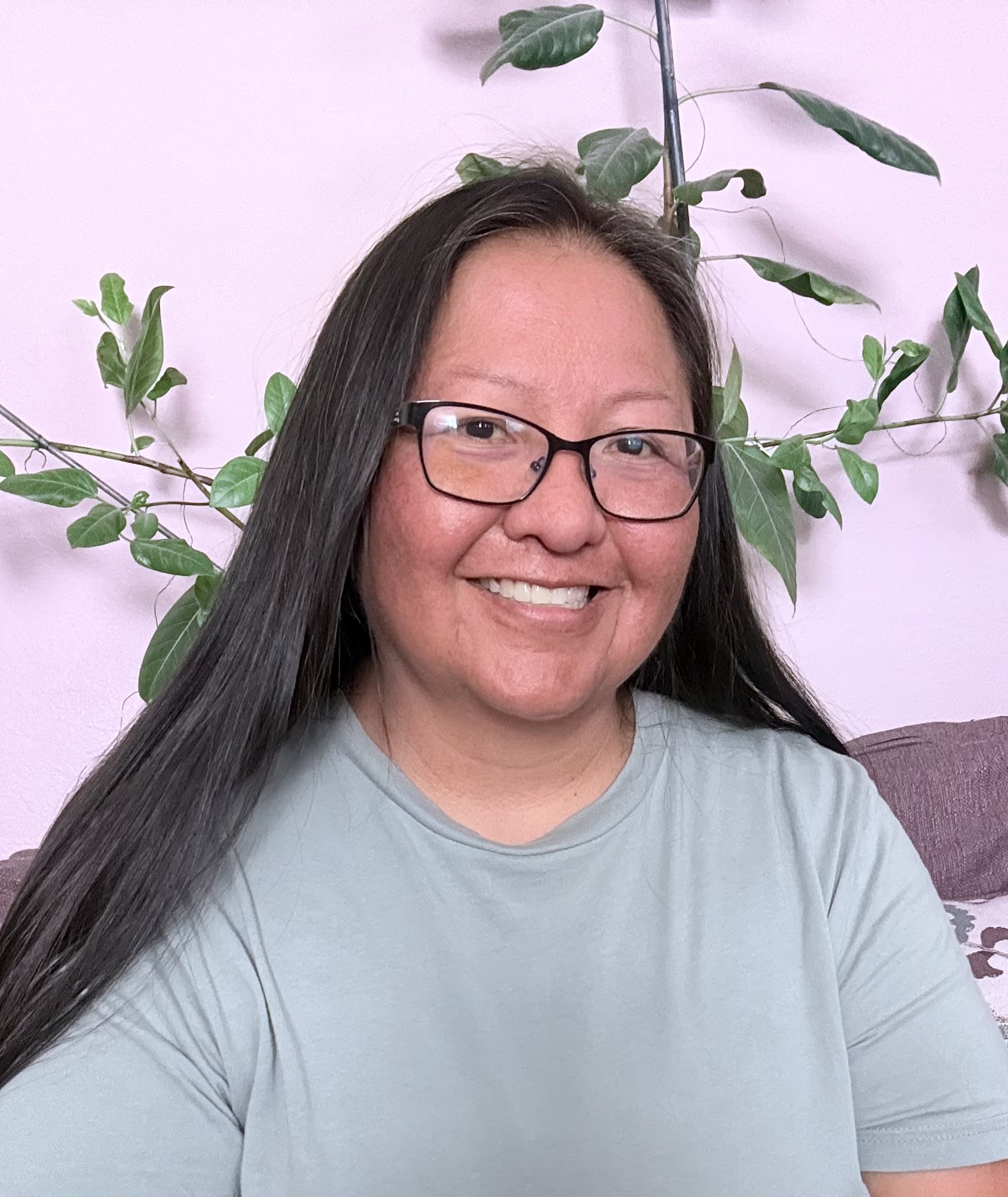
Rebecca Kinkade-Black is Diné. Bįįh Bitoodni nishłi, Lók'aa' Dine'e báshishchíín, Táchii'nii dashicheii, dóó Tł'ízí Łaní dashinalí. Her work has been published in A Year of New Mexico Poetry: an Anthology from Casa Urraca Press, ALOCASIA Journal, Alocasia: 99 queer writers on plants and nature anthology, Tipping the Scales Journal, and HEART RATIONS zine. She is an amateur storyteller and a lover of plants and enjoys spending time with her wife, parents, and dog.
ABOUT THE AUTHOR