
Interview: Anna Collins’ Myaamia Tarot Deck Finds a Home for Storytelling in Diaspora
Myaamia artist Anna Collins shared excerpts of her ongoing project “Cultural Cosmologies: A Myaamia Tarot Deck” with Chapter House Journal for our Summer 2026 issue, Celestial Bodies.
Elliott Chemberlin (Chapter House Journal Fiction Editor): Can you tell us more about the background of this project? How did you arrive on tarot cards as a form to visualize these elements of Myaamia cosmology?
Anna: My favorite part of every Myaamia Winter Gathering is storytelling, when we gather in our council house to tell aahlsoohkaana, our winter stories. We believe that the act of gathering and telling our stories together breathes life into them for that specific moment. We close our night of storytelling by saying “that’s as far as the thread goes tonight.” Then, we pick the thread back up the next year. We only tell our stories in winter, and we do not record them.
Since our storytelling practice is in a period of revitalization after generations of forced assimilation sent them underground, many Myaamia people have not heard the aahlsoohkaana. When I cannot make it to Oklahoma for a gathering, it is always the stories I regret missing the most. I was curious about how to make central figures of our cosmology more accessible to our diasporic nation without actually recording or telling any of the stories. Tarot has always been fascinating to me for its potential to generate endless amounts of different stories by placing the cards in shifting relation to each other. I set out to create a Myaamia tarot deck in an attempt to capture the central figures, symbols, and values embodied within our cosmology while still protecting the integrity of our storytelling practice.
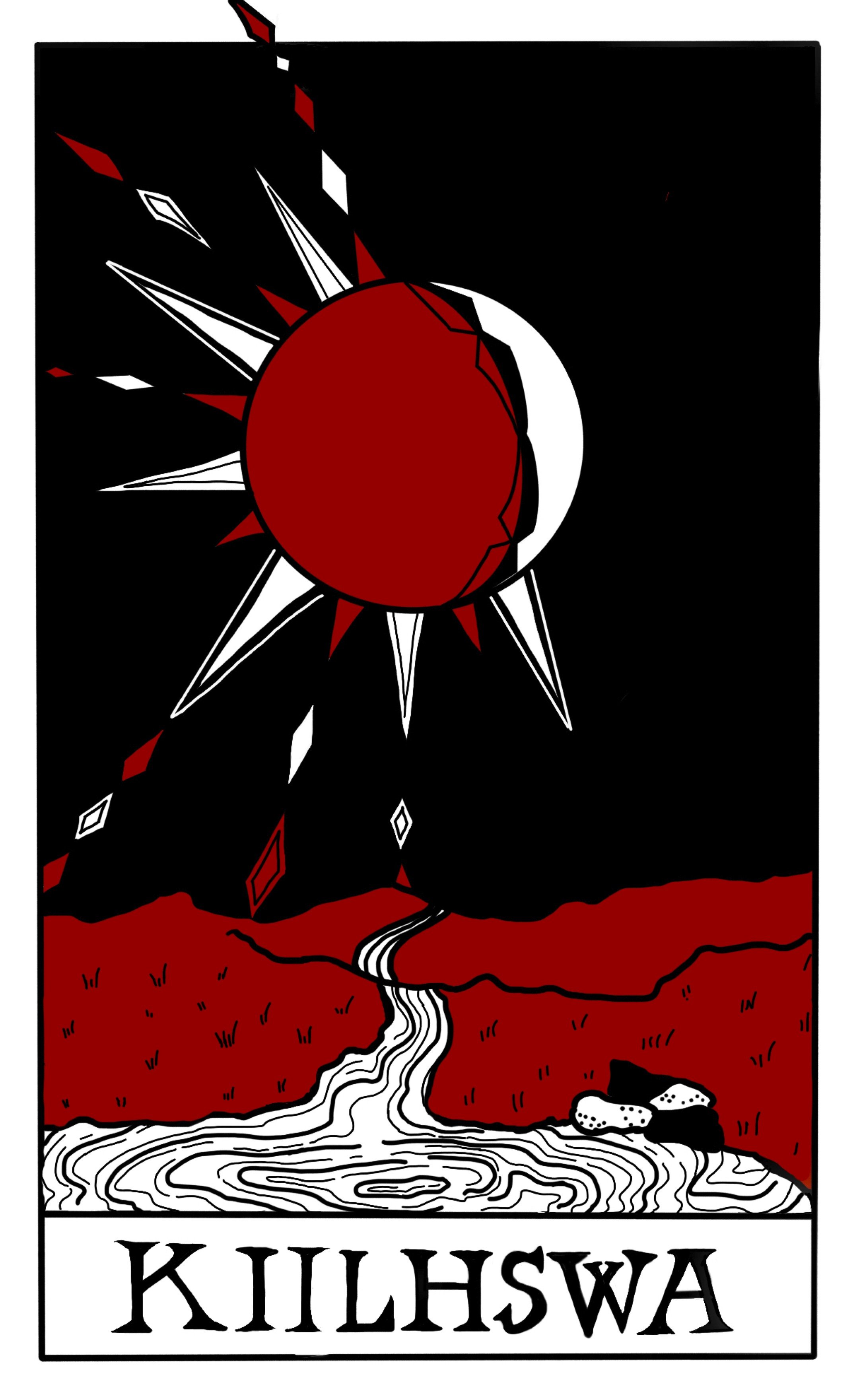
Kiilhswa // Sun/Moon
Kiilhswa means both sun and moon in the Myaamia language. Kiilhswa begins the Myaamia tarot deck due to its centrality within Myaamia cosmology. The Myaamia lunar calendar, driven by moon phases, tells us of ecological changes within our homelands, such as sandhill crane migration patterns or green corn harvesting, that mark the passage of time. Gratitude exists in each season, and pulling Kiilhswa reminds us to appreciate the lunar month or life period we are currently in.
E: How did you select the figures that you did for each tarot card? Do they relate in any way to the western tarot archetypes, or do they visualize something entirely different?
A: Rather than trying to make a Myaamia equivalent of each Western tarot card, I focused on choosing figures that are most central within Myaamia cosmology. While there are some 1:1 overlaps, such as the sun and star cards, most of the similarity comes from shared meanings behind the symbols—transformation, gratitude, love, beauty, fear, death, danger, grief, etc. being common card meanings in both decks. To me, the goal of the deck is to serve as a tool for Myaamia people to learn more about our cosmology, language, and stories. It makes more sense to start with the stories themselves than try to fit the deck into a pre-existing Western mold. For example, Western tarot cards largely depict humans, whereas many aahlsoohkaana center around animals and even plants, so it wouldn’t make sense to create so many human cards. I started with the tarot concept, but Myaamia stories, not the European deck, drove my choices about card figures.
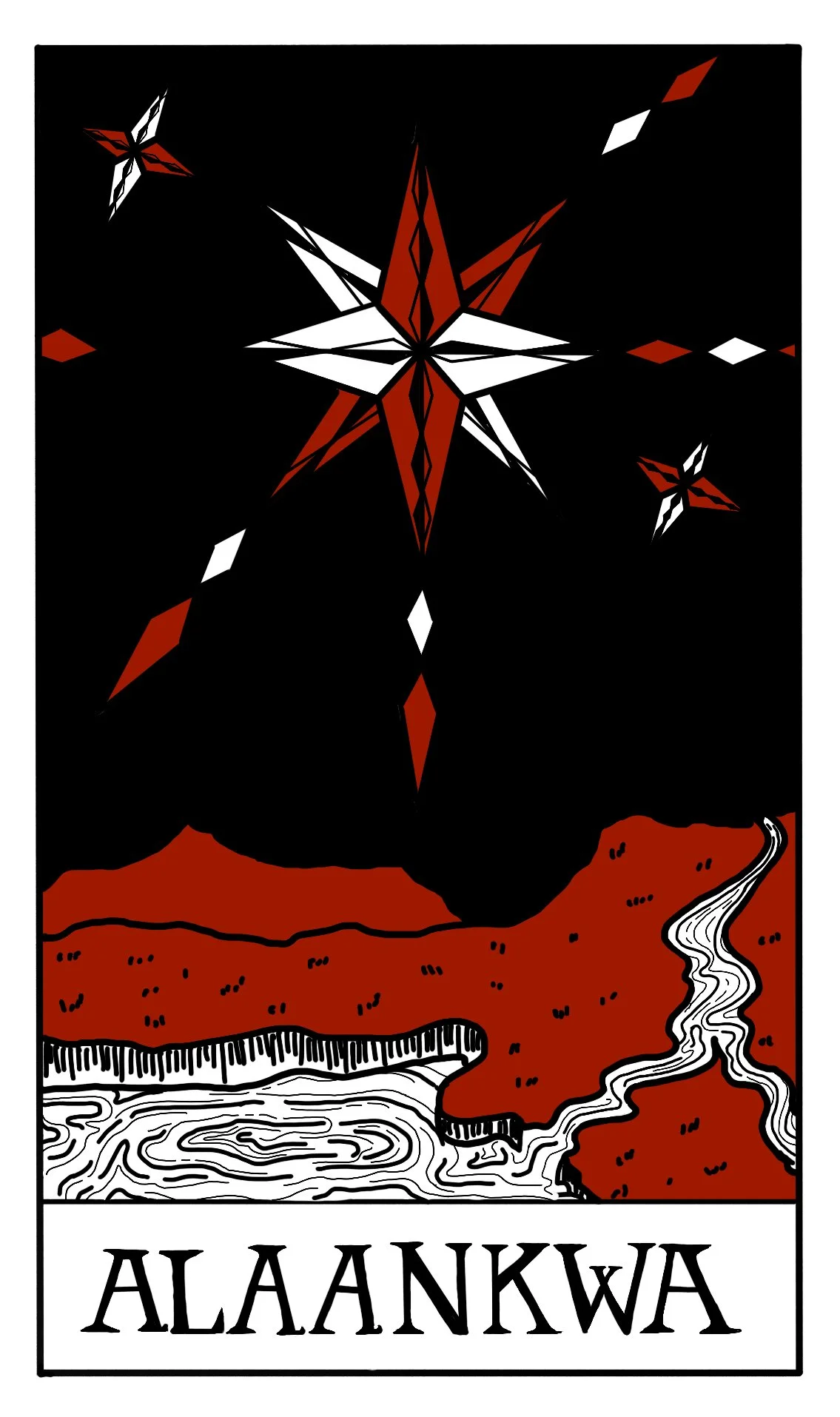
Alaankwa // Star
Myaamia people have our own names for many stars and constellations in the night sky, as well as stories about them. We believe they are carrying the daylight through the dark, holding it for us until morning. However, we also have stories of stars becoming trapped in the sky, unable to leave. Depending on surrounding cards and the circumstances and interpretations you bring, Alaankwa can either symbolize feeling well-oriented or trapped.
E: How did you select which tarot cards from your project to share with Chapter House Journal for our Celestial Bodies issue? How many cards have you created, or do you intend to create, in total?
A: I selected the cards I believed are most central to our stories and cosmologies, and that I felt comfortable sharing with a wider audience. I am still learning the aalhsoohkana myself, so I am creating the cards slowly as I continue to familiarize myself without stories in figures. Overall, I have created fifteen cards, all a part of the Major Arcana, which is the overarching set where each card is its own figure. The remaining cards, the Minor Arcana, are divided into four suits. Eventually, I hope to create an entire deck, which would be seventy-eight cards.
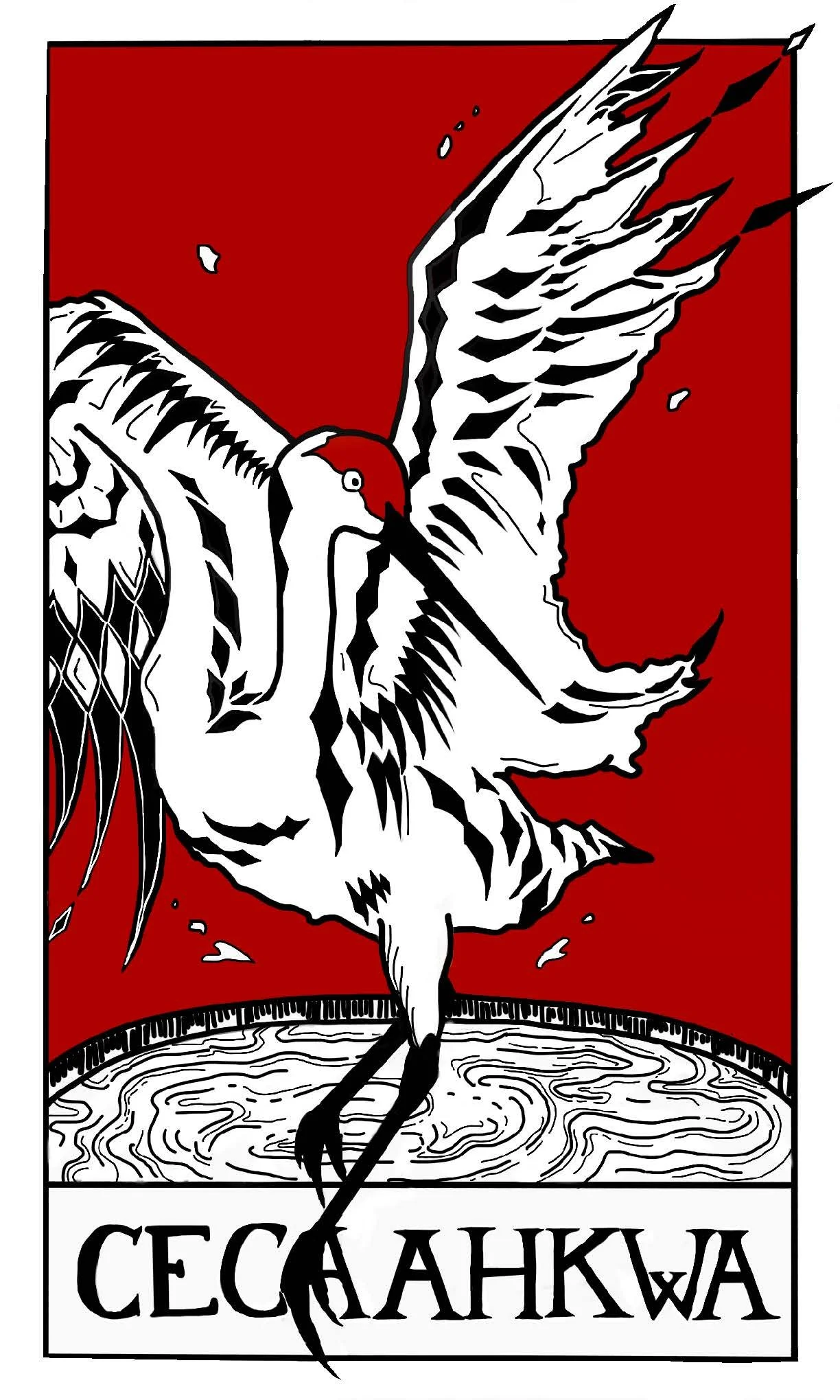
Cecaahkwa // Sandhill Crane
Neighboring Tribes once believed that Myaamia people could transform into sandhill cranes and take flight, calling us the “Twigh Twee” people after the unique sound of their calls. Pulling Cecaahkwa symbolizes transformation and rebirth. Mirroring the cyclical nature of time, Cecaahkwa marks the end of the Myaamia major cards and a return to the beginning of the cycle.
E: How does tarot inform your artistic and creative practices?
A: As a visual artist and lover of storytelling, I have always been drawn to tarot and its ability to combine the two so completely and fluidly. I also love the ever-changing meaning and relationship between the cards—it lends itself well to Myaamia storytelling, which is far less linear than Western storytelling. Myaamia stories are often winding, full of shifts that become the beginning of a new story within the old one, or the introduction of a whole new cast of figures just when you thought you’d learned them all. Art within our community is also often made to be worn, used, and practiced, every day; not just a painting hanging on a wall but ribbonwork on your clothing, bags to hold and carry your belongings, stories to keep your loved ones entertained. We have many games we play to entertain ourselves, but also to teach our children our language and practices. I was drawn to tarot as another example of an art form that can be incorporated into daily practice and used to teach our diasporic community about our language, cosmology, aesthetics and stories.
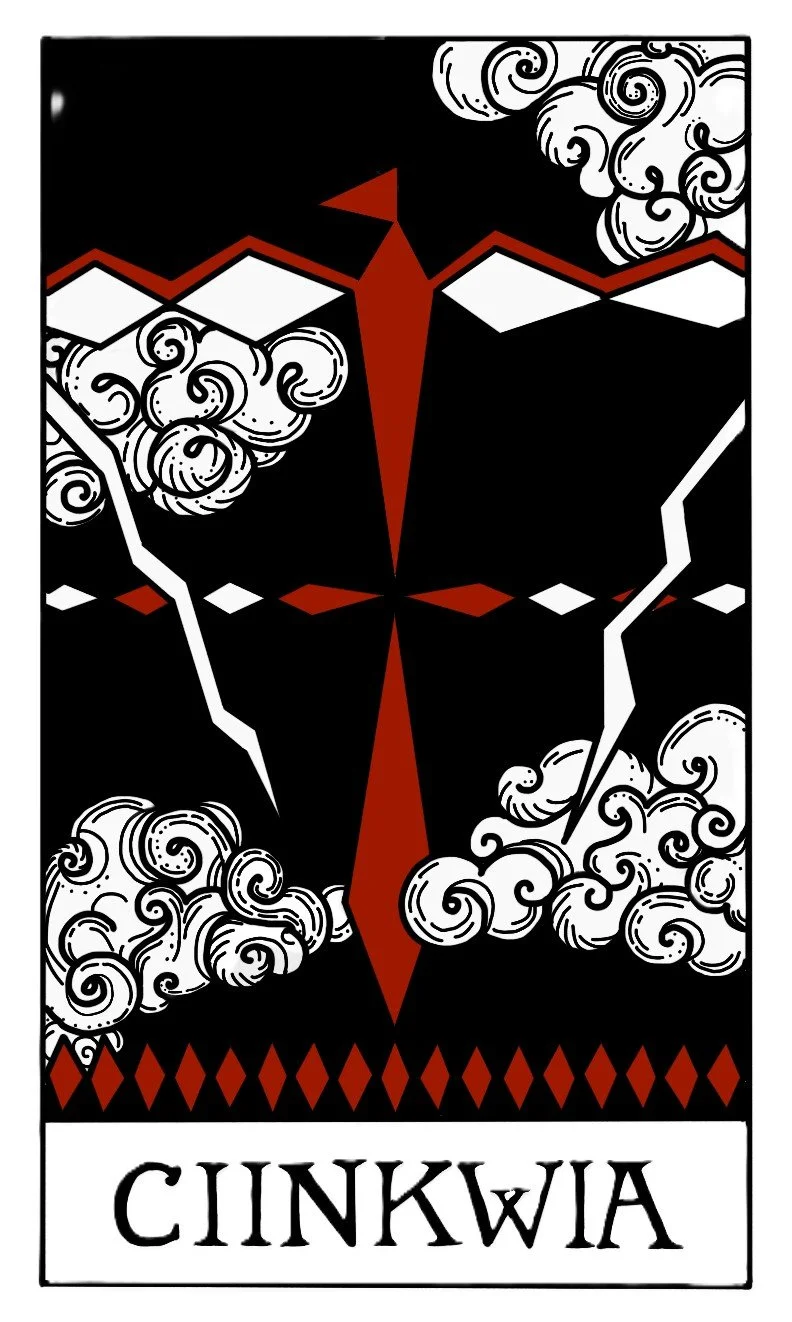
Ciinkwia // Thunderbird
The flapping of Ciinkwia’s wings causes thunder and lightning in the sky, so the Ciinkwia card symbolizes power and bravery. Ciinkwia is also embroiled in an eternal battle with Lenipinšia, the Water Panther, between light and darkness. Pulling Ciinkwia without Lenipinšia can also be a sign of imbalance, as the eternal struggle creates harmony.
E: How will this project continue to develop? What is your vision for the future of this body of work?
A: I hope to continue building out the deck and eventually complete it, although that may take me a while! I would love it if the deck could be a game for Myaamia families to play together. My hope is that, down the road, it can serve as a conversation starter and educational tool across our diasporic community. It has also become an incredibly meaningful personal project, as I learn so much from conversations with community members each time I set out to create a new card.
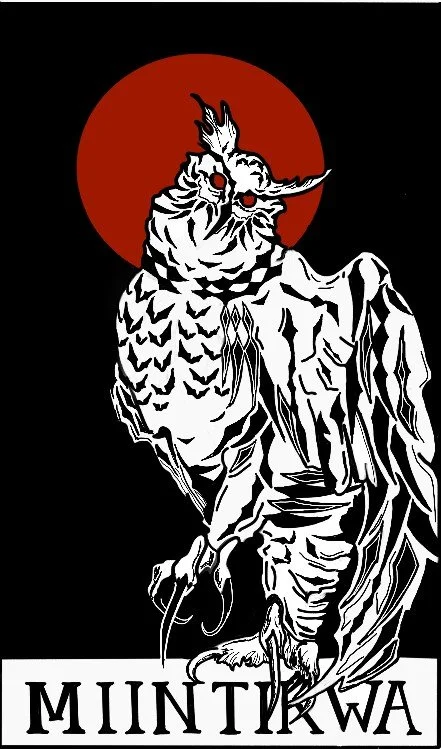
Miintikwa // Screech Owl
Miintikwa, the screech owl, is a sign of death within Myaamia cosmology. However, for many Myaamiaki, owls are helpers—a sign of danger so that you may take extra care of yourself and loved ones. Pulling Miintikwa is usually a symbol of a metaphorical death rather than a physical one. Miintikwa asks us to reflect on our relationships and choices and ask ourselves if we are in need of a change.
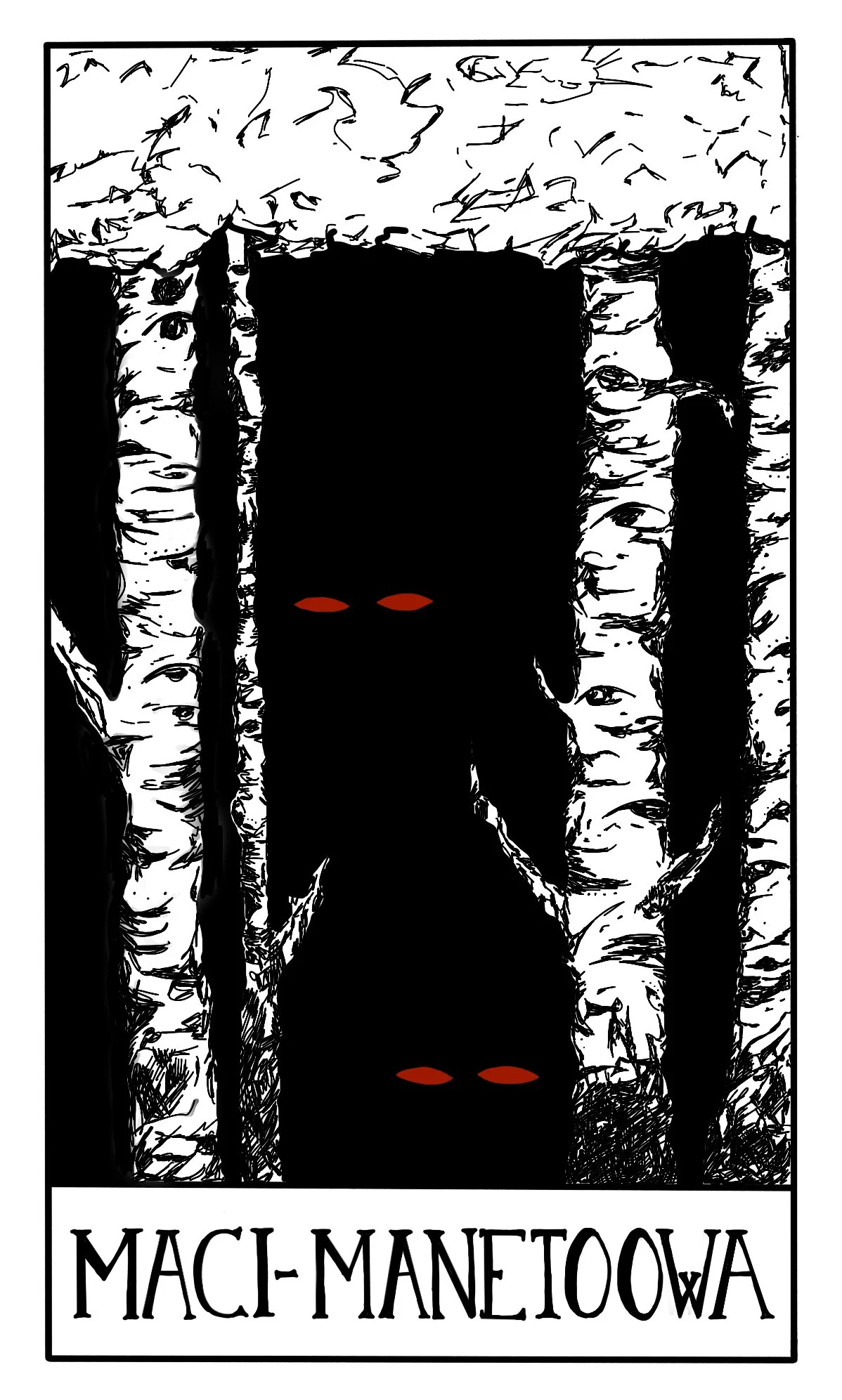
Maci-manetoowa // Bad Spirit
In this card, the Mani-manetoowaki, or bad spirits, watch from beyond the birch trees, not attacking, but keeping watch. Pulling this card can be a sign to take stock of your relationships and priorities, and be aware that possible changes may be coming soon.
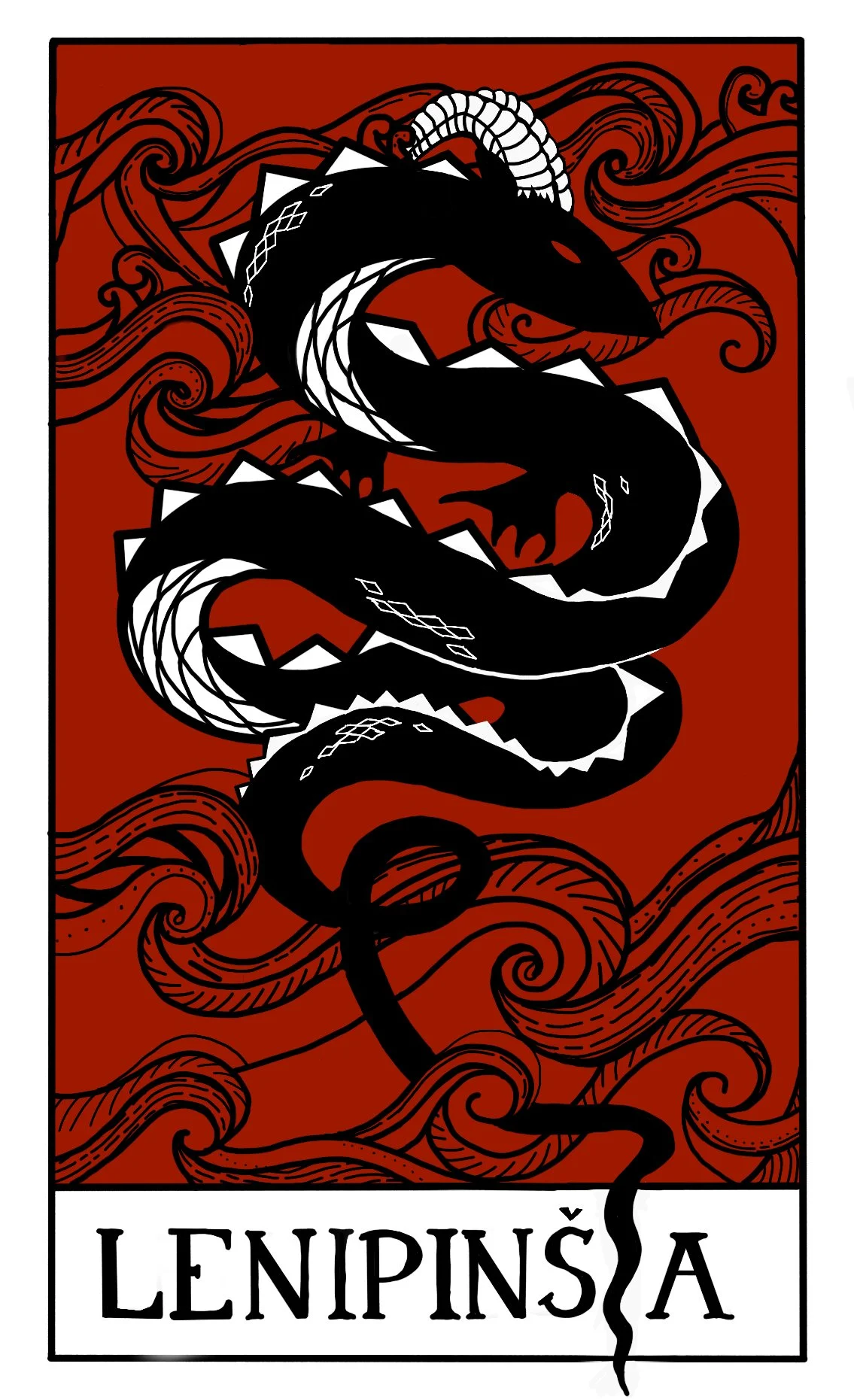
Lenipinšia // Water Panther
Lenipinšia, the underwater panther, lives in the underworld and is associated with danger and death. However, Lenipinšia’s struggle with Ciinkwia also points to the importance of harmony, and the need for loss and grief alongside life.
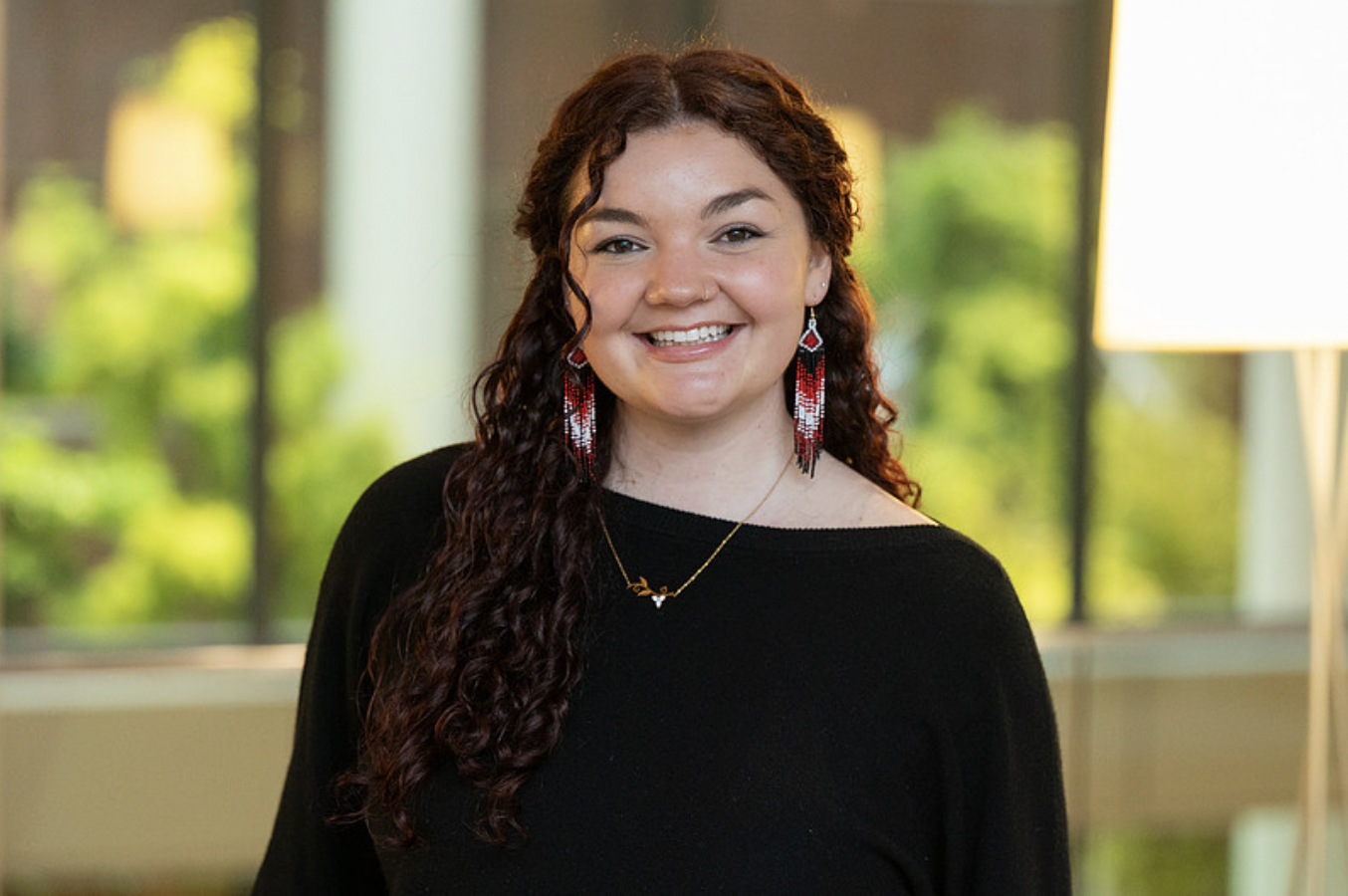
Anna Collins is a citizen of the Miami Tribe of Oklahoma, born and raised in Northern California. She majored in Environmental Science and Public Policy and minored in Art and Visual Studies at Harvard University. Her work has been shown in galleries at the Harvard Club of Boston, Harvard Kiosk in Cambridge, and the Crete Creative Gallery in Crete, Illinois. She exhibited and sold her beadwork in August at the inaugural Myaamia Cultural Fest in Fort Wayne, Indiana. Her tarot series will be included in an upcoming exhibit of Myaamia artists at Miami University’s international branch campus in Luxembourg. Her work draws from Myaamia traditions to explore themes of community, identity, relationality, and cultural revitalization.