Chapter House Storyteller’s Corner recently reviewed El Paso: Five Families and One Hundred Years of Blood, Migration, Race, and Memory by Jazmine Ulloa and declared that the book “proudly and forcefully argues that this city’s history, people, and binational nature must be brought directly into the center of U.S. history, much like Ellis Island or the American Revolution are, instead of being relegated to the margins of our nation’s narrative and simply revisited every time an immigration crisis explodes.”
In this interview, we get to dig deeper into this declaration of El Paso's importance to the overall narrative of the United States, including its significance before it was named El Paso. Below, you will find a deeply committed reporter who was rocked by the massacre that occurred at a Walmart in her hometown, where Mexicans and Mexican Americans were directly targeted and murdered while shopping for everyday items. The hope is that by exploring the history of El Paso, we may all change the narrative of who belongs to this nation, what stories matter, and who gets to tell them.
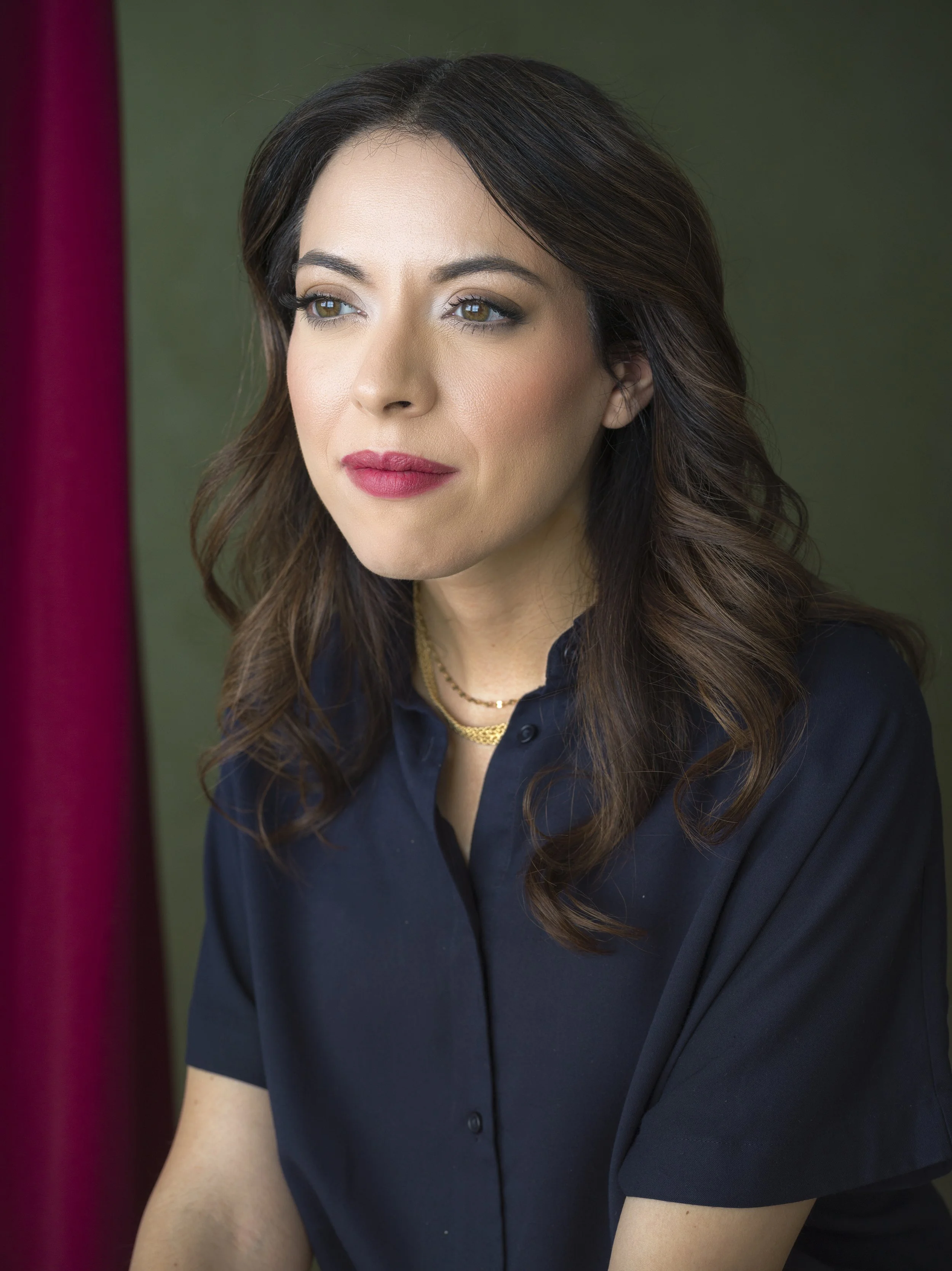
Jazmine Ulloa is a national reporter for The New York Times. She previously reported for The Boston Globe, where she was part of a team that won the Toner Prize for Excellence in Political Reporting, and for The Los Angeles Times. A native of El Paso, she began her career as a journalist in Texas, working for newspapers in Brownsville, San Antonio, and Austin. She has made appearances on MSNBC, CNN, and CBS, as well as in Al Jazeera’s documentary television program Fault Lines.
I’d like to begin with your writing story. How did you first become a writer and journalist?
I was actually a high school journalist. I became editor of our school newspaper, and there was one teacher who was instrumental in getting me excited about writing, reporting, and journalism: Patricia Monroe at Burgess High School in El Paso.
She’s had a lot of students go on to do great things, including some people I now work with in various capacities. I just came back from Texas, where I did an event with one of her former students, who was moderating and is now an editor at ProPublica. It’s pretty incredible to see.
But I think the moment that really made me understand just how much words matter came when I was reporting on the femicides in Ciudad Juárez, right across from my hometown of El Paso. More than 300 women had gone missing—estimates vary, of course—but the patterns were the same. Many were found in deserted cotton fields. Some had been mutilated. Some had been dumped into vats of acid. Many mothers were left without answers, and some never found their daughters at all.
Many of these victims were young girls who looked like me and were around my age. I was about fifteen when I started reporting and sixteen when I crossed the river and spoke with some of the mothers. It’s a moment I’ve always carried with me.
I feel that what you learned about the power of words translates profoundly into this book. Before El Paso became the subject of your book, it was home. What did you believe you understood about the city that writing this book unsettled?
I realized just how little I knew about my hometown and its history—and how important El Paso has been not only to the United States, but also to Mexico. Ciudad Juárez and El Paso were once one place, deep in Mexican territory, before they were divided. Both cities have been crucial crossroads into the United States and back into Mexico.
I didn’t know, for example, that Chinese laborers once called El Paso a “Beacon of Hope” and saw it as an important crossroads in what was essentially an underground railroad of labor at a time when the United States was excluding Chinese workers under one of the first federal laws explicitly barring people based on race.
I also didn’t know that so many intellectuals, activists, poets, and journalists had lived sometimes just blocks from where I once lived in downtown El Paso. They helped foment the ideological seeds that would lead to the Mexican Revolution and the overthrow of a dictator just across the river.
These are powerful stories. They are American stories, and yet they have largely been forgotten.
That was one of the revelations of the book for me. I was born in El Paso and had heard pieces of these stories, but I had never seen this history presented in the history books I encountered. One of the remarkable things your book does is place El Paso not at the margins of American history, but at its center. Why was that reframing important to you?
I feel that El Paso is the American city that can tell us the most about where we are today in our nation’s immigration battles. It is a mountain pass deep in the Chihuahuan Desert that served as a critical portal into the Native lands that would become the United States before there ever was a United States.
Knowing its history allows us to see what historians such as Julian Lim have long chronicled: that our southern borderlands have always been rich, multiracial and multiethnic crucibles where forces of conservatism and liberalism, white supremacy and resistencia, have long been at odds—places where identities collide and collapse into one another, and where new forms of culture are forged.
You describe returning to El Paso to report on the 2019 Walmart massacre in the community where you grew up. How did you find the narrative beginning for a book whose history reaches so far beyond that day?
I went back and forth about where to begin. I considered starting with the moment when I first realized that this story could actually become a book.
But then the prologue came to me. It begins with the story of the Niños Héroes, the young military cadets who fought for Mexico at Chapultepec Castle during the U.S.-Mexico War. That was a pivotal battle in a war that would lead to the treaty that divided this region and created the border as we know it today.
It was a story I had always heard growing up. My mother loved to tell it. As I explain in the book, students in Ciudad Juárez grow up knowing these histories. Much of the history I cover in the book is part of elementary-school education just across the border. My mother grew up knowing the story of the Niños Héroes and dressing up as them during cultural celebrations.
So I had that story in my mind when I began writing, and it felt like the right place to start.
What surprised me was that I had always understood it simply as a tale. But when I began digging into the history—what that war led to and what that moment meant for both the United States and Mexico—I realized: This is what the book is about. It became a natural place to begin.
What’s fascinating about the Niños Héroes is the mythology surrounding them. Were they really children? Did one of them actually wrap himself in the Mexican flag and leap to his death? At a certain point, you find yourself asking: What do I believe? What is true?
Your book makes room for that uncertainty. It asks us to consider the relationship between history and mythology. How did you think about that tension?
That story was one of my entry points into Mexican history. My mother and grandmother were adamant that I know as much Mexican history as American history, that I know Spanish as well as English, and that I feel as Mexican as I did American. I didn’t have to choose. I could be both.
I realize now that this was a privilege that many Mexican Americans in the United States don’t necessarily grow up with.
But while working on the book, I also realized that the story of the Niños Héroes is itself a myth—or at least a story whose historical accuracy has been debated. That became another reason it felt like such an appropriate place to begin.
Because that question runs through the heart of the book: What is the power of myth? Who gets to tell our myths? Which ones do we choose to believe? And what gets lost in the telling?
And we want to believe it because it’s such a powerful story: these young cadets refusing to surrender, one wrapping himself in the flag rather than allowing it to fall into enemy hands. It’s a story made for the ages.
Exactly. Whether you believe every detail or not, it is a story that shapes culture. It has helped shape Mexican identity.
And yet for American students, it is another one of those stories that we have largely left at the margins.
That interests me because I teach a class about the myths of the Spanish invasion, including the narratives Hernán Cortés created in his Segunda Carta de Relación. Some of those narratives remain embedded in how we understand the conquest today without our even realizing it.
Your book seems deeply interested in that boundary between what we call history and what we call story—between nonfiction and the narratives societies construct about themselves.
Your subtitle brings together blood, migration, race, and memory. Which of those words became most complicated for you as you wrote? And which came closest to the book’s emotional center?
That’s such a good question. I think blood became the most complicated.
I began with a story about bloodshed—blood that kills. The book begins in the shadow of a self-proclaimed white supremacist who traveled from North Texas to El Paso and, as he told an officer at the scene that day, came to “kill Mexicans.”
But as I wrote and traced the lives of these families, I found myself exploring another kind of blood: the blood that ties us together, the blood that binds, the blood that gives us life.
So I think blood became the word that comes closest to the crux of the story.
You also chose to tell this enormous history through five families. What could those family histories reveal that a conventional history of El Paso could not?
I traced five families, some going back to the Mexican Revolution. I wanted families who could illuminate the different migrations that have moved through this passageway.
That meant Mexicanos and Latinos, certainly, but I also wanted to show the diversity within Mexican identity and within Latinidad. The families trace their roots to China, Indigenous Guatemala, and Mexico—including some of the same Mexican states where my own family has roots.
I was trying to tell this much larger story about the foundations of our immigration system, its expansion under both Republican and Democratic administrations, and its culmination in what we are seeing today—all through this one portal.
But the families allowed me to show how those systems actually play out in everyday lives.
There are rules of legality, rules of race, rules of identity. But those rules can also be broken, melded, and shaped into something new. They can be experienced very differently, sometimes even within the same family.
Race is one of the words in your subtitle, and the book reveals how complicated race can be within Latino families themselves. You write about the diversity contained within being Mexican, American, Latino, and Indigenous.
Yet race remains extraordinarily difficult for us to discuss. We know race is constructed, but those constructions have had very real consequences—determining where people could live, which schools they could attend, whether they could cross a border, and even whether they could become citizens.
At this particular moment in American history, how capable are we of talking honestly about race, especially in the context of El Paso?
It was a difficult theme to grapple with because so many Mexican families—including some of the families I spoke with—hadn’t fully grappled with it themselves.
I write in the book about covering the George Floyd protests and about how Latinos, Mexicanos, and Mexican Americans were reacting to those protests. That moment stirred up all these different emotions and questions, including the fundamental question: Who even is Latino? What does that mean?
I think many Mexican and Latino families are still struggling to talk about race. In some ways, it remains taboo.
The murder of George Floyd and the protests that followed opened up conversations that hadn’t been happening before. But now we’re in a very regressive period in American history, and we’re seeing a backlash against many of those conversations. The country finds itself in a complicated moment—one in which many people simply don’t want to talk about these issues.
That’s also why I thought race was such an important theme to explore throughout the book.
Based on my conversations with historians on both sides of the border and elsewhere, one of the things El Paso reveals is that racism, nativism, and xenophobia haven’t been exceptional to the development of the American immigration system. They’ve been central to it.
Some of the nation’s most expansive and restrictive national-security, immigration, and public-health policies along the border emerged in the 1920s, during the height of the eugenics movement—a movement that regarded Black and brown people as inferior to white people.
But those ideas go back even further.
Some of the rhetoric that eventually shaped immigration policy grew out of anti-Black racism directed at Black people fleeing the Caribbean, including Haitians seeking freedom, and at free Black people entering the southern states of the United States.
Some of our earliest immigration restrictions grew from attempts to prevent free Black people from bringing with them ideas about Black freedom and the revolution in Haiti.
I don’t think many Americans know that this is part of the origin story of the immigration system we have today. That’s one of the histories I wanted to explore throughout the book.
That’s one of the things that makes El Paso so fascinating in your telling. It becomes a crucible for histories that we often separate from one another.
You write about the delousing of Mexican men and women crossing the border, the influence of eugenics, and the racial hierarchies produced by colonialism. And then there’s Haiti. You can’t fully understand the history of the United States without understanding the Haitian Revolution and the fear that Black liberation generated elsewhere in the Americas.
These histories converge at the border.
So let me turn the question toward you as a reporter. What does being from El Paso allow you to hear or understand that another reporter might have missed?
When I started writing the book, I was thinking about the binational culture of El Paso as I had always understood it growing up: Mexico and the United States, Mexican and American.
But as I studied its history, I began seeing these transnational currents that had been flowing through El Paso all along.
I was trying to balance those two portrayals. On one hand, I wanted to capture its binational culture—its Mexican-ness and its American-ness. But I also wanted to capture these much larger transnational currents: Chinese migration, Indigenous migration, and other movements of people through this region.
I began to see El Paso at the center not only of white supremacy, but also of mestizaje. These were complicated forces manifesting themselves in the lives of the families I was following.
And I think when you’re from the border, you develop an ability to navigate two languages, two cultures, two worlds.
Whether consciously or subconsciously, you become very aware that perspective changes depending on where you’re standing, where you’re looking, and whom you’re asking. A dividing line can mean very different things depending on which side of it you’re on.
For me, the border could feel incredibly fluid. Even people who were undocumented sometimes found ways to cross back and forth.
But for others—like the brothers I profile in the book who were seeking asylum in the United States during some of the most violent years of the drug war—that boundary became a very real physical barrier they could not transcend.
When you grow up with that duality, I think you become accustomed to looking for it everywhere.
Reading the book, I kept thinking that no one else could have written it quite the way you did. You seem to be standing on the shoulders of so many people who came before you, and being bilingual and bicultural gives you another way into this extraordinarily complicated history.
But I’m also interested in the book’s emotional range. How do you make room for humor, pleasure, and joy alongside so much violence?
Because that humor is also part of who we are. Even in the worst moments, someone is going to tell a joke. What everyday details felt essential to getting El Paso right?
That was another balance I was constantly thinking about. I didn’t want this to be only a story of pain and tragedy. I wanted the resilience of the community—of its Mexicanos, of its workers—to come through.
And because I’ve lived it, I knew where to draw from.
I wanted the book to sound like your grandfather or your grandmother telling you a story. I wanted it to sound like the women in my family who raised me and told me stories—women who could tell you the most heartbreaking story imaginable and then, a minute later, crack a joke.
I tried to carry that sensibility throughout the book.
What fascinated me was discovering that same quality in the historical record. I listened to many oral histories of Mexicanos because I wanted to capture that spirit, that voice—a kind of collective voice.
You can hear it even when people are describing terrible experiences.
Someone might be talking about the delousing stations on the border and then suddenly make a joke.
There’s a bracero I write about who had just gone through what they called “the bath.” The workers were sprayed with white powder to “clean” them because they were regarded as dirty before they were sent out to work in the Texas fields.
And after going through this humiliating experience, he turns to his compadre and jokes, essentially, “Now I’m an American. I’m a gacho. I’m a white guy now.”
That humor was there in the historical record.
And I could hear it because I had grown up hearing it in my own family’s stories.
That’s what makes those moments so powerful. The humor doesn’t erase the violence or humiliation. In some ways, it becomes a way of surviving it—a way of maintaining dignity and humanity when a system is trying to take those things away.
You also make me think about México Profundo by the anthropologist Guillermo Bonfil Batalla. He challenges the idea of mestizaje as a simple, unifying national story—the notion that everyone can be folded into a single raza cósmica. Your book similarly complicates easy categories of Mexican identity.
But I want to end by returning to one of the book’s central metaphors.
El Paso is often compared to Ellis Island. Is that a fair comparison? What does the comparison make visible—and what does it prevent us from seeing?
We know Ellis Island as a symbol of some of the nation’s most sacred ideals: welcoming immigrants, welcoming the other.
Many of the people who passed through Ellis Island were Europeans, and we celebrate the contributions they made to American society. Ellis Island occupies this prominent place in our collective consciousness.
We don’t think about El Paso that way. We don’t hold it in the same special place.
I’m making an argument that perhaps we should, because El Paso tells us so much about where we are today.
Its history helps us understand that immigration isn’t marginal to the American story. It is central to it. And it shows how immigration policy was shaped, particularly in relation to Mexicanos and Latinos.
The machinery of detention and deportation that was developed and expanded along the border, primarily against Mexican workers, was eventually extended to many different kinds of migrants. And now we’re seeing tactics that were tested and contested in border communities playing out in the interior of the country.
When I returned to El Paso to cover the mass shooting in August 2019, I was a national political reporter for The Boston Globe. People were once again calling El Paso the “Ellis Island of the Southwest” or the “new Ellis Island.”
But in this new Ellis Island, children were being separated from their parents at the border. Migrants were being held beneath bridges in El Paso. And now a white supremacist had traveled there decrying what he called a Hispanic “invasion” of Texas.
I remember thinking: This is a powerful metaphor, but it’s an imperfect one.
And that raised the question I wanted the book to ask: If this is our new Ellis Island, what does it say about us as Americans?
If we knew the history of El Paso as well as we know the history of Ellis Island, we would understand that there is no “Hispanic invasion” of the United States.
Much of the American Southwest sits on land that was Indigenous before it was Spanish, and Spanish before it was Mexican.
Mexicanos and Latinos didn’t suddenly arrive in this history.
They helped build the Southwest as we know it today.
What I take from the book is that we are richer when migration and culture are allowed to flow across borders rather than when we build walls between people. El Paso and Ciudad Juárez demonstrate how artificial that separation can sometimes feel between two countries whose histories are so deeply intertwined.
Your book asks us to reconsider not only the border, but also the stories we tell about who belongs on either side of it.
That’s really what I wanted readers to consider. If we knew El Paso’s history as well as we know the history of Ellis Island, we would understand how complicated the idea of an “invasion” really is.
The American Southwest was Indigenous land before it was Spanish, and Spanish before it was Mexican. Mexicanos and Latinos have been part of this region’s history from the beginning. They helped build it into what it is today.
Understanding that history changes the way we understand the present.
Jazmine, thank you. This is an extraordinary book, and I hope many people read it. You’ve recovered histories that have too often been pushed to the margins and shown us why El Paso belongs at the center of the American story.
Thank you, too, for the journalism you continue to do at The New York Times. It has been a privilege to read your work and to have this conversation with you.
Thank you so much. And thank you for staying with me—and for your patience. I really appreciate it.
Rey M. Rodríguez has an MFA in fiction from the Institute of American Indian Arts. He recently released his debut book of poetry, Todos Somos Sagrados / All Are Sacred (El Martillo Press 2026), and has finished a novel set in Mexico City and is seeking representation.