by Rey M. Rodríguez
Geneva Toland is a writer, editor, song leader, naturalist, and educator with an MFA in Poetry from the Institute for American Indian Arts. Her debut poetry collection, Council of Thunder, is the winner of Wayfarer Book's 2025 Homebound Poetry Prize and will be available October 2026. Her writing has appeared in Camas, Southern Humanities Review, humana obscura, Canary Literary Magazine, We’Moon Datebooks, among others. She also an poetry editor with Terrain.org, and works as a communications steward with equity and justice leader J. Miakoda Taylor.
This is interview covers a wide range of topics from her writing story to the power of a poem to find its voice to why we all need to submit your work. I could not be more excited to introduce you to this exciting new poet.
Geneva Toland, welcome to Storyteller Corner, the literary blog for Chapter House, the literary journal of the Institute of American Indian Arts.
Thank you.
Let’s begin with Council of Thunder. At what point did the poems you were writing begin to feel like a book?
I started my MFA at Iowa State University’s program in Creative Writing and Environment. I went there thinking I was going to write one book about the environment, place, ancestry, settler colonialism, and the ways history lives in our bodies and in the land.
But I eventually realized that I wasn’t writing one book.
One of my mentors, Anaïs Duplan, taught a class called Decolonizing Your Creative Voice. They looked at my manuscript and took two poems from it and asked me, “Do these poems live in the same universe?”
Immediately, I knew the answer was no.
They were different narrators, different voices. That question helped me realize there were actually two books inside the work.
One became a coming-of-age book. It was about heartbreak as a kind of initiation into adulthood, but it was also about ecological devastation, patriarchal harm, and the question: How do I live here well?
That became Council of Thunder.
The other book asks a different set of questions: What is the world I inherited? What is the history I inherited? What did my people do? The books are related, but they approach those questions through different lenses and different speakers. That second book became my thesis manuscript when I transferred to the Institute of American Indian Arts’ MFA program, which I hope to publish one day as well.
When did you decide you were a writer—or a poet? Was there a particular moment when you claimed that identity?
I always wanted to be a writer.
When I was young, I was always filling notebooks and journals. I wrote poetry throughout school. But when I went to college, I started comparing myself to other people and developed this feeling that I wasn’t good enough.
So I stopped.
Later, farming and being in nature brought poetry back into my life, although I was still writing privately.
COVID changed things for me. Suddenly there was this strange spaciousness, but there was also mortality everywhere. There was this sense of collapse, and the stakes became very high.
I realized that if I didn’t pursue art seriously, I was going to regret it enormously.
That was when I began claiming the identity of writer. I applied to MFA programs. I started writing every day. I became obsessed with it.
Now I can’t imagine not writing.
What did the Iowa State program give you during that period?
It gave me a full-time, in-person community of people who were talking about writing every day.
That was incredibly important.
There was this shared obsession and a sense that we had permission to take art seriously. I was surrounded by colleagues who were incredibly generous and who loved beauty and poetry.
We live in a society that often devalues art. People ask, “What are you going to do with that?” as though art has to justify itself economically.
Being in an MFA program helped rewrite that narrative for me.
Art is powerful. Dedicating yourself to it is an honor and a privilege.
You eventually transferred to IAIA. What drew you there?
I was trying to write about the inheritance & construction of whiteness, and that was difficult because I hadn’t been taught the language for doing it.
Part of what makes whiteness powerful is its invisibility. Talking about it, interrogating it, and naming it begins to disrupt that power.
I was looking for teachers who could help me do that.
Before coming to IAIA, I talked with white and white-ancestry alumni and asked whether IAIA was a place where I could find the language to interrogate whiteness and my ancestry while studying alongside Indigenous artists who were claiming their own language, culture, and artistic practice.
What I heard was that there was a shared commitment to justice and sovereignty.
For me, part of the responsibility of white people is to reclaim our own histories rather than becoming these shadow people who don’t know where we come from or what our ancestors did.
If IAIA was willing to accept me and trust me with that work, I felt incredibly honored.
It gave me a way to articulate what I was trying to do that felt much more truthful than simply saying I was an environmental or nature writer.
What writers or literary traditions influenced Council of Thunder?
I’ve been deeply influenced by environmental writers who locate the self within an ecological web—writers who are trying to restitch the human back into the rest of life.
I’m interested in language as a way of creating ecological belonging.
At the same time, we inherit harm. We inherit disruption and toxicity. We can’t separate ourselves from the world around us.
Mary Oliver was important to me. David Whyte. W.S. Merwin. Craig Santos Perez and his eco-justice poetics around Guam. Natalie Diaz and her poem, “The First Water is the Body.”
Sunaura Taylor’s “Age of Disability: On living well with impaired landscapes” essay in Orion magazine was also transformational for me. I’ve had my own health struggles and experiences of disability, so the idea of a toxified ecosystem as a disabled body resonated deeply with me.
All those writers and ideas, and many more, helped shape the book.
Earlier you talked about what is spoken and what is withheld in poetry. How much did you feel the need to resolve things for the reader?
That was something I had to learn while writing the book.
Initially, I wanted to resolve every poem. I wanted everything to have a happy ending.
One of my mentors told me, “The poem doesn’t have to solve the problem. It doesn’t even have to answer the question. The poem can simply ask the question.”
That changed everything.
What if the poem simply sits inside the question? What if it sits inside the heartbreak and says: I’m here with you in this.
Climate change is one of the enormous questions underneath the collection. The book offers some pathways toward living inside that question, but individual poems don’t necessarily resolve it.
There’s power in mystery and in what remains unsaid.
There’s power in being able to say, I don’t know. But I’m not afraid of not knowing.
Did writing Council of Thunder change your definition of poetry—of what a poem can be?
Definitely.
I teach poetry to young people now, and I often begin by asking them, What is a poem?
We have all these ideas about what a poem is supposed to be. It has to rhyme. It has to look a certain way. It has to have line breaks.
I ask the students to make a list of everything they think a poem has to have, and they’ll come up with this enormous list.
Then I ask, “Have you ever read a poem that has none of those things?”
And they’ll say, “Actually, yes.”
Then I ask, “Have you read a poem that has all of those things?”
Yes.
So then what is a poem?
We sit with that question.
The answer I keep returning to is that a poem is sound and language about something you’re paying attention to.
That’s kind of it.
Once I approach poetry from that definition, a poem can be whatever it wants to be.
I learned from many of my mentors, especially at IAIA—Sherwin Bitsui, Layli Long Soldier, Jennifer Elise Foerster, m.s. RedCherries, Esther Belin—to respect the poem as a sovereign being.
A poem has a life of its own. As the artist, you’re trying to respect that life and allow the poem to become what it wants to become rather than forcing it into something else.
I’m grateful that my answer to the question What is a poem? has become so expansive, because it means my writing practice has a million different directions it can take and still be poetry.
Did that understanding emerge after you had written the book, or did it happen during the writing?
Definitely during the writing.
I started experimenting with different forms. I began writing more prose poetry, for example, and some of those poems made their way into the collection.
I had also tended to write longer poems—and there are still quite a few long poems in the book—but there’s a series called “dear my old love” where I began experimenting with very short, almost haiku-like meditation poems.
I started wondering: What if a poem is simply a meditation on a moment?
It doesn’t necessarily have to tell an entire story.
The book kept asking me: What else does this need? What else does this need?
There needed to be a balance among the different ways we approach an experience.
I learned so much while writing this book. Truly, I feel like the book was my greatest teacher.
I love this idea of the poem as something sovereign—as though part of the writer’s responsibility is simply to get out of its way and let it breathe. When you’re revising, what tells you that a poem has finally found its form?
I actually taught a workshop about this recently called Is a Poem Ever Done?
Anne Lamott, who wrote Bird by Bird, has a funny way of talking about this that I appreciate. Essentially, you reach a point when you’re sick and bored of the poem and can’t possibly work on it anymore. You have to put it down and call it good enough.
I know that feeling.
I felt it quite a lot while finishing this book. I would reach a point where I thought, There’s nothing more I want to do to this poem. If I’m forced to keep working on it, I’m going to kill whatever joy remains in it.
There’s a balance. Eventually you simply have to let the poem go.
It’s probably similar to raising anything: at some point, you have to surrender and allow it to become its own thing in the world.
Deborah Taffa once gave me another wonderful piece of advice. She said the best way to discover whether a piece is finished is to read it aloud to a group of strangers you deeply respect and admire.
You’ll discover very quickly how much you want to edit while you’re reading.
There’s something about the pressure of standing in front of people whose opinions matter to you. You want the poem to exist in its best possible form, and suddenly you begin hearing exactly what isn’t working.
I experienced that at IAIA. I would read something aloud and immediately think, Oh, that wasn’t finished.
Then I would read another poem and think, That’s it. I can stand fully behind this poem. I could read it to anybody.
Learning to recognize the difference was important.
Are there places in Council of Thunder where form actually changed the direction of a poem—where the shape the poem assumed taught you something you didn’t know when you began writing it?
The poem that immediately comes to mind is “standing in line at airport security.”
It’s about the constant infringement on bodily sovereignty that we experience in this country, particularly as women.
I wrote an early draft using fairly conventional line breaks and stanzas, but it felt too neat.
The poem concerns a moment of violation, and I remember thinking, This isn’t how the violation felt. The violation wasn’t neat.
I wanted the poem to feel the way the experience felt.
That’s something I love about poetry—when I can read a poem and think, That’s it. That is what it felt like to be there in that moment.
So I rewrote it without line breaks. It became a prose poem, almost a piece of micro creative nonfiction. The boundaries between those forms can overlap.
At first, that frightened me. I thought, This isn’t a poem anymore. It’s an essay.
It was long and blocky and prose-like, and I began thinking it couldn’t possibly belong in a poetry collection. In fact, I left it out of the first few drafts of the book.
But as I continued reading the manuscript, I kept feeling that something was missing.
What was missing was that moment when the speaker could fully express the violation—to allow the experience to exist in its fullness and take up the space it required.
So I put the poem back.
And suddenly I thought: Yes. This is a poem. It belongs here.
It’s a poem because it is language and sound about a moment.
That experience taught me, again, to respect the sovereignty of the poem—to respect what the poem wants to say and how it needs to say it.
It also taught me to trust that the way something needs to be expressed—especially when writing about trauma or other difficult experiences—is the way it needs to be expressed.
I don’t have to censor that impulse because of rules about form.
Form should answer the needs of the poem, not the other way around. When existing forms don’t meet those needs, I can find new forms for what needs to be said.
Which poem was the most difficult to finish? What problem did you ultimately have to solve?
Interestingly, a lot of the poems toward the end of writing this book arrived almost fully formed.
Once I understood the “universe,” as Anaïs Duplan calls it—once that universe had been established by the other poems—the remaining poems seemed to come in and fill the gaps.
I didn’t have to think very hard about them. I simply wrote them, and they were done.
So I don’t think any particular poem was especially difficult to finish. The hardest thing was wrestling the book itself out of my entire body of work and asking, What is this story?
There were poems I had discarded because I thought they didn’t belong anywhere, or weren’t very good, or shouldn’t be read. Then I would go back through my work and suddenly realize, Oh, this poem needs to be here.
It made me respect my poems more because I realized they had been telling a part of the story that I wasn’t listening to.
At one point, I printed out hundreds of poems I had written over the previous ten years and spread them across the floor.
I just started looking at them together.
And the different speakers began to emerge.
It was almost like having different people standing in the same room. I could look at a poem and think, That poem belongs to this speaker. That one belongs to somebody else.
These different voices began emerging from a decade of work.
So I started organizing the poems according to their speakers. Once I did that, I realized many of those poems were already finished. They belonged to that particular speaker and that particular universe.
There wasn’t much more I needed to do to them. Once I found the book, the poems fell into place.
Let’s talk about the title, Council of Thunder, and the book’s three sections: “Sleep-Walk,” “Thunder-Wake,” and “Morning-Bird.” How did that architecture emerge?
I have to give some credit for the title Council of Thunder to my friend Eleanore Tisch, who was in the Iowa State program with me. She’s one of the most brilliant poets I know and one of my dearest friends.
Originally, I had given the book a title involving salt. One of the final images in the collection involves a wound nurtured by salt.
I loved that image—the idea of healing a wound with salt water, something that heals but also stings.
So I had been thinking about titles like Salt Wound or Healed by Salt—something along those lines.
Eleanore read the manuscript and essentially told me, “This title isn’t as strong or powerful as these poems. It’s disrespecting the book.”
She felt the book had this enormous, almost confrontational energy. It was something that shook you. The title I had chosen was too delicate for what the poems were actually doing.
I realized she was right. I was undercutting the power of the poems.
We both began noticing there was a pattern of thunder images in the book.
And then I have a series of “Council” poems in the book that gesture towards the very old practice of sitting in circle with others to make decisions. In these poems, the narrator sits with the more-than-human beings and asks them for advice.
I loved this practice of literally going outside and sitting in council—in a circle—with a thunderstorm, with Bear, with Juniper, and saying: You are my teachers. You are my elders. You are my mentors. What do you need to tell me about this moment we’re living in?
Because the book wasn’t simply about being struck by thunder or caught in a storm. It was about sitting with the storm.
And then Council of Thunder emerged.
As soon as we had that title, we knew.
That’s it.
That title respected the book.
And did the three sections emerge from that same idea?
Once I had the title, I knew the middle section needed to involve thunder because the poem, “In Spring, Thunder Wakes the Bear” was there, and because the entire section has this disruptive, waking energy.
I would talk with Anaïs Duplan about the order of my poems, and he helped me recognize that this is the part of the book that is there to shake you up.
It’s the moment when the speaker wakes up and says, essentially, I’m going to become an agent in my own life, even if it kills me.
So it became “Thunder-Wake.”
Then I started asking myself about the energy of the other sections.
The first section felt like someone taking stock of the world without actually doing anything about it. There’s a kind of sleepiness to it. The speaker is sleepwalking through life, allowing things to happen to her. People are trying to wake her up, but she isn’t ready.
That became “Sleep-Walk.”
Then “Thunder-Wake” is the awakening.
The final section feels like a reclaiming of joy.
It says: This world is intense. This world will try to kill you. And still, there is so much joy available to us in any moment of any day.
What a gift that is—to be human in this world and still have the capacity to claim joy.
I wanted an image for that final section that suggested a claiming of joy and self, but also re-emergence and rebirth.
I encountered David Budbill’s poem “What Issa Heard,” with its image of morning birds singing into a suffering world. The idea that stayed with me was that suffering will always exist, but so will song.
And I realized: The speaker is the morning bird.
She is singing into the suffering world.
Even thinking about it makes me emotional because it feels like such a beautiful choice for the speaker to make.
If I have to live in a suffering world, then I’m going to be a morning bird in it.
That’s where “Morning-Bird” came from.
That’s beautiful. Geneva, so I want to close by looking forward. Now that you’ve published a book and graduated from IAIA, what advice would you give to emerging writers?
I’ve had so many extraordinary teachers, and I’m constantly learning new things. But if I had to offer advice, the first thing I would say is: build your community of writers.
This book would not have happened without the community of writers around me.
I have mentors and peers who read my work and help make it stronger. I have teachers who introduce me to writers I didn’t know before, whose work then teaches me something new. And I have a publishing community—friends at Terrain.org, for example—who helped me learn about editing and publishing.
Then there are friends who have already published books. They tell me about contests and share what they learned from their own experiences. That’s actually how I discovered the contest that Council of Thunder eventually won.
None of this would have happened without all those people—literally hundreds of people along the way—who, in one way or another, said: You have a place in this world.
So build that community. Strengthen those relationships. Be part of a community of writers.
And the other thing I would say is: you never know. Take the chance. Send the work out.
I didn’t think this book was ready to win a contest. I used the contest deadline simply as a deadline to force myself to finish the manuscript.
When I submitted it, I felt as though I were throwing a ball toward a basket with my eyes closed, already convinced it would never go in.
And then it won.
So you never know.
I also think we’re often terrible judges of our own work because we’re so hard on ourselves. Other people can be far more generous toward our work than we are.
Trust in that generosity.
And keep throwing your work toward the baskets that call to you.
That’s wonderful. Geneva, thank you. You’ve been incredibly generous with your time.
Thank you. And speaking of community, I’m so grateful for everything you do to build our community of writers. What you offer is such a gift. I’m very grateful.
Rey M. Rodríguez has an MFA in fiction from the Institute of American Indian Arts. He recently released his debut book of poetry, Todos Somos Sagrados / All Are Sacred (El Martillo Press 2026), and has finished a novel set in Mexico City and is seeking representation.
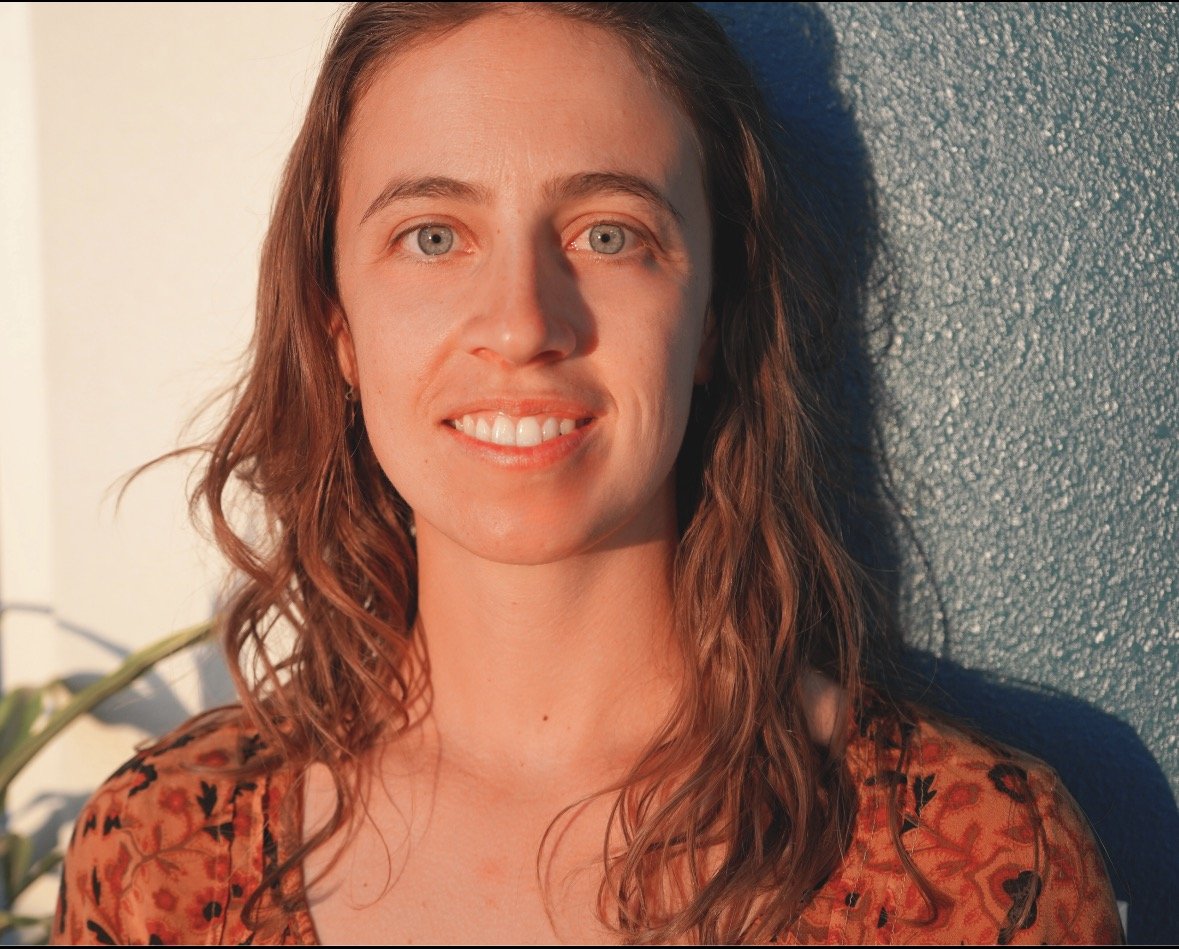
Photo Credit IAIA Alumna Virginia St. Rain